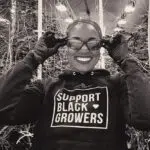








Since 2020, Pisgah Peaks Ventures has helped dozens of business-to-business cannabis operators build fractional marketing and revenue operations teams to scale efficiently. With services that include website design, pipeline growth, outsourced sales-development representatives, cold email campaigns, public relations, brand-building, and design, the firm helps operators avoid costly full-time hiring, slow ramp periods, and overwhelmed internal teams that have a fixed skill set.
“We’re not here just to sell another marketing package,” said founder Brandon Bobart. “We’re here to help construct an evolving, real team of cannabis veterans who can execute a broad range of marketing and sales activities. We work in a shared project management ecosystem, attend key company meetings, and work to serve as an embedded part of your team, not just another vendor.”

Letting go of broken attribution models
What’s the biggest misconception businesses have about PR or marketing?
A lot of owners believe every marketing activity can be attributed to a marketing lead or a sale, but the reality is the last-click attribution model is broken and causes you to miss out on great brand-building opportunities.
How can companies connect PR and marketing to business outcomes?
Understanding the metrics that matter and breaking them into buckets. Not every key performance indicator can be revenue; you also need leading indicator metrics that show directional growth and North Star metrics like top-line revenue growth, pipeline size, average order value, and the like.
Getting more mileage out of what you already have
What’s one simple thing companies can do internally to get more out of their campaigns?
Repurpose, repurpose, repurpose! Not every campaign needs to be net new. Often, the best results are obtained by reiterating a narrative in different ways across a variety of channels.
What role does data play in shaping effective campaigns?
Businesses should be able to collect zero-party data from customers to drive future content: “if you’re interested in X, you may like Y.” Business-to-business (B2B) brands can leverage contact data to build targeted omnichannel campaigns specific to their role or pain points within an organization and distribute that content across a multitude of channels.
Building brand stories people actually care about
What makes for a strong brand story?
A solid why you do what you do and why you’re uniquely qualified to do it. Make people understand why you wake up every day and why your company does what it does.
What’s one mistake cannabis companies often make in PR or marketing?
Focusing on features, not benefits. You’ll never see Nike run an ad about the way their shirts are made and the formulation process to create long-lasting materials. Tell a story that people care about & show them how your product matches the narrative.
Channels, tactics, and attention realities
What’s the most overlooked opportunity brands should be paying attention to right now?
Talk to five customers weekly. It sounds crazy but, when done consistently over time, it pays immense dividends.
What trends in consumer behavior should cannabis companies be paying attention to?
Attention spans are getting shorter and more fragmented. People are into social shopping via TikTok Shop. OpenAI just announced Etsy and Shopify one-click purchase ability in their chat search results, which further complicates things.
What’s one channel or tactic that’s delivering surprising results right now?
Direct mail. I’ve found it to be effective when done in a targeted manner. We took a campaign, created a crazy offer, and then retargeted the offer on Meta for some good results.
What’s the smartest low-budget tactic you’ve seen work in marketing or PR?
LinkedIn thought leadership content is essentially free if you do it yourself. For B2B, it can really move the needle. We’re seeing cultivators and other plant-touching groups benefit as well from the exposure, but beware: You won’t do this with just some ChatGPT-authored posts. You have to be real and have a unique perspective. Vanilla doesn’t sell.
Choosing partners and preparing for pressure
What advice would you give a company choosing an outside partner for the first time?
Make sure they have opt-out clauses if the relationship isn’t working. Also, understand how success will be measured and the timeline to see results. Partners should use specific numbers and benchmarks instead of vague language. Ask what the potential partner will need from your team to be successful and ensure alignment.
How should brands prepare for a crisis?
Have a plan and know who owns each step. If a bad email goes out, what’s next? Who owns it? If a bad article or review is published, what is the first step to counteract that coverage? Who owns it?
Playing the long game
How can companies make sure their messaging stands out in a crowded market?
Be original and raw. Polished, pretty Instagram graphics aren’t cutting it anymore. You need to be engaging, tell a story, and show up daily or weekly because attention spans are short. Also understand results take time. You won’t be a “brand leader” in a year. Be known for one thing.
How do you see cannabis marketing and PR evolving over the next two years?
The speed to execute will increase with new artificial intelligence tools, and the headcount needed to execute smaller campaigns will continue to shrink. The digital landscape will continue to fragment as more micro communities and media sources arise.
What’s the one piece of advice you think every business leader should know?
Showing up every day doesn’t mean 110 percent every day. Some days it’s 10 percent and some it’s 200 percent, but it’s important to know you’re moving the ball forward every day.
Related Articles: