


The term “pioneer” gets tossed around a lot in the cannabis industry, often with regard to plant-touching operations in old-guard states like California, Colorado, and Washington. Brian Ted Jones is a pioneer of another sort. As an attorney, he’s blazing new trails in a territory more often associated with the old west than new frontiers in law. Based in Oklahoma, Jones is helping clients define and refine the shape of a young, vigorous industry with a bright future.
He, the state, and cannabis share a complex, interwoven history.
“My mother’s family arrived here in the 1850s,” Jones said. “They were Choctaws forcibly relocated under the Indian Removal Act. I have deep, deep roots here, and this place keeps fascinating me.”
A confluence of politics, policy, and timing
Jones did not expect to find himself enmeshed in another historical event, but the emergence of legal cannabis impacted his career trajectory in ways he never anticipated. A practicing attorney since the age of twenty-five, his side hustle as a freelance journalist and involvement in state and national politics landed him in the perfect spot to participate in the birth of Oklahoma’s industry.
“I practiced criminal defense for the first six years of my career,” said the University of Oklahoma College of Law graduate. “Then, in 2016, I changed course and went to work for a local nonprofit. They wanted someone to spend the whole year educating the state about the impact of a single state ballot question that was coming up for a vote: State Question (SQ) 777. The supporters called it ‘right to farm.’”
At the same time another initiative also caught his eye — and the attention of enough voters to make the ballot that year. While discussing the farming bill at town halls, Jones began receiving questions about SQ 788, a medical-marijuana measure. As the measure gained momentum, Jones realized something that would change his course yet again: The proposed law required business licenses to be issued within sixty days of voter approval. That meant what probably would be a significant number of prospective license-holders would need legal assistance — fast.
“Dean Andrew Coats, a legendary Oklahoma trial lawyer who’d been [Oklahoma City’s] Mayor and Oklahoma County’s [district attorney], told us at [law-school] orientation that being a good lawyer meant ‘thinking around corners,’” Jones recalled.
And think around corners he did, founding Brian Ted Jones PC in 2019 with a mission to serve the cannabis industry. Jones said he views the industry as a mechanism for helping promote economic mobility in Oklahoma.
“Our firm focuses on cannabis licensing and compliance, which means helping companies get licensed, stay licensed, and stay compliant,” Jones said. “I also do a lot of transactional work for cannabis companies, writing corporate governance agreements, license transfer agreements, and commercial contracts.”
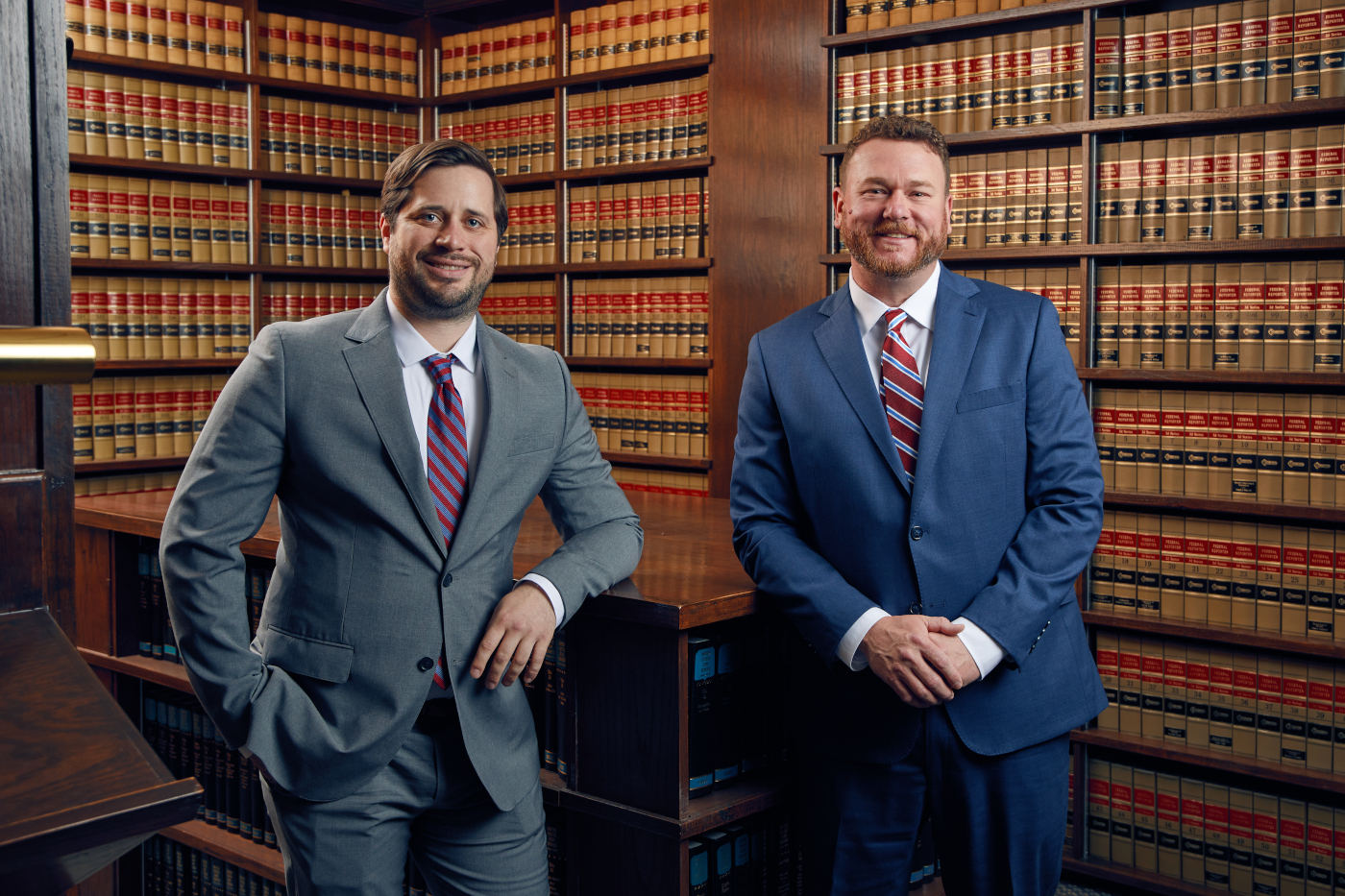
From rapid rollout to regulatory reality
During the first few years after Oklahomans voted in a medicinal program, businesses were not required to submit a certificate of occupancy (COO). Most grows at the time were in unincorporated areas that lacked the fire marshals responsible for issuing COOs. That changed in 2023, leaving hundreds of cannabis businesses at risk of forced shutdowns.
But pioneers are accustomed to facing challenges.
“I ended up representing about seventy companies [without COOs], and I’ve found that when I help a business with one thing, they often realize they need my help with other things,” Jones said. “And since I grew my practice purely on referrals and word-of-mouth, the more people I helped, the more I grew.”
Jones associate Max Federman also loves being on the front lines as a new legal area develops.
“Cannabis law is exciting to me because it sits at the cutting edge of public policy,” he said. “We’re not just interpreting statutes; we’re actually helping to shape them. This area of law is still developing, which means cannabis attorneys often find themselves in uncharted territory. In that sense, we’re pioneers, and that makes the work both intellectually challenging and deeply rewarding.”

Taking Oklahoma’s lessons nationwide
After helping dozens of Oklahoma businesses establish safe, sane, and compliant operations in a young and rapidly growing market, Brian Ted Jones PC believes the knowledge and experience its team has gained can benefit businesses in other states.
“As I look around the country, I see lots of states going through the same sorts of challenges we’ve surmounted in Oklahoma over the past seven years, and I think my firm has a lot to offer cannabis businesses in those states,” Jones said.
His pioneering spirit naturally drives him toward frontiers where public policy, law, and regulations remain a work in progress. Cannabis is only one example, but right now it’s the one he finds most fascinating.
“What draws me to cannabis law is the same thing that draws me to emerging industries more broadly: the opportunity to work on the frontier of legal and policy development,” Jones said. “These are areas where the law hasn’t fully caught up with innovation yet, so there’s room to think creatively, problem-solve in real time, and help build frameworks that didn’t exist before.
Whether it’s cannabis, cryptocurrency, [artificial intelligence], or other new technology or sectors, I’m energized by the chance to help shape systems from the ground up. That kind of work has lasting impact and aligns with my passion for using law not just to manage change, but to lead it.”
Key legal questions cannabis operators are asking
What legal services does Brian Ted Jones PC provide?
The firm focuses on cannabis licensing, compliance, and transactional law. That includes obtaining and renewing licenses, drafting ownership or governance agreements, assisting with transfers, and ensuring companies remain compliant as regulations evolve.
Why did Oklahoma become a proving ground for cannabis law?
Because the regulatory rollout moved extremely quickly, Oklahoma became a stress test for everything from municipal oversight to license timelines. Attorneys had to problem-solve in real time, building practical legal frameworks where none previously existed.
How did the COO requirement change the regulatory landscape?
Beginning in 2023, cannabis businesses had to demonstrate a certificate of occupancy, which many rural or unincorporated facilities had never needed. The shift put hundreds of operators at risk and required legal strategy to keep compliant facilities open.
What makes emerging cannabis markets similar to Oklahoma’s early years?
Newer programs are now bumping into the same issues Oklahoma faced first: rapid licensing, uneven municipal oversight, facility compliance, and evolving policy. Firms with early-stage experience can help others avoid costly missteps.
Does Brian Ted Jones PC work with businesses outside Oklahoma?
Yes. As other states follow similar regulatory paths, the firm increasingly advises out-of-state operators seeking help with licensing, compliance preparation, governance documentation, and long-term regulatory strategy.