

- Greentank uses a consumer-first playbook, starting with the moment of use and working backward to hardware design.
- The team blends macro tech, regulatory and retail trends with the physics of cannabis oil to guide its product roadmap.
- Quantum Chip™ is one outcome of this process: a ceramic-free heating platform engineered for flavor fidelity and consistency.
- The approach aims to reduce clogging, improve reliability, and preserve terpene character from the first puff to the last.
- As Greentank rolls Quantum Chip into select devices and scales in 2026, it’s pushing the industry beyond “good enough” vape hardware.
In cannabis, innovation rarely moves in a straight line. Instead, it moves in loops shaped by culture, constrained by regulation, accelerated by technology, and ultimately judged by consumers in a moment that lasts only a few seconds. That moment matters more than anything else, and for Greentank Technologies, innovation begins precisely in that space.
The company is quietly redefining what it means to build hardware for cannabis businesses while putting consumers right at the center of the process. The approach may sound unconventional in a category defined by brand partners, white labels, and wholesale economics, but it is shaping the next era of vape technology.
“Our job is to read the landscape of consumer technology trends, macroconsumer trends, and parallel trends in science and regulation so we can forecast what will be important in the near future,” said Chief Product and Innovation Officer Chris Gemmell. “From there, we translate all of those findings into products.”
Consumer-centric innovation in a B2B world
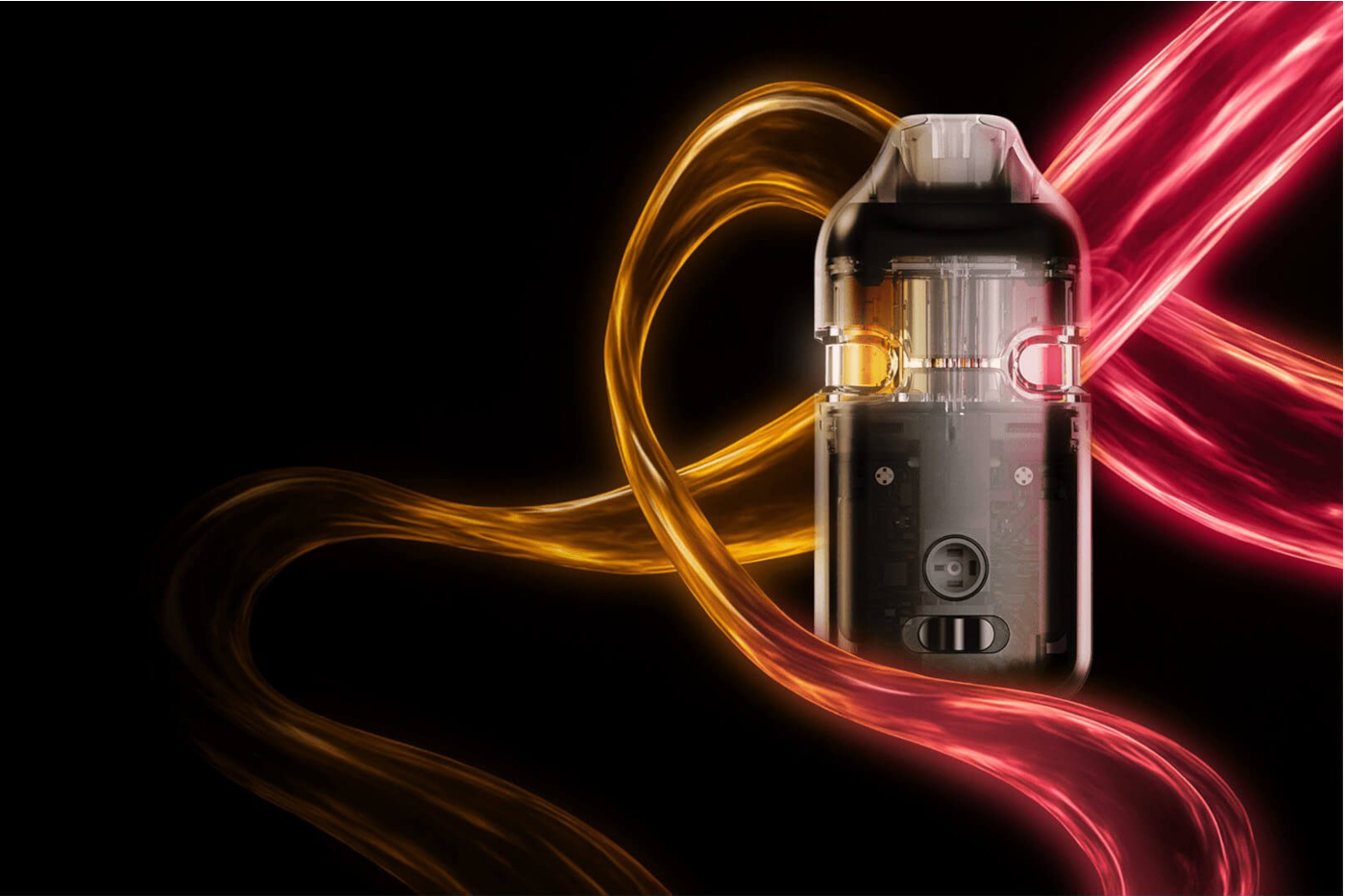
Greentank’s development framework begins with an unusual premise for a business-to-business organization: the consumer as the core stakeholder.
“We always start by thinking about a number of key drivers for consumers, including simple value and effortless confidence,” Gemmell said. “For example, when I pick up a device, I want it to be hassle-free and intuitive. No clogs, no leaks or burnt hits. I want it to deliver everything I need.”
Understanding consumer needs and desires starts with a simple truth: Cannabis is not the center of a consumer’s life. The plant is but a small moment within a larger whole.
“That’s why we look at the outside world,” Gemmell explained. “What’s going on in wearable tech and [artificial intelligence]? All of these things are really interesting, because they’re setting our expectations on how we interact with products and services within our lives. That’s the macro we are trying to understand — a sort of outside-in view toward the category.”
Greentank’s outside-in lens is paired with an inside-out view of the cannabis category. The company tracks regulatory shifts, retail dynamics, and adjacent markets like nicotine vaping, then unpacks not just what trends are happening, but also why.
“What’s happening in terms of regulations that will impact the industry or consumer? What’s happening in adjacent product categories like nicotine vaping? What’s happening in mainstream retail today?” Gemmell asked. “We look at all of that data and then get under the skin of it. What are the things that will make consumers stop and think about their purchase? And how can we intuitively answer the questions before they have to ask?”
What’s driving the next generation of vapes?
When Greentank distills its research, several core consumer drivers emerge. One of them is personalization. Increasingly, consumers want real-time control over their experience. They want the right effect, right now, personally tailored to their situation. As devices become more technologically sophisticated, expectations continue to rise.
“Greentank’s GT Fuse is a direct response to this shift,” Gemmell said. “Its dual-chamber architecture reflects a growing comfort with advanced functionality, which gives users the ability to switch experiences without sacrificing simplicity or performance.”
The team also identified entertainment and “play” as key drivers.
“Vapes are adult-focused, but they can’t be too serious or clinical,” Gemmell said. “Our job is to bring surprising, engaging technology to market while maintaining reliability.”
Understanding trade-offs, not just formats
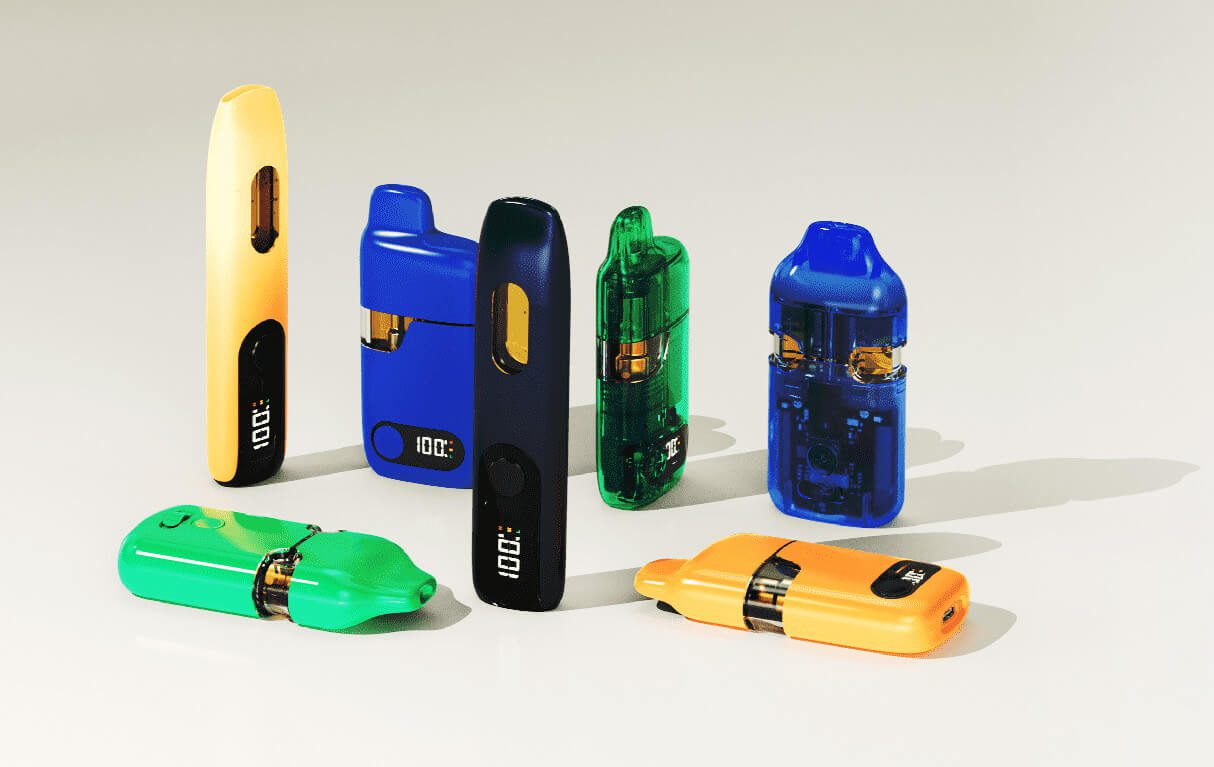
One of the clearest examples of Greentank’s consumer-first thinking can be seen in how the company evaluates product formats, particularly the rise of disposables and all-in-one devices.
From a surface view, reason for the category’s growth are obvious. Closed systems offer convenience, strong performance, approachable price points, and a ready-to-use experience that appeals to both light and occasional partakers.
But Greentank looks deeper.
“There’s a trade-off consumers start to feel,” Gemmell said. “There’s guilt when you throw away a piece of plastic and a battery. There’s also the cost equation when people realize how much oil they’re actually getting.”
The same logic applies to daily coffee purchases: individually inexpensive, but those small costs add up to a significant amount over time.
By examining both benefits and friction points, Greentank projects where consumer behavior may trend next as consumers balance cost, sustainability, and performance. The company has followed the data as technology evolves — from fully-open 510 systems to disposables and now moving in the direction of pod-based platforms.
Where authenticity meets convenience
At the heart of Gemmell’s philosophy is a tension he sees affecting the cannabis consumer: authenticity versus convenience.
On one end of the scale are consumers deeply connected to the plant, loyal to flower, and invested in ritual. On the other end are those prioritizing convenience through gummies, beverages, or discreet formats. Most consumers live somewhere in between.
“That middle ground is where we play,” Gemmell said. “A consumer can’t articulate, ‘Hey, what I want is a heater with no metals that’s not going to do this or that.’ But what I know is, they are looking for high-fidelity flavor and a consistent experience from start to finish. That was actually the fundamental driver behind the development of the Quantum ChipTM: something that really offers a response to consumer need.”
Want to see how Greentank’s consumer-first playbook translates into hardware? This short video introduces three of the company’s newest device designs.
Inside Greentank’s Quantum Chip
Quantum Chip is the company’s next-generation heating engine, already proven in nicotine applications and now adapted for cannabis. Unlike traditional ceramic heating elements, which dominate the cannabis market with a nearly 99-percent share, the Quantum Chip is built on a high-precision engineered substrate using biocompatible metals and no ceramic particles.
“Ceramic behaves like a sponge,” Gemmell said. “It absorbs liquid, undergoes extreme thermal cycling with each puff, and gradually deteriorates. Over time, that leads to clogging, inconsistent oil feeding, and degraded flavor.”
The Quantum Chip was designed to eliminate those issues. It minimizes thermal cycling, maintains stable temperature control, and preserves the integrity of the oil throughout the session. The result is consistent vaporization, authentic terpene expression, and a last hit that matches the first.
“It’s easy to refine what users can see,” Gemmell said. “But we’re refining what they can’t see, and that’s often what matters most.”
Live head-to-head testing between ceramic platforms and Quantum Chip technology has reinforced that belief. Across expert users and industry professionals, the response has been immediate and emphatic, Gemmell said: improved flavor, smoother delivery, and a noticeably elevated experience.
The next era of cannabis vaping

Greentank is deliberate about how and where it deploys Quantum Chip technology. Ceramic platforms have served the industry well, and the Greentank team is the first to acknowledge ceramic’s role in bringing cannabis vaping to scale.
But Gemmell sees innovation as a responsibility, not a milestone.
“Ceramic technology is technically good and safe and fine, but can we rest with ‘good?’” he asked. “Is ‘good’ always good enough? Can we rest with ‘safe’? Is ‘safe’ enough? As innovators, our job is to never relax.”
As Greentank integrates the Quantum Chip across select products and prepares for broader commercialization in 2026, the message to operators is clear: The next era of cannabis vaping will be defined by those who understand innovation is not about chasing trends. Instead, it depends on decoding what consumers cannot yet articulate and delivering experiences they didn’t know how to request.
“As the old Henry Ford quote goes, ‘If I asked people what they wanted, they would have told me they wanted a faster horse,’” Gemmell said. “It’s up to us to decode what the consumer is looking for.”

Greentank’s consumer-first hardware playbook: key questions answered
What does “consumer-first” actually mean in Greentank’s hardware playbook?
Greentank’s consumer-first hardware playbook starts at the moment of use — when someone actually picks up a device and takes a puff. The team looks at how the device feels in the hand, how intuitive it is to operate, whether it clogs or leaks, and how consistent the flavor is over time. From there, they work backward to formats, materials, and engineering decisions that deliver a better experience again and again, not just on the first hit.
How does Greentank use trends and data to design new vape devices?
Greentank looks at more than just cannabis hardware trends. The team tracks adjacent categories like nicotine vaping and consumer electronics, follows regulatory and retail shifts, and studies how people buy and use devices in the real world. Those signals inform everything from airflow and power curves to form factor, helping the company design hardware that feels current today and relevant to where the market is going next.
How does Greentank decide between formats like disposables, pods, and 510 cartridges?
Rather than picking a “winner,” Greentank evaluates the trade-offs behind each format: cost over time, environmental impact, retail dynamics, and how different consumers actually prefer to vape. That analysis has pushed the company toward pod-based and other closed systems in some cases, while still supporting 510 and disposable formats where they make sense for certain markets and use cases.
What is Quantum Chip, and how does it fit into this consumer-first approach?
Quantum Chip is Greentank’s next-generation heating platform, built on a precise, ceramic-free substrate using biocompatible metals. It came out of the same consumer-first playbook: the team wanted more consistent performance, better flavor fidelity, and fewer issues with clogging or burned hits. By managing heat more carefully and avoiding traditional ceramic elements, Quantum Chip is meant to give consumers a smoother, more reliable experience from the first draw to the last.
How is Quantum Chip different from traditional ceramic vape hardware?
Traditional ceramic heaters tend to absorb oil and go through extreme thermal cycling, which can contribute to clogging, inconsistent vapor production, and muted or scorched flavor over time. Quantum Chip is designed to minimize that thermal stress and keep temperatures in a tighter, more predictable range. The goal is to preserve the character of the oil — especially terpenes — while reducing common failure points that frustrate consumers.
What’s next for Greentank’s hardware roadmap?
Greentank plans to expand the use of its consumer-first playbook and Quantum Chip platform across a broader range of devices, from compact disposables to more advanced systems with real-time control. The roadmap focuses on giving brands flexible hardware options that still feel consistent to consumers, while continuing to push on reliability, flavor, and trust in what’s inside the device.