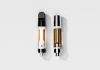

- As filling speeds rise, manual packaging becomes the throughput constraint.
- Point-solution machines help, but integrated lines reduce labor and handling more dramatically.
- Cleaner, more consistent finished carts align better with tightening expectations and GMP trends.
- Flexibility for testing and holds matters in state-by-state regulatory reality.
- Faster end-to-end completion can improve cash conversion and inventory turns.
For years, cannabis manufacturing innovation focused on a single pressure point: cartridge filling. Faster fills, higher throughput, better consistency. For a while, that was enough. Then, the bottleneck moved.
As filling speeds increased, a noticeable imbalance emerged downstream: Operators could fill tens of thousands of cartridges in a day, but packaging remained stubbornly manual. Large teams of employees still hand-loaded, bagged, sealed, and sorted products and still had trouble keeping up with automated filling machines’ pace. Not only did all that manual labor slow the process, but it also added significant expense. Any efficiency gained upstream was lost at the finish line.
This was the moment that led Xylem Technologies to rethink cannabis automation.
Why ‘one machine’ fixes rarely deliver full automation
Early attempts to solve the packaging bottleneck focused on individual machines — most notably, automated baggers. On paper, the systems reduced labor. But in practice, they rarely delivered full automation.
“Just because you can fill thousands of vapes a day doesn’t mean you can package all of them,” said founder Jeff Wu, who has been part of the cannabis manufacturing revolution for more than a decade. “So, while our equipment was helping out companies’ filling process, a number of our clients were still getting backlogged on the packaging process. They were running twenty- to thirty-man teams just to slam that product into a bag and seal it by hand. We needed a solution.”
It became clear to Wu that packaging could not be treated as an isolated step. Ideally, he realized, packaging had to be integrated into a complete production flow and designed with the same rigor as filling equipment.
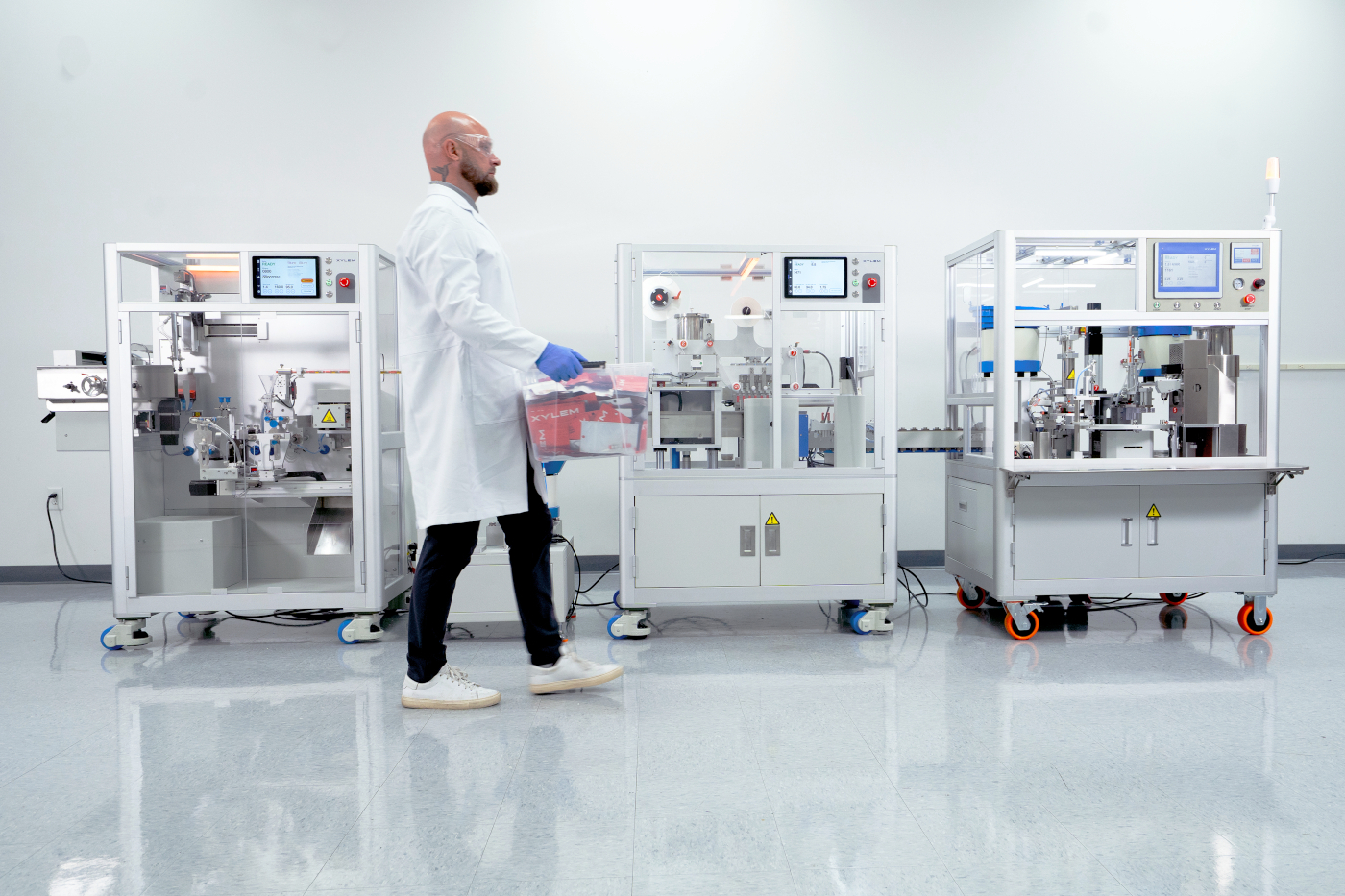
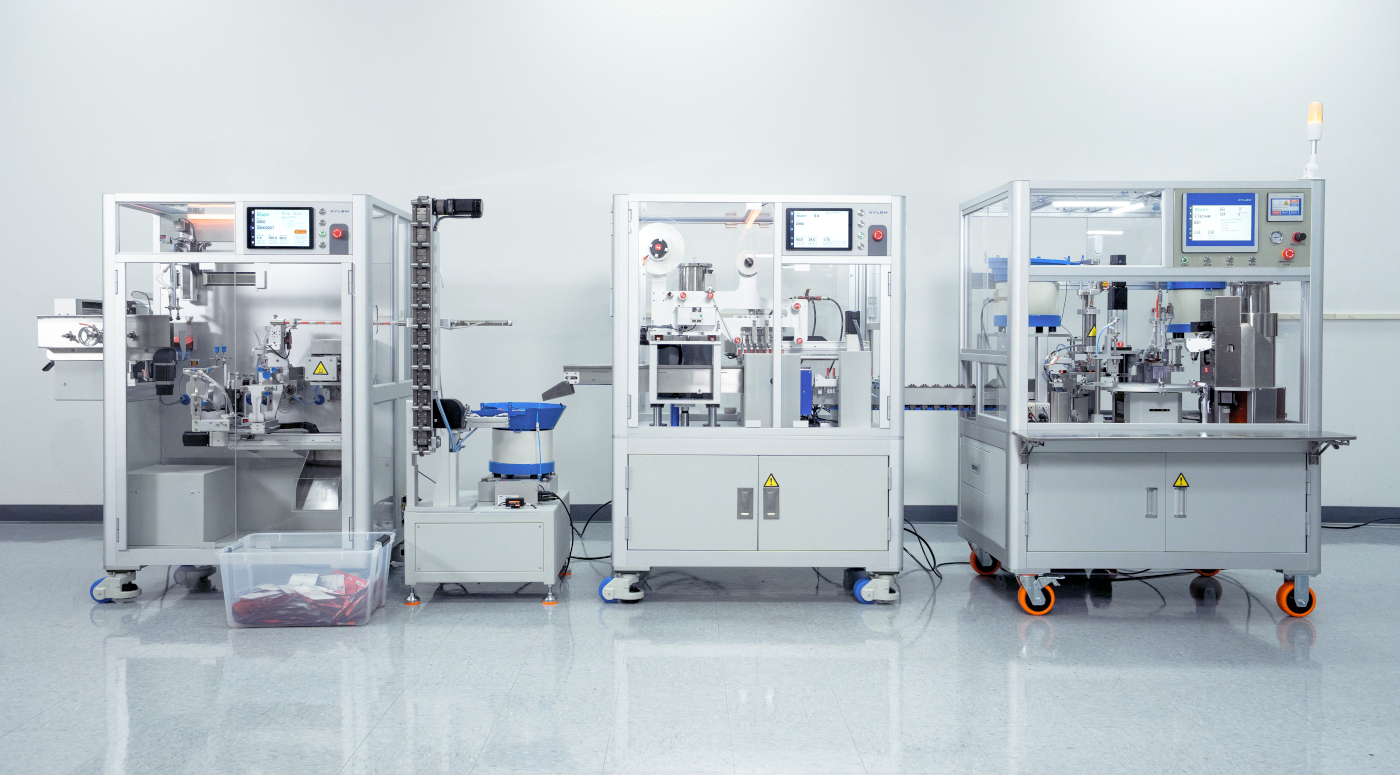
Xylem’s solution: the XCB automated vape manufacturing line — an end-to-end system designed to integrate sorting, filling, and capping with downstream cleaning and packaging. The XCB’s throughput is up to 1,600 packages per hour — about 12,800 packages in an eight-hour shift— helping packaging keep pace with high-throughput filling.
The line mentality: Optimize the system, not the station
Xylem’s XCB automated vape manufacturing line was built around a simple but radical idea for cannabis manufacturing: Treat vape production the way mature industries treat their manufacturing.
Automotive plants, consumer electronics facilities, and food-grade manufacturers don’t optimize single machines; they optimize systems. Tight quality controls, minimal human handling, predictable throughput, and clear oversight define modern production environments.
Xylem’s XCB line brings that same optimization to cannabis. Instead of stitching together disconnected equipment, XCB creates a unified process where cartridges enter at a single point and exit fully cleaned, packaged, and ready for distribution.
“A number of companies tried to do automated baggers, but they still weren’t autoloading,” Wu said. So, you’re essentially cutting only one person off the line if the rest of the process isn’t automated. With the XCB, you put the vape carts in, the bags in, and two and one-half to three people can run your entire production process from top to bottom.”
In many operations, maintaining comparable throughput means staffing a fifteen- to twenty-person packaging crew. The XCB reframes that model entirely, consolidating the process into a streamlined line run by just a few operators and replacing manpower with engineered flow.
Designed for cleaner output as expectations rise
As cannabis manufacturing matures and more operators adopt Good Manufacturing Practices (GMP), expectations for cleanliness, consistency, and presentation are rising fast. Operating procedures that once were acceptable in a forty-person hand-fill room no longer are tolerated by regulators or consumers. Fingerprints, residue, or debris on finished cartridges increasingly result in rejected product and returned inventory.
The XCB line is designed to operate squarely within the same manufacturing paradigm that underlies consumer electronics and food production. It’s focused on the future of cannabis.
Built for the realities of regulation
One of the biggest challenges in cannabis automation is regulatory complexity. State-by-state requirements for testing, quarantine, and release make many “end-to-end” solutions impractical in the real world. The XCB line was engineered with this reality in mind.
“With our system, the line can be broken up effectively if needed,” Wu said. “This means instead of filling, bagging, and cleaning all in one line, you effectively do filling and cleaning, and then your product goes into a bucket from which state regulators will sample to test. We built the system with that compliance in mind, so you can keep moving with minimal interruption.”
This flexibility reflects a deep understanding of cannabis operations, not just machinery. Automation that ignores regulatory nuance often creates more problems than it solves, while automation that anticipates complexity becomes an asset.
Speed changes cash flow, not just throughput
Perhaps the most strategic advantage of the XCB system is what shows up on the balance sheet.
“Using a tabletop system, 5,000 cartridges would take about a week to complete,” Wu said. “So, imagine you’re done, you box everything up on Friday. The invoice happens only after you finish the production run and send everything out the next Monday. But if you use a line system, those 5,000 carts are done by noon on Monday — not just filled, but also packaged. Now, you have four days and the weekend to collect that money, buy more inventory and make your next batch.”
Where tabletop systems might allow four inventory turns per month, efficient line-based operations can reach well over a dozen.
For manufacturers operating on margins of five to ten dollars per cartridge, the difference can be profound. The question stops being “What does it cost per fill?” and becomes “How fast can capital move through the business?”
At scale, speed compounds. Faster inventory turns mean faster reinvestment, higher monthly revenue, and greater resilience in competitive markets. Automation, in this context, becomes a financial strategy, not just an operational one.
A market growing up
Shifts in manufacturing practices are happening alongside a broader normalization of cannabis products.
Early markets prioritized availability. If a product could be made, it could be sold. Today, branding is more refined, quality expectations are higher, and the customer base is expanding beyond early adopters into more mainstream consumers with very different standards.
“As we continue to move away from forty to fifty people filling cartridges by hand in a room together, people won’t be okay with vapes that are sticky on the outside,” Wu said. “Even packaging and branding are maturing. You used to see those weird strain names that border on the offensive. Now, a lot of that heavy street-drug feel is dialed back to be a lot more ‘normal’ and wellness-focused.”
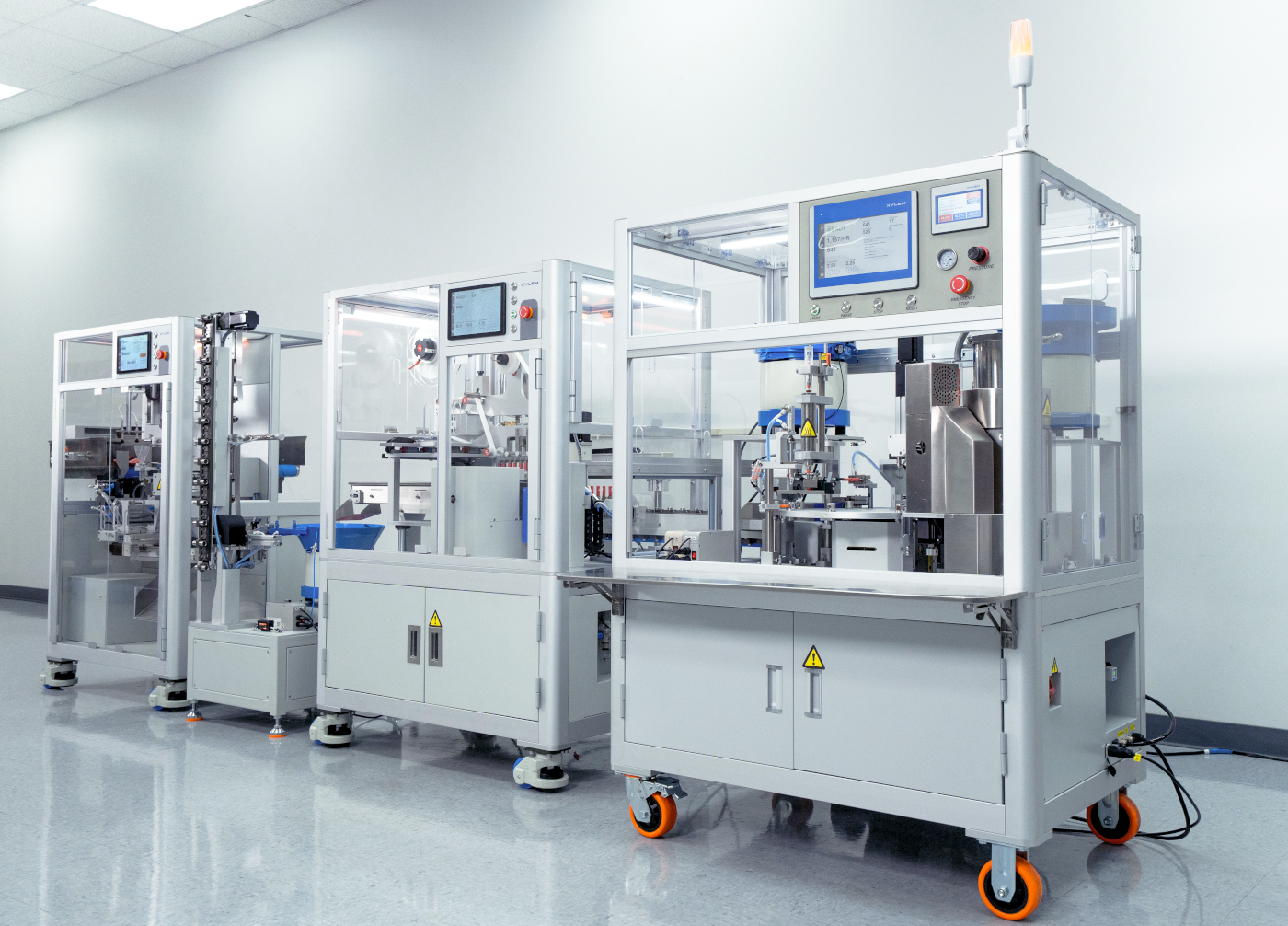
The XCB automated vape cart manufacturing line reflects this evolution. It supports the move away from crowded hand-fill rooms toward cleaner production environments where fewer people oversee smarter systems. XCB aligns cannabis manufacturing with the practices of established consumer industries, where reliability and repeatability matter as much as output.
What’s next: vision systems and fewer manual touchpoints
In 2026, Xylem expects to debut AI-driven vision systems — technologies that further reduce reliance on jigs and manual adjustment, leaving even less room for human error. The move will push automation deeper into precision tasks that once required skilled human hands.
For now, the XCB line stands as a practical embodiment of where the industry is today. Cannabis manufacturing is no longer about doing more by hand. It’s about building systems that scale, comply, and move at the speed of modern business.
For manufacturing, that increasingly means thinking in end-to-end processes, not single machines.
Learn more about the XCB automated vape manufacturing line at xylemtech.com
Packaging automation: key questions manufacturers ask
What is vape packaging automation in cannabis manufacturing?
It’s the use of integrated machinery to handle steps like loading, cleaning, bagging/sealing, and staging finished carts with minimal manual handling.
Why does packaging become a bottleneck after filling is automated?
High-speed filling can outpace manual labor downstream, creating backlogs that erode throughput gains and increase labor costs.
How does an integrated line differ from an automated bagger?
A bagger automates one step; an integrated line is designed around end-to-end flow so upstream speed isn’t lost to manual staging, loading, or handling.
How can packaging automation support GMP-aligned operations?
By reducing human touchpoints, improving consistency, and helping keep finished units cleaner and more uniform.
How do state testing and quarantine rules affect automation lines?
Systems may need breakpoints for sampling and holds; flexible line design can help operations comply without fully stopping throughput.