






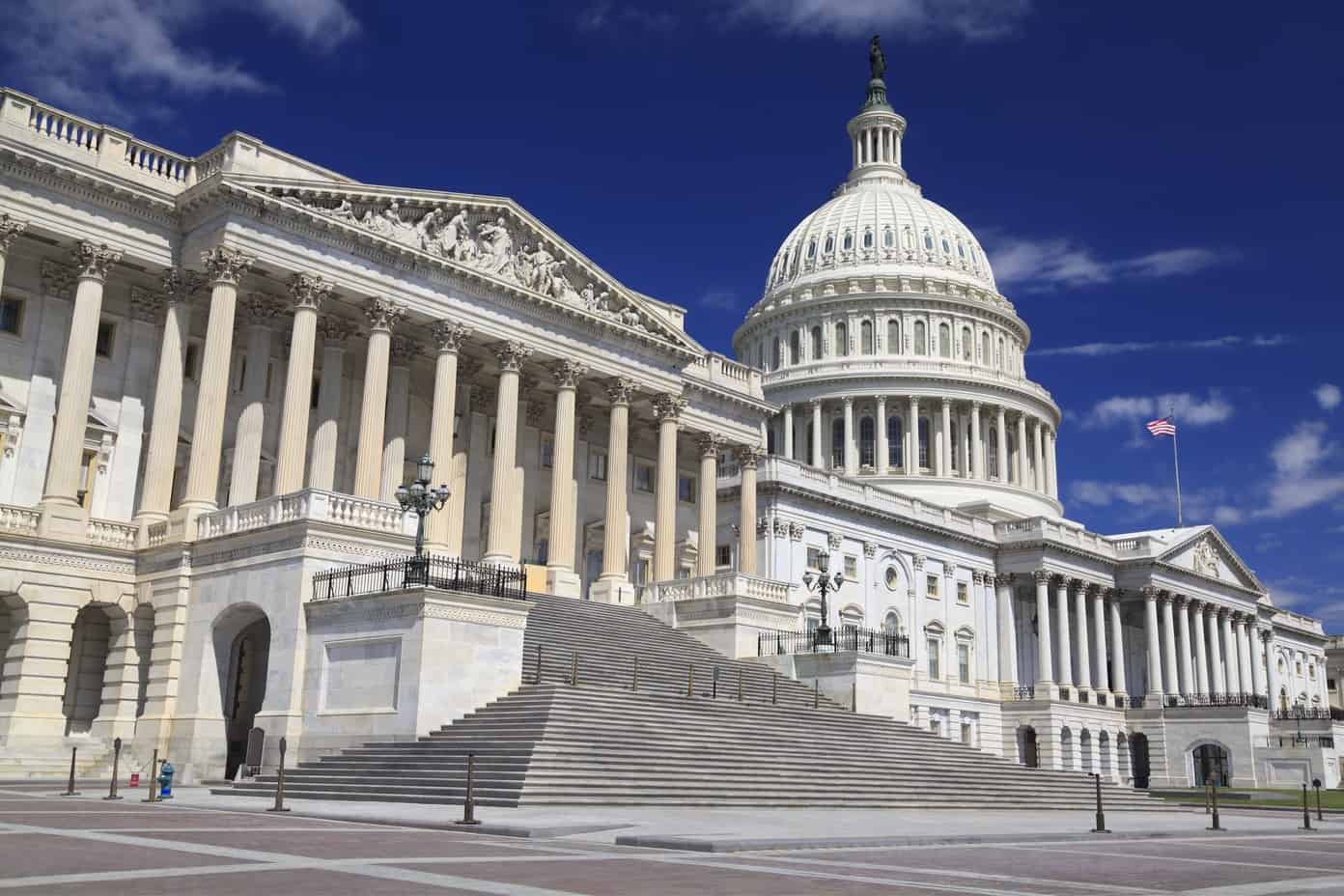
WASHINGTON – The House Appropriations Committee voted to strip rescheduling authority from the Trump administration and open the door to new Drug Enforcement Administration (DEA) crackdowns on state medical cannabis programs. Both provisions are included in the fiscal year 2026 Commerce-Justice-Science (CJS) appropriations bill that passed out of committee and now awaits a vote on the House floor.
The timing came less than a month after President Donald Trump publicly acknowledged the complexity of cannabis policy while signaling his openness to rescheduling. On August 11, responding to a reporter’s question about whether he planned to move forward — and turning to DEA Administrator Cole and Attorney General Bondi for affirmation — Trump said, “…[W]e’re looking at reclassification. And we’ll make a determination over the next — I would say over the next few weeks. And that determination hopefully will be the right one. Very complicated subject, the subject of marijuana. I’ve heard great things having to do with medical, and I’ve heard bad things having to do with just about everything else. But medical and, you know, for pain and various things. I’ve heard some pretty good things. But for other things, I’ve heard some pretty bad things.”

While the President cannot unilaterally reschedule cannabis, a November 4, 2021, Congressional Research Service analysis confirmed the Controlled Substances Act (CSA) assigns scheduling decisions to the Attorney General (delegated to DEA), with scientific input from the Department of Health and Human Services (HHS) and the Food and Drug Administration — not the president. The Supreme Court has held a president may issue an executive order only if authorized by statute or the Constitution.
The only role a president may play is directing agencies to use the CSA process. HHS has recommended rescheduling, and DEA’s review has been paused since January while new administrator Terry Cole familiarizes himself with the issues.
House Republicans are now attempting to choke off that very process. Section 607 of the CJS bill would bar the use of federal funds to reschedule or deschedule cannabis, halting the DEA’s ongoing review midstream. Section 529(b) would rewrite the long-standing Medical Cannabis Amendment (529(a)), also called the Rohrabacher-Blumenauer Amendment, which since 2014 has barred the Department of Justice (DOJ) from interfering with state medical cannabis programs. Invoking the federal “Drug Free Zones” law (21 U.S.C. 860) would give the DOJ and DEA new authority to prosecute cannabis activity within 1,000 feet of public housing, universities, schools, and even video arcades — zones that encompass many licensed medical cannabis businesses.
“It seems House Republicans are out of touch — even with President Trump when it comes to medical cannabis,” said Steph Sherer, founder of Americans for Safe Access. “The Administration is moving forward with rescheduling through the established federal process, while these appropriations riders would roll back patient protections and stop progress. These riders are a green light for the DEA to raid state medical cannabis programs. It’s the Project 2025 playbook in action — federal agencies sent in to override voters and legislatures, this time targeting patients and providers.”
For more than a decade, Congress has renewed the Medical Cannabis Amendment with bipartisan support, recognizing the importance of protecting patients in the forty states and Washington, D.C., with medical cannabis programs. The proposed changes in the fiscal year 2026 CJS bill would mark a dramatic reversal, undermining both patient access and the administration’s ability to complete its rescheduling review.
Key Questions About Cannabis Rescheduling and the House Appropriations Bill
Can the president reschedule cannabis?
No. Under the Controlled Substances Act, only the Attorney General (delegated to the DEA), with scientific input from HHS and FDA, can reschedule cannabis. The president may direct agencies to act but cannot unilaterally change scheduling.
What is the Medical Cannabis Amendment?
Also known as the Rohrabacher-Blumenauer Amendment, this rider has protected state medical cannabis programs since 2014 by preventing the DOJ from spending funds to interfere with compliant operators.
What would Section 607 of the CJS bill do?
Section 607 would bar federal funds from being used to reschedule or deschedule cannabis, effectively halting the DEA’s ongoing review process.
How would Section 529(b) affect medical cannabis programs?
Section 529(b) rewrites existing protections to allow DOJ and DEA enforcement within 1,000 feet of schools, universities, public housing, and other zones — areas that include many licensed medical cannabis businesses.
Why does the House vote matter for cannabis patients?
If passed, the fiscal year 2026 appropriations bill would weaken long-standing patient protections and expand DEA enforcement authority, threatening access for millions in legal medical programs.
Related Articles: