






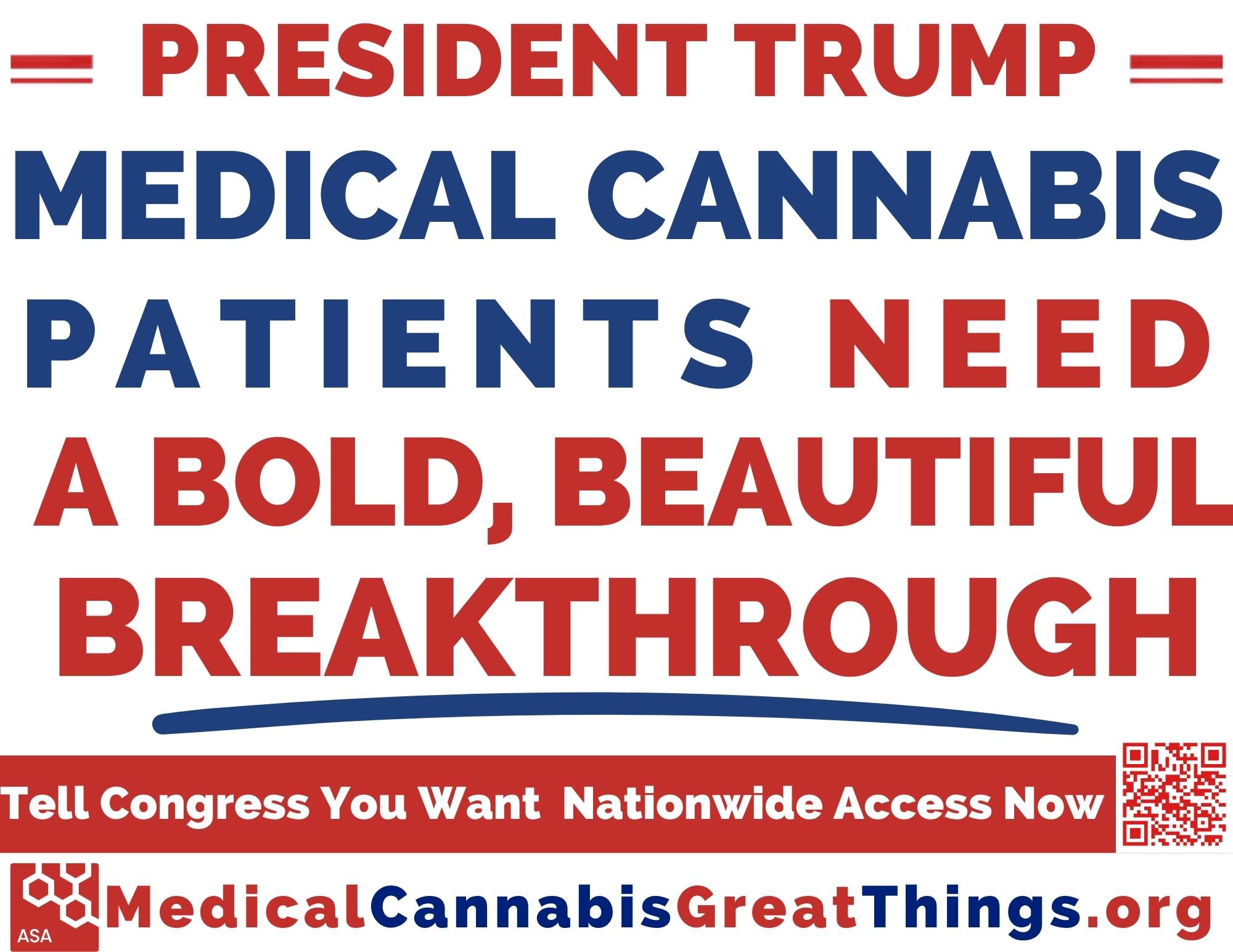
WASHINGTON — On August 11, 2025, President Donald Trump told reporters, “I’ve heard great things having to do with medical [cannabis]… for pain and various things. I’ve heard some pretty good things.”
He’s right—patients across America do have great things to say. So do their doctors and communities. But while millions rely on cannabis for their health, federal law still treats them like criminals, and the future of medical cannabis remains uncertain.

Nearly 3 in 10 chronic pain patients use cannabis to manage pain and improve daily function—often reducing or replacing opioids. More than 68 million Americans live with chronic pain.
Over 40% of people with cancer report cannabis use to ease sleep, mood, stress, anxiety, depression, and pain.
Nearly 1 in 5 older adults use cannabis, especially for chronic pain, arthritis, sleep, and appetite. At 57.8 million strong, the 65+ population is the fastest-growing group of medical cannabis patients (U.S. Census, 2023).
22% of U.S. veterans—more than 3 million people—use cannabis for PTSD, pain, and sleep. With nearly a third living with a disability, the need is urgent.
Public health data show that when a county opens its first dispensary, opioid death rates fall. After ten years, opioid deaths are 30% lower than in counties without dispensaries (Washington Post, Julien Berman).“These numbers tell a story the President needs to hear,” said Americans for Safe Access (ASA) founder Steph Sherer. “Medical cannabis is not just a policy debate—it’s a matter of survival, dignity, and health for millions of Americans.”
In response, ASA launched the “Great Things” campaign to flood social feeds, news outlets, and congressional offices with patient and professional stories that highlight the essential role of medical cannabis and the urgent need for federal protections. The campaign launched with an Opinion Piece in The Hill by Sherer: “A bold, beautiful strategy for Trump’s medical marijuana policy.”
About the Action
The campaign encourages patients, caregivers, veterans, healthcare professionals, and advocates across the country to post their stories under the hashtag #GreatThingsMedicalCannabis. Participants will tag members of Congress and share graphics, videos, and testimony showing how cannabis has improved their health and quality of life. The action is designed to ensure patients are included in the narrative while the President and Congress consider cannabis scheduling and protections in budget bills in the coming weeks, ensuring the conversation is led by the people who made the moment possible: patients.
Patients Made This Moment
Over the last few decades ASA and ts members created the legal frameworks for state medical programs, developed the product safety protocols that underpin today’s testing standards, pressed the WHO and UN to acknowledge cannabis’ medical value, leading to modernized scheduling, and secured DOJ appropriations protections year after year—the only guardrail shielding patients, providers, and professionals from federal prosecution.
HHS’s recent recognition that cannabis has “currently accepted medical use” is the only reason we are talking about rescheduling.
Earlier this year, when the White House moved to undercut federal protection for medical cannabis programs, ASA convened national patient organizations and pushed Congress to restore them.
What Can Trump Do?
While the President cannot simply “legalize or deschedule” cannabis by executive order (CRS Report, 2021), there are concrete steps he can take now.
Finish Rescheduling. Direct DEA Administrator Cole to adopt HHS’s Schedule III recommendation through a final rule or promptly resolve pending ALJ issues and move to a determination.
Prevent Congressional Kneecapping. Urge appropriators to remove Section 607 from the CJS appropriations bill while maintaining protections for state medical programs.
Create Infrastructure. Establish an Office of Medical Cannabis & Cannabinoid Control (OMC) at HHS to oversee cannabis as medicine.
Protect Patients. End evictions of medical cannabis patients in federal housing, allow VA doctors to recommend cannabis, and end cannabis drug testing for federal employees.
Build a Real Medical Pathway. Urge Congress to pass bipartisan legislation creating a dedicated cannabis schedule (Schedule VI) under OMC oversight, aligned with treaty obligations.“This is how the President can support patients, protect science, and position U.S. manufacturers to compete globally,” Sherer added. “Medical cannabis policy is ‘very complicated,’ but it is also ripe for a bold, disruptive breakthrough.”
About ASA
Founded in 2002, Americans for Safe Access is a nonprofit representing medical cannabis patients, doctors, and researchers. ASA works to ensure safe and legal access to cannabis for therapeutic use and research and has been at the forefront of nearly every significant advancement in medical cannabis policy for more than two decades.
Related Articles: