






Since its founding in 1968, Huber has been at the forefront of environmentally responsible temperature control technology. The company began using natural refrigerants in 1976, long before sustainability became a global imperative. Now, as regulations begin to phase out synthetic refrigerants and businesses look to future-proof their investments, Huber’s natural solutions are more relevant than ever.
“We’ve spearheaded natural refrigerants since the beginning, and now it’s coming back around,” said Rick Sanders, sales manager for the company’s botanical extraction division. “For most of our history, we’ve offered natural refrigerant options. In the 1990s and 2000s synthetics became more prevalent, but with new European Union directives and ripple effects in the United States and Canada, it’s clear natural refrigerants are the future. We’re here to make sure our customers’ technology investments are protected as synthetics are phased out and become more expensive.”
Natural refrigerants are becoming the new global standard
According to Sanders, natural refrigerants like CO₂ and propane not only provide long-term stability but also deliver unmatched sustainability benefits. Unlike synthetic alternatives, which tend to have a high global warming potential (GWP), natural refrigerants can achieve a GWP of near zero.
“This really helps ensure people who are sustainability-focused can implement [a change] with a good conscience,” Sanders said.
Companies may not have long to shift from synthetic to natural refrigerants. Michigan already has adopted regulations modeled on environmentally responsible policies adopted by the California Air Resources Board (CARB). Canada also has adopted forward-thinking environmental policies. These regions are driving both awareness and adoption in the cannabis space.
Why extraction labs are moving away from synthetics
“There’s a lot of push for education but, oddly enough, it’s actually coming from customers themselves, especially if they’re in regions where CARB requirements are starting to roll out,” Sanders said. “We’re just trying to stay as upfront and transparent as possible, but it’s becoming a much easier conversation to have because people are in the know, and a lot more people today are receptive to the concept.”
For cannabis operators, the choice of refrigerant has practical as well as environmental implications. Natural refrigerants are not only more sustainable but also more cost-stable, reducing risk in a market where volatility already presents a daily economic challenge.
Sustainable solutions without performance compromise
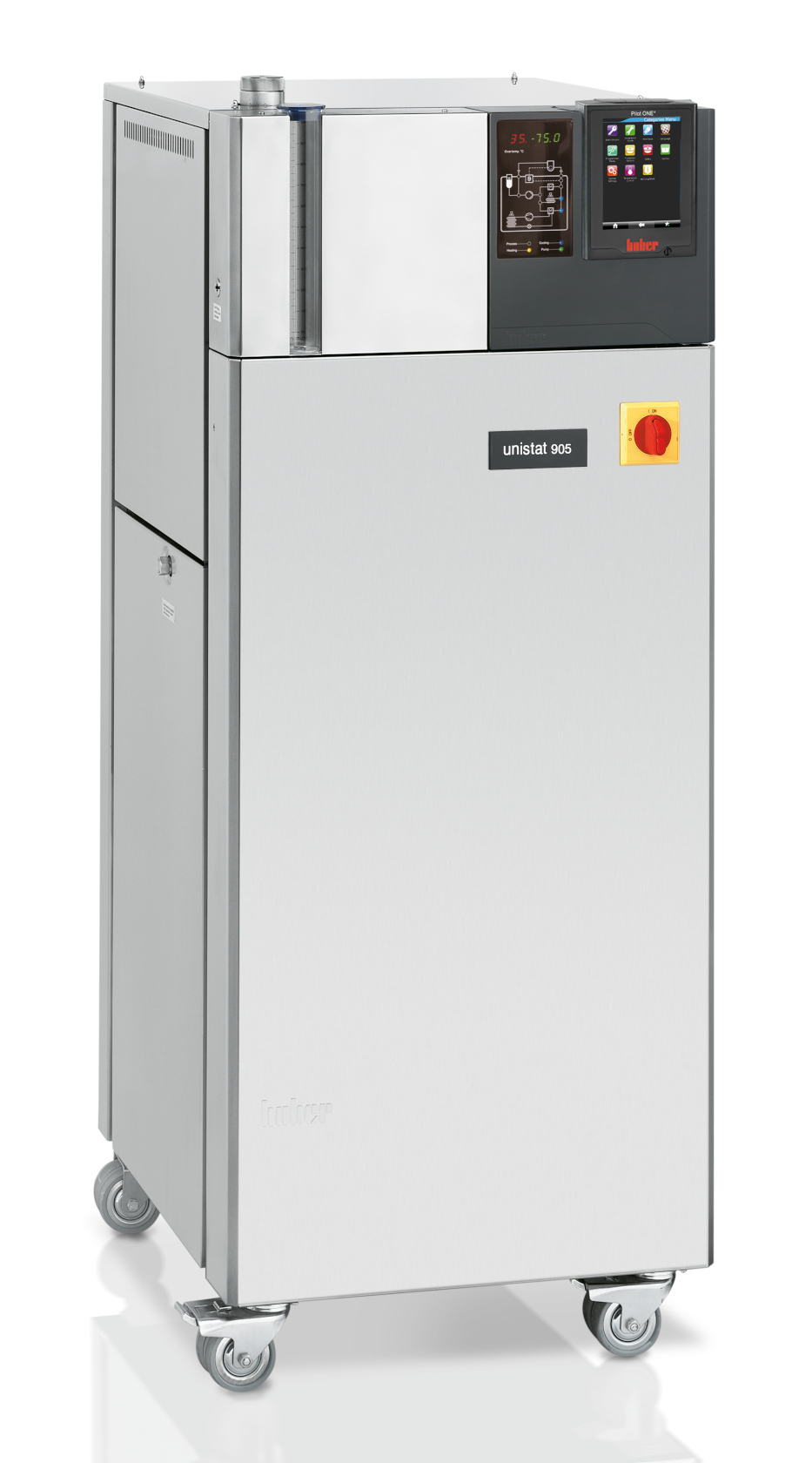
Huber’s temperature-control innovations are designed to meet the evolving needs of extraction and refinement facilities of all sizes. Smaller Huber units have used natural refrigerants for years and, as of January 1, 2025, so do the company’s large-capacity systems that serve both cannabis and adjacent industries like life sciences and automotive.
Beyond mere technology, Huber engages the professional community in ways that spark conversation and collaboration. At the industry trade show MJBizCon, the company annually hosts a collaborative pavilion that draws together manufacturers, extraction specialists, and innovators under one roof.
“MJBizCon is a celebration of our partners,” Sanders said. “We’re an ancillary company, and we have a wonderful relationship with our partners that we want to highlight. Our space at the show allows everyone to come together, flourish under one banner, and grow. That’s been a focal point for us.”
Preparing operators for 2026 and beyond
Looking ahead to 2026 and beyond, Sanders is confident Huber’s natural-refrigerants advocacy will continue to shape the future of cannabis extraction.
“Anywhere temperature control is needed, we have a fit,” he said. “And with natural refrigerants, we’re providing solutions that are not just reliable, but sustainable for generations to come.”
The science behind the switch to natural refrigerants
Why are synthetic refrigerants being phased out in extraction labs?
Synthetic refrigerants — especially hydrofluorocarbons (HFCs) — have extremely high global warming potential (GWP). Many remain in the atmosphere for decades or centuries, making them major contributors to climate change. International agreements such as the Kigali Amendment, along with regional policies from the California Air Resources Board (CARB) and Environment and Climate Change Canada, mandate steep reductions in HFC production and use. As a result, extraction labs risk future non-compliance, rising costs, and limited availability if they continue relying on synthetic refrigerants.
What are the benefits of natural refrigerants like CO₂ and propane?
Natural refrigerants have exceptionally low or near-zero GWP and don’t produce the persistent atmospheric impacts associated with synthetics. Their thermodynamic properties — high energy efficiency, rapid heat-transfer capability, and stable performance across wide temperature ranges — make them ideal for precise extraction and refinement steps. Because they occur naturally and aren’t subject to phase-down restrictions, they also offer long-term supply stability and predictable operating costs.
How do CARB and Michigan regulations affect cannabis extraction facilities?
CARB’s refrigerant regulations set strict GWP limits for new equipment, effectively eliminating many high-GWP synthetics. Michigan adopted similar policies, accelerating the shift in the Midwest. Extraction facilities operating in or distributing equipment to these regions must meet the new refrigerant thresholds for both installation and ongoing service. Even labs outside these jurisdictions are affected indirectly: As manufacturers retool for low-GWP compliance, synthetic refrigerant systems will become scarcer, more expensive, and more difficult to service nationwide.
Are natural refrigerants more cost-effective for long-term lab operations?
Yes. Although system upgrades may require upfront investment, natural refrigerants provide long-term savings through higher energy efficiency and significantly lower regulatory risk. As synthetic refrigerants are phased down, their prices — and the cost of servicing systems that use them — continue to rise. Natural refrigerants, by contrast, are abundant, inexpensive, and stable in supply. Over the lifespan of extraction equipment, these factors typically result in lower total cost of ownership and fewer operational disruptions.