



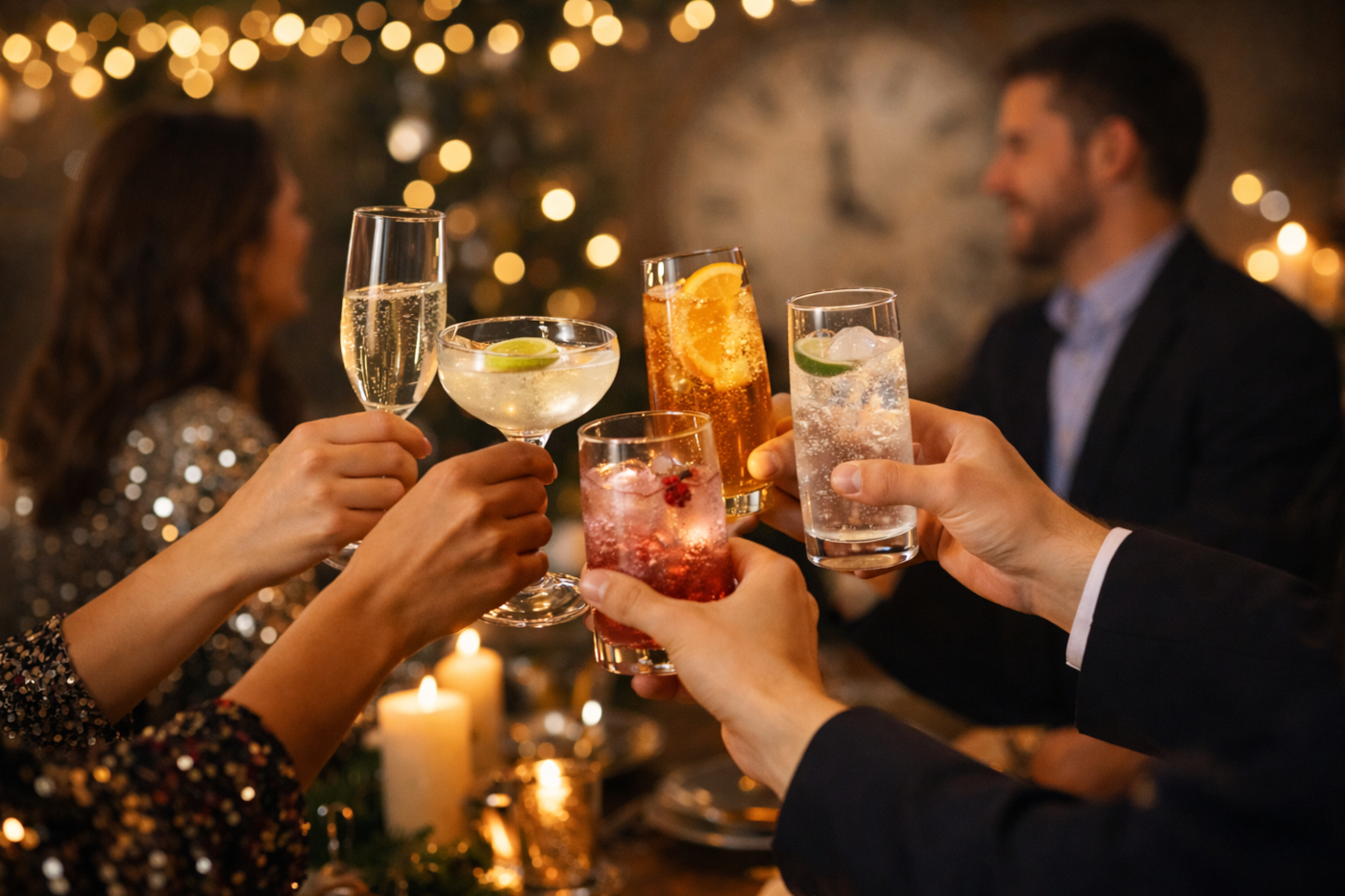
Something subtle but seismic is happening at the bar cart. Younger consumers are still going out, dressing up, and chasing that New Year’s sparkle — but increasingly, they’re skipping the booze. Instead of champagne flutes and cocktail shakers, low-dose THC spritzers and cannabis-infused seltzers are taking center stage, signaling a cultural shift retailers can no longer afford to ignore.
Time data shows the share of adults younger than 35 who drink alcohol dropped from 72 percent in the early 2000s to about 62 percent now. Gen Z, in particular, is drinking roughly 20 percent less alcohol per capita than millennials did at the same age and spending far less on booze overall.

For cannabis retailers and brands, that shift is a once-in-a-decade opportunity. Celebrating and socializing historically have belonged to champagne, spirits, and late-night bar tabs. Today, traditional beverages frequently are supplanted by low-dose THC spritzers, hemp seltzers, and other “sober curious” options that nevertheless feel elevated, social, and fun.
The question for retailers is how to catch the wave.
The sober-curious New Year celebration
“For us, drinks hit the most during periods like Dry July or Sober October, where people are purposefully avoiding alcohol entirely,” said Flip Croft-Caderao, founder of infused beverage brand Cali Sober. “Thanksgiving and Christmas are big bumps for us too, but I think New Year’s and St. Paddy’s Day are the last holidays that are really built for drinking. Still, we’re seeing so many more people be sober-curious or totally sober from alcohol. This is my third New Year’s where I haven’t had a drink, and a lot of people are joining the movement.”
What’s striking, Croft-Caderao added, is that many of those moving into cannabis beverages don’t have a dramatic rock-bottom story. They just choose to abstain.
“I meet a lot of sober-curious people, and a lot of them don’t have these huge stories of transformation,” Croft-Caderao said. “They’re more paying attention to the key factors and side-effects negatively impacting them: weight gain, hangovers, physical and mental health. Alcohol makes a lot of people feel more anxious or depressed, so they’re turning to cannabis or mushrooms instead.”
That mindset aligns with broader national trends. Nearly one in two Americans now say they’re trying to drink less. Public health researchers point to the “sober curious” movement and rituals like Dry January and Sober October as catalysts that helped push drinking rates among Americans to their lowest levels in decades.
At the same time, the culture around how people socialize is evolving. Morning “wellness raves” like Daybreaker combine yoga, DJ sets, and meditation in alcohol-free settings. Coffee shops are doubling as cocktail bars, serving $10–15 espresso mocktails with nightclub aesthetics and zero hangovers. Daytime, caffeine-fueled “daylife” events are emerging as a global trend: electronic dance music in the front, green juice in the back.
“Culture is the hardest thing to overcome. Alcohol is so ingrained in everything we do,” Croft-Caderao said. “And booze itself is a gnarly drug, and a hard one to quit. It’s having to get over the fact that your friends are like, ‘What’s wrong with you? Why aren’t you drinking?’ However, as we get older, I’m realizing younger generations are a lot more open to the idea of people not drinking, so those conversations are a lot easier to navigate.”
For retailers, this change isn’t just a vibe shift. It’s a purchasing shift.
What cannabis drink data says
On the ground, cannabis beverages are still a small but meaningful slice of dispensary revenue, but they’re growing in power.
“We’ve had a lot of success working with cannabis beverage companies, because they have a stronger blueprint coming from alcohol and other distribution data sources to enhance their sales,” said Vibhav Gupta of CannMenus, which tracks real-time dispensary menu data. “Around the holidays, you see an uptick in beverage sales, especially recently.”
Within those fluctuating sales figures, one pattern is clear: “In dispensaries, the sales are very much concentrated to the 100mg segment,” Gupta said. “High-dose dominates most of states’ dispensary sales.”
During the holidays, lower-dose brands take more of a front seat, but high-dose products still tend to rule the day.
Gen Z and millennials: party-ready, not plastered
“Consumers, especially Gen Z and millennials, are definitely the trending demographic that are most likely to substitute alcohol for cannabis drinks,” said Chase Dawson, digital marketing director at Mango Cannabis. “These younger generations were already drinking less than the older generations were at their age, but the legalization of cannabis and the diversity of products coming into the market really ushered in the age of cannabis drinks.”
The value proposition is simple and powerful: same social signal, less collateral damage.
“This is great news for cannabis retailers, because these consumers love the ‘party-ready’ feeling they get without the nasty hangover in the morning,” Dawson said. “They also don’t have the same detrimental long-term effects on the liver like alcohol, which is technically a toxin, can.”
For retailers, that means marketing aimed at younger consumers should focus less on “drinks versus joints” and more on “how do you want to feel when you party?” Calm, social, present, and functional the next morning make a compelling sales story.
Education is the secret weapon
If there’s one non-negotiable for beverage success, it’s education.
“The best tip for anyone getting into cannabis drinks, just like any edible, is to start at a low dose,” Dawson said. “This is a little harder to do with a drink than typical edibles, where dosing is typically based on how much you’ve eaten. So, just sip steady and monitor how your body’s feeling.”
That simple “sip steady” mantra works on display cards as well as in staff talking points, email campaigns, and social content. Retailers should be crystal-clear about:
- Onset times compared to edibles.
- Differences between cannabis-derived THC, CBD, and hemp-derived beverages.
- The differences in safe serving sizes for newcomers and experienced consumers.
- How to substitute a cannabis drink for a glass of wine or cocktail in a 1:1 ritual
The goal is not to scare people; it’s to help them feel in control of their experience. Celebrations can be emotionally loaded, and consumers want to feel a little care and comfort with their euphoria.
How retailers can win
So, what does all of this mean for operators? Here are a few tips for success with infused beverages.
Build a dedicated beverage moment
Create a small but focused “bar” in-store with cans, mixers, and plenty of low-dose options. Pair them visually with glassware, mocktail recipes, and party accessories.
Lead with low-dose and sessionable
Keep high-dose beverages in the mix for experienced customers, but build your storytelling around sessionable, 2–5mg products that feel familiar to social drinkers and sober-curious newcomers.
Explicitly tie into sober-curious culture
Use language that nods to Dry January, hangover-free mornings, and wellness-forward celebrations. Consumers are already there; you’re simply giving them the tools they need.
Leverage data to time promotions
Build promotions and inventory planning around Thanksgiving, Christmas, New Year’s Eve, and even St. Patrick’s Day, where alcohol historically has dominated. Now’s the chance to change that narrative.
Train your team to have “How do you want to feel?” conversations
Encourage staff to ask about desired mood and setting, then recommend beverages (and other formats) accordingly. You’re not just selling a drink; you’re architecting an evening.
With the popularity of infused beverages rising, the future of celebration is looking a lot less boozy and a lot more plant-based. Retailers who understand that shift won’t just sell more beverages. They’ll cement their place in the next evolution celebratory gatherings.
Cannabis drinks vs. alcohol: what retailers should know
Are cannabis drinks replacing alcohol for younger consumers?
Not entirely, but Gen Z and millennials are drinking less alcohol and increasingly choosing low-dose THC beverages for social occasions, especially holidays.
Why are cannabis drinks popular during New Year’s?
They offer a celebratory, social experience without hangovers, next-day fatigue, or alcohol’s long-term health effects.
What THC dosage works best for new cannabis drink customers?
Low-dose options (2–5mg THC) are best for newcomers, offering sessionable effects similar to a glass of wine or cocktail.
How should retailers educate customers about cannabis beverages?
Staff should explain onset times, dosing, and how to “sip steady,” helping customers feel in control of their experience.
When do cannabis beverage sales peak?
Sales often spike around Thanksgiving, Christmas, New Year’s Eve, and other alcohol-heavy holidays like St. Patrick’s Day.
Related Articles: