






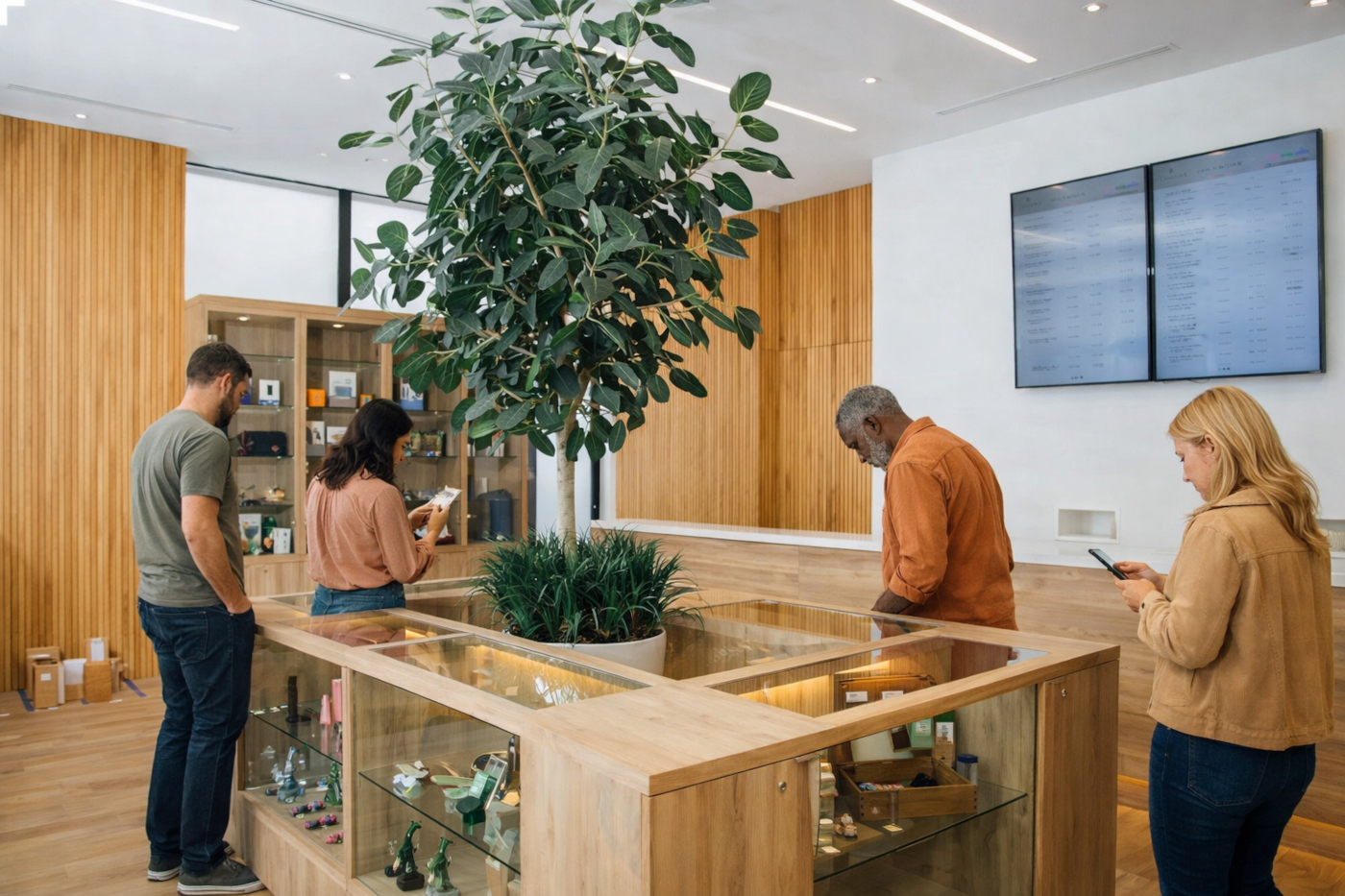
I’ve spent my entire career in fast-paced, customer-facing industries, but nothing prepared me for what I saw when I first stepped into cannabis retail: the hesitation, the uncertainty. The quiet fear on the faces of people walking into a dispensary for the first time.
Even in Arizona, one of the most stable adult-use markets in the country, I still watch customers pause before crossing the threshold. They look around for cues. They whisper questions they worry might sound “dumb.” They apologize for not knowing the difference between concentrates and cartridges.

And every time, I’m reminded of one uncomfortable truth our industry needs to own: Cannabis is failing first-time customers, and it’s time to fix that.
Cannabis retail’s real disruption isn’t product innovation
Many leaders talk about product innovation, solventless breakthroughs, automation, or AI-driven efficiencies as cannabis’s next major disruption. But the real disruption isn’t happening in labs or the back-of-house systems.
The next major disruption in cannabis will be the consumer experience. Not the one we assume we’re delivering. The one customers actually feel the moment they step inside. Retailers who fail to elevate that experience will fall behind.
Coming from Starbucks, a mainstream retail chain, I was accustomed to customers walking in confidently, already understanding the process. Cannabis is drastically different.
Even the most curious customers carry the weight of stigma. They worry their ID might be misused. They brace for a space that might feel clinical or intimidating. They’re overwhelmed by categories and options.
And who can blame them? We built the industry faster than we built the educational foundation to support it.
If we want this industry to thrive, we must design environments that normalize cannabis instead of mystifying it. That responsibility falls on us, not customers.
Why discounts can’t replace trust in dispensary retail
Inflation, layoffs, and economic pressure have reshaped how people evaluate value. But “value” is no longer limited to price. Value also resides in being welcomed instead of judged, educated instead of talked over, feeling safe, feeling understood, and feeling confident enough to return.
Customers tell us this through post-transaction surveys and everyday conversations. We just need to listen. Discount-driven strategies may create temporary revenue spikes, but experience-driven strategies build trust, and trust is the true long-term differentiator in a maturing market.
Hardware will evolve. Packaging will change. New product categories will emerge. But without a strong customer experience foundation, innovation becomes noise instead of progress. I’ve seen the impact of simplifying information, improving signage, training teams to ask discovery questions, and creating retail environments that feel more like wellness spaces and less like transactional counters. These aren’t operational “extras”; they’re the new baseline. If a customer enters overwhelmed or intimidated, the industry has already lost the opportunity to build trust.
Arizona is often called a “mature” market, but maturity isn’t a finish line. It’s a mindset. License pacing, diverse product offerings, and welcoming store designs helped set the foundation. But what truly drives stability here is something deeper: a commitment to meeting customers where they are, not where we assume they should be.
That is the lesson emerging markets already are watching closely.
How emerging markets can avoid early retail mistakes
States preparing for adult use can bypass years of trial and error if they prioritize consumer experience early through education, transparency, thoughtful onboarding, and store environments designed to reduce intimidation. “Markets entering adult use can learn from the way Arizona paced itself,” I often tell colleagues. “Maturity does not mean slowing down. It means refining. Anticipating. Building with intention.”
The next era of cannabis will not be won by the biggest menu or the flashiest product innovation.
It will be won by the retailers who reduce confusion, remove intimidation, share knowledge, train teams intentionally, communicate transparently, and build trust at every single step.
This comes down to leadership. “Sustainable leadership is about clarity,” I tell my teams. “It’s communication. It’s giving people the confidence to take calculated risks.” When teams understand what they’re doing and why, customers instantly feel it.
Why leadership — not layout alone — defines great cannabis retail
If I could share one message with operators in emerging markets, it would be to prioritize the customer experience before you prioritize scale. Get the first-time customer right, normalize cannabis through education, lead with empathy, not assumption and, finally, build environments that encourage curiosity instead of fear.
The truth is simple. We’re not losing customers to price alone. We’re losing them to confusion. We can do better, and we must — not because it’s trendy, but because it’s the only way for the industry to grow responsibly.
Cannabis has given me the opportunity to help shape something still unfinished. If the past nine years have taught me anything, it’s this: better, quicker, leaner — that is how we evolve.
And it starts with the customer every single time.
First-Time Cannabis Customers: What Retailers Need to Know
Why are first-time cannabis customers uncomfortable in dispensaries?
Many new customers face stigma, confusing product categories, and fear of judgment. Without clear education and welcoming design, cannabis retail can feel intimidating instead of accessible.
What matters most in cannabis retail today — price or experience?
Experience matters more. While pricing drives short-term traffic, trust, education, and emotional comfort determine whether customers return.
How can dispensaries improve the first-time customer experience?
Simplifying menus, training staff to ask discovery questions, improving signage, and creating calm, wellness-oriented environments help normalize cannabis and build confidence.
Why is customer experience critical in mature cannabis markets?
As markets stabilize, differentiation shifts from novelty to consistency. Mature markets succeed by meeting customers where they are and reducing friction at every touchpoint.
What should emerging cannabis markets prioritize first?
Education, transparency, and onboarding — not scale. Getting the first customer experience right prevents years of correction later.

As executive vice president of retail and marketing at Copperstate Farms, Caroline Riggs leverages her expertise in retail strategy, marketing, and team leadership to enhance operational performance and customer engagement. She focuses on implementing people-driven strategies, aligning plans with company objectives, and fostering a culture of collaboration. Previously, she served in leadership roles at Good Day Farm and Trulieve.
Related Articles: