






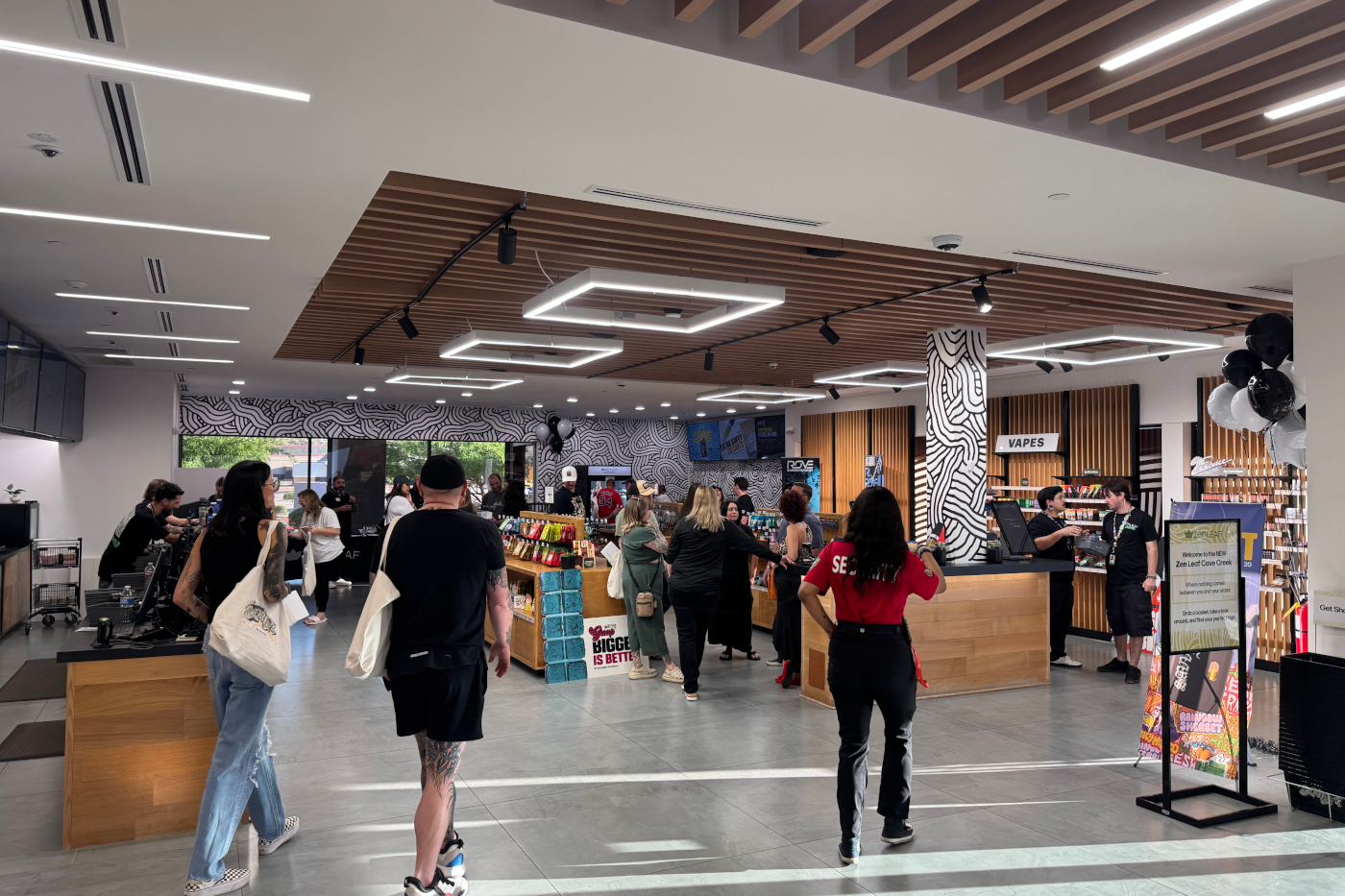
Key takeaways
- Zen Leaf standardizes the experience, not the floorplan: “consistency, not uniformity” across 13 states.
- Compliance is treated as a design parameter, shaping operations and storytelling space.
- Localization is built in through neighborhood-specific murals and community moments that still feel on-brand.
- Hospitality and education drive layout decisions, lowering friction for new consumers while staying intuitive for regulars.
- Accessibility starts outside the store. Parking, lighting, visibility, and easy in-and-out matter as much as interiors.
In cannabis retail, multi-state growth can flatten what makes a dispensary feel local: warmth, personality, even trust. Zen Leaf, a national dispensary brand from Verano, has built a retail design strategy around avoiding that trap: Keep the brand’s DNA consistent across 13 markets while tailoring each store to the realities of local regulations, footprints, and community expectations.
“Our goal is to provide shoppers with the best experience regardless of location,” said Robert Cohen, executive vice president of retail strategy. “The intention is always the same. We want to create a warm and welcoming environment that represents the best expression of our brand.”

That intention, more than any single material choice or architectural feature, defines Zen Leaf’s retail strategy. The brand’s approach to design prioritizes hospitality, accessibility, and community engagement, grounding each location in its neighborhood while maintaining a recognizable identity across markets. The philosophy feels deliberately human in an industry that has, at times, leaned heavily into either clinical minimalism or over-the-top spectacle.
Designing for consistency, not uniformity
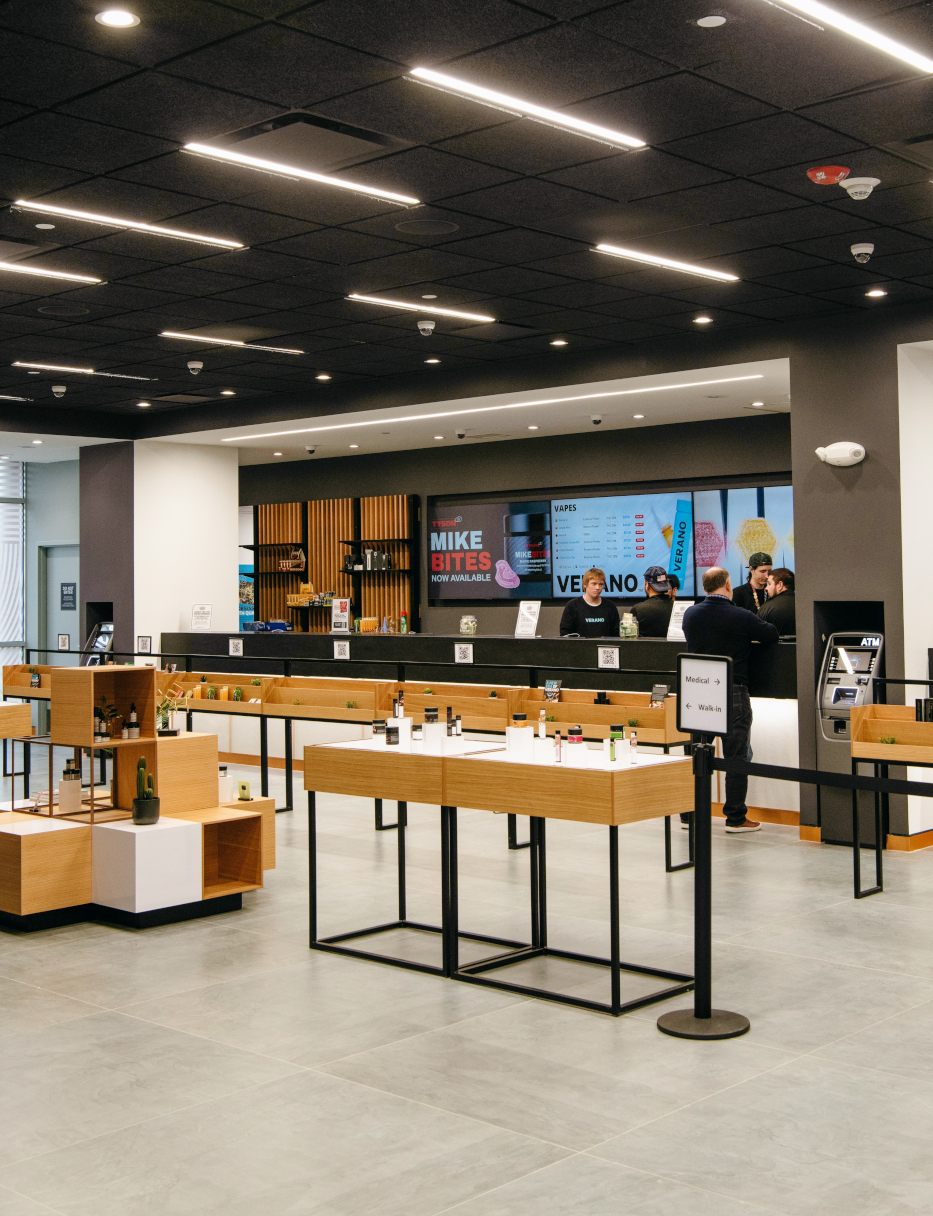
Zen Leaf’s footprint spans states with dramatically different regulatory frameworks, which means the brand had to abandon the idea of a one-size-fits-all store model.
“A lot of times we’ll have an idea, and then the conversation immediately becomes, okay, is this compliant?” Cohen said. “Can we do this in all of our markets? How might that look? And if we can’t, how does [the concept] translate?”
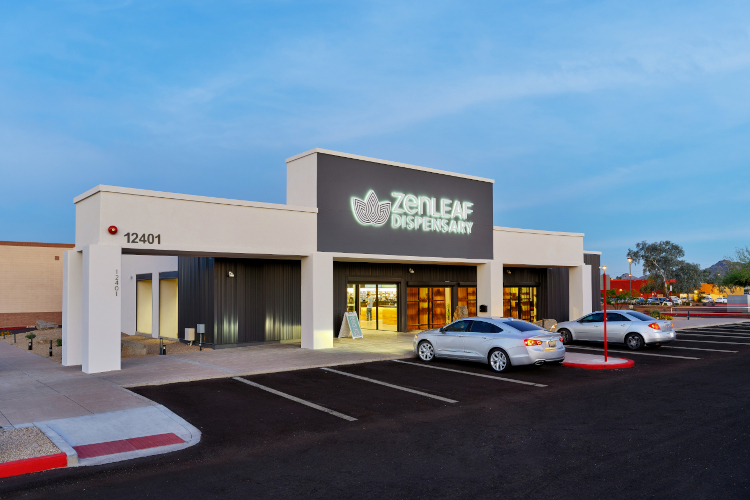
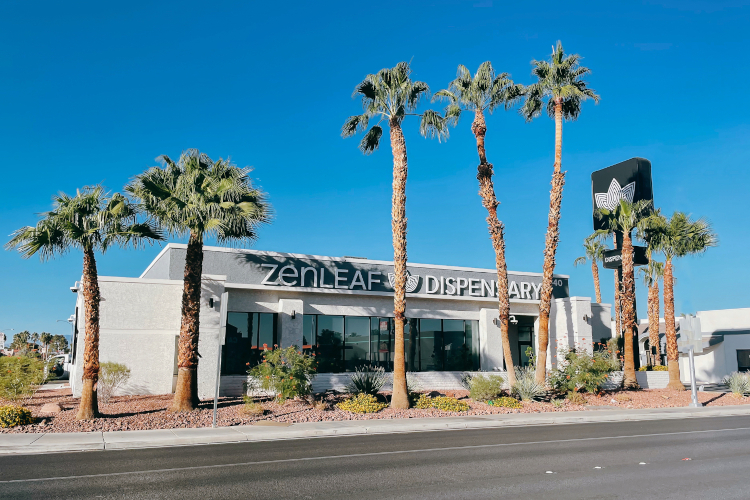
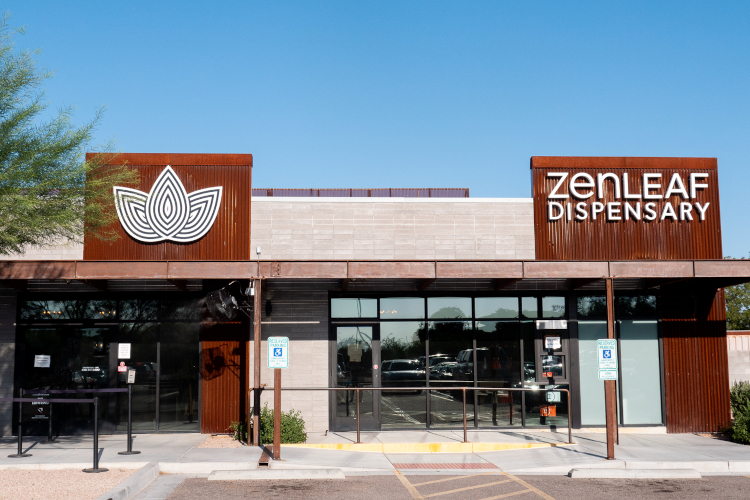
For example: In Nevada, the company operates drive-thru dispensaries, but Arizona state law prohibits them. On the other hand, Pennsylvania’s medical-only market allows large stores with expansive storytelling opportunities, while municipalities like Waterbury, Connecticut, limit dispensary sizes, thus requiring a more concise branding approach.
“The DNA and the intention are identical everywhere,” Cohen said. “Where it changes is the size of the store, the level of localization, and how much storytelling space we have to work with.”
Rather than forcing physical uniformity, Zen Leaf focuses on delivering a consistent experience. The stores are designed to feel welcoming to first-time consumers while remaining familiar and intuitive for more sophisticated patrons. The approach reduces friction for new shoppers while reinforcing brand trust for regulars, a critical balance for a category that continues to onboard consumers with varying levels of product familiarity.
“We try to always have little hospitality stations where you can grab a water or a small bite to eat if you need it,” Cohen said. “Some markets prohibit this through legislation, but the soul of every Zen Leaf store is about showing people who we are; how we greet people and how we tell our stories.”
Regulation as a design parameter
For many cannabis retailers, regulation is a creative constraint to be endured. The Zen Leaf team takes a different view.
“You see a property and you think, this is the dream,” Cohen said. “You want to include everything the brand does. Then you get into zoning and municipal regulations and realize you can’t. So the question becomes, how do we pivot?”
Sometimes that pivot is operational. If a drive-thru isn’t permitted, curbside pickup may be an option. Other times, the pivot is experiential, requiring the team to rethink how brand stories are told within tighter physical or regulatory limits.
“What matters is whether we can still tell our story well,” Cohen said. “Can we still create an experience that feels aspirational and welcoming within the space we have?”
This approach has allowed Zen Leaf to remain nimble as regulations evolve and new markets open. Rather than retrofitting stores, the brand designs with compliance in mind from the outset, treating legislation as a framework within which creativity and consistency must coexist.
Localization without losing the brand
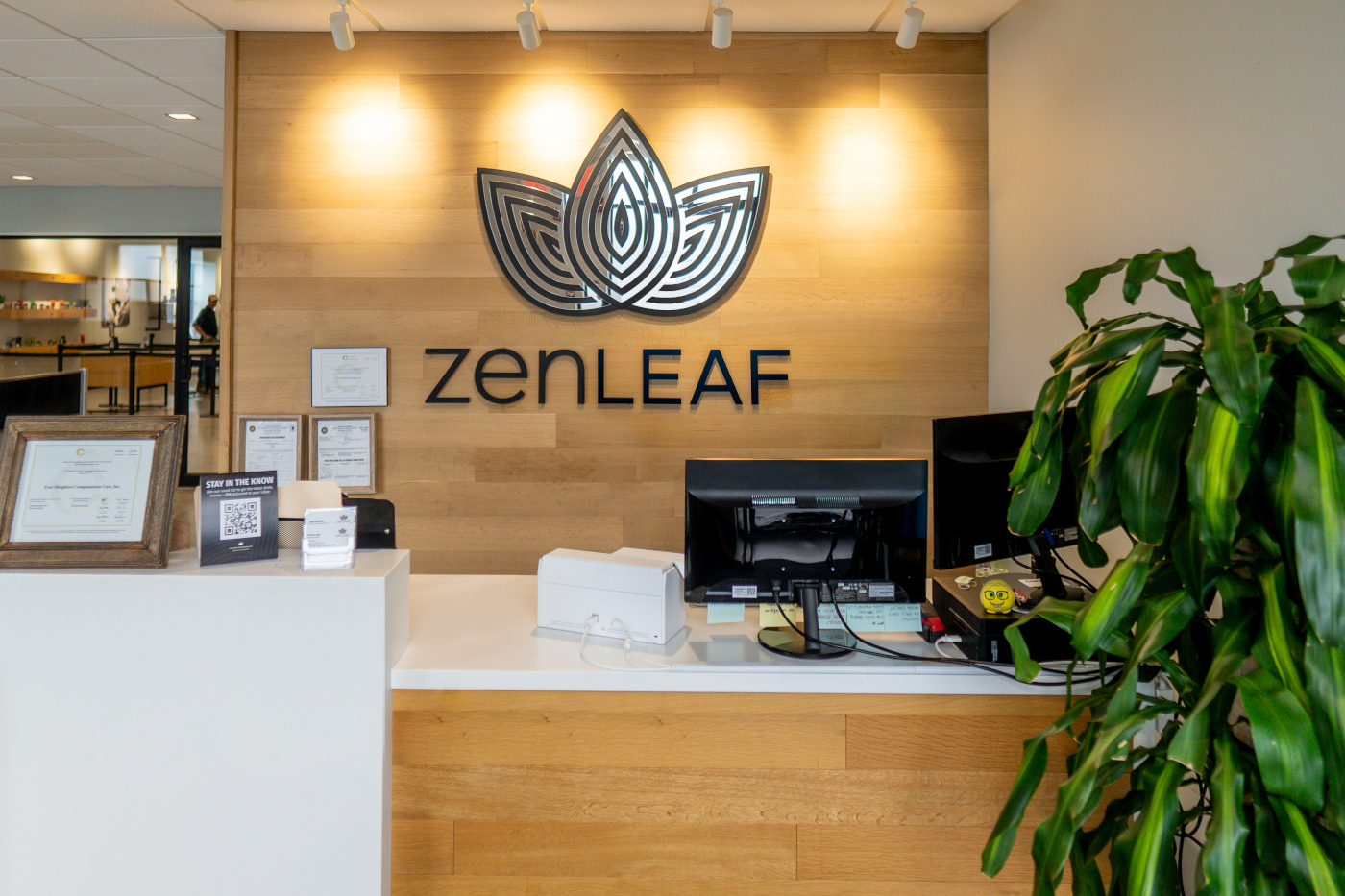
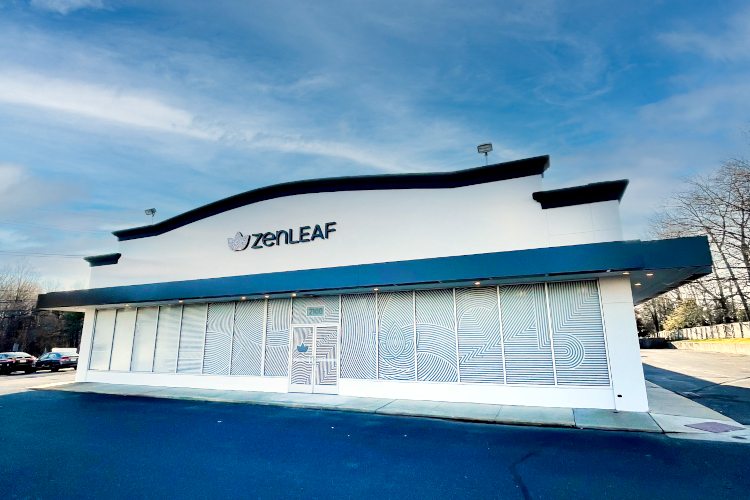
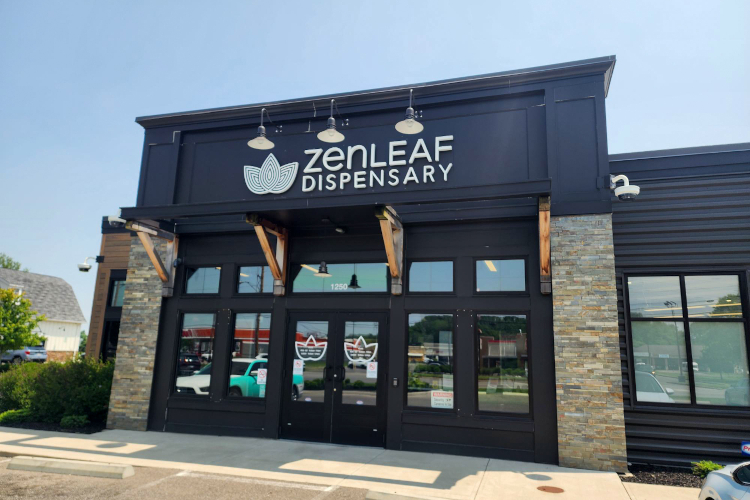
While Zen Leaf maintains a consistent design ethos, individual locations are encouraged to reflect their neighborhood’s surroundings.
“Many of our stores feature murals,” Cohen said. “They’re all Zen Leaf-branded, but they’re based on the local vibe of the neighborhood they’re located in.”
The result is a network of stores that feel embedded in their communities rather than imposed upon them.
Localization also shows up in smaller, more ephemeral ways. Seasonal décor, neighborhood-specific initiatives, and community-driven programming are not only allowed, but encouraged.
One of the simplest examples is also one of the most effective. In November, Zen Leaf locations rolled out inflatable snowmen outside their stores.
“When you have a snowman in conjunction with a group of friendly people greeting you, it becomes a transformative moment,” Cohen said. “Who can look at a snowman with anything but a smile? The best part of my day is getting those snowman pictures from my customers and employees.”
These gestures may seem lighthearted, but they serve a strategic purpose. They soften the threshold into cannabis retail, signaling approachability in a category that still carries stigma for some consumers.
Hospitality and education as core design principles
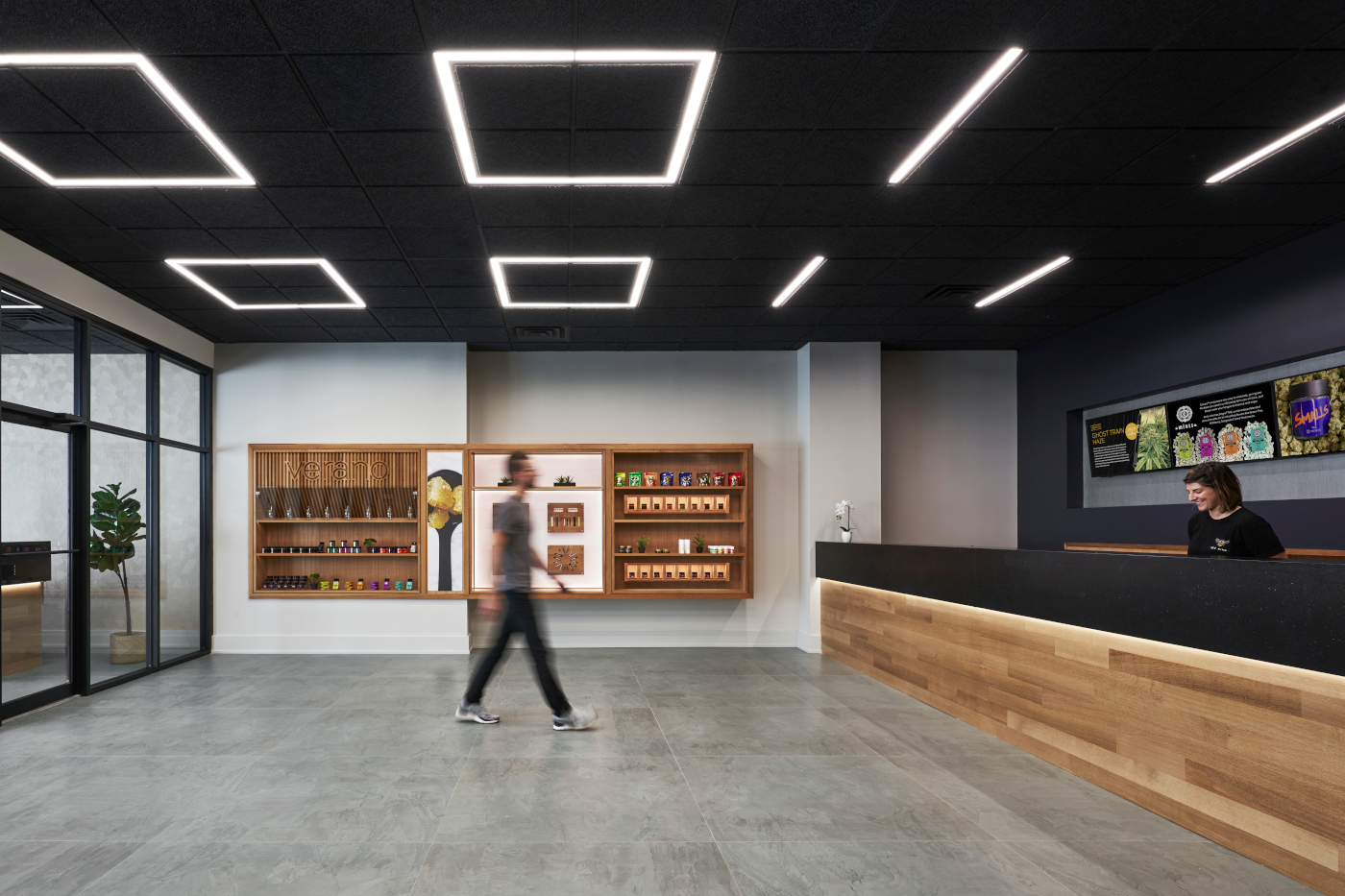
Perhaps the most defining aspect of a Zen Leaf dispensary is how walking through the door feels.
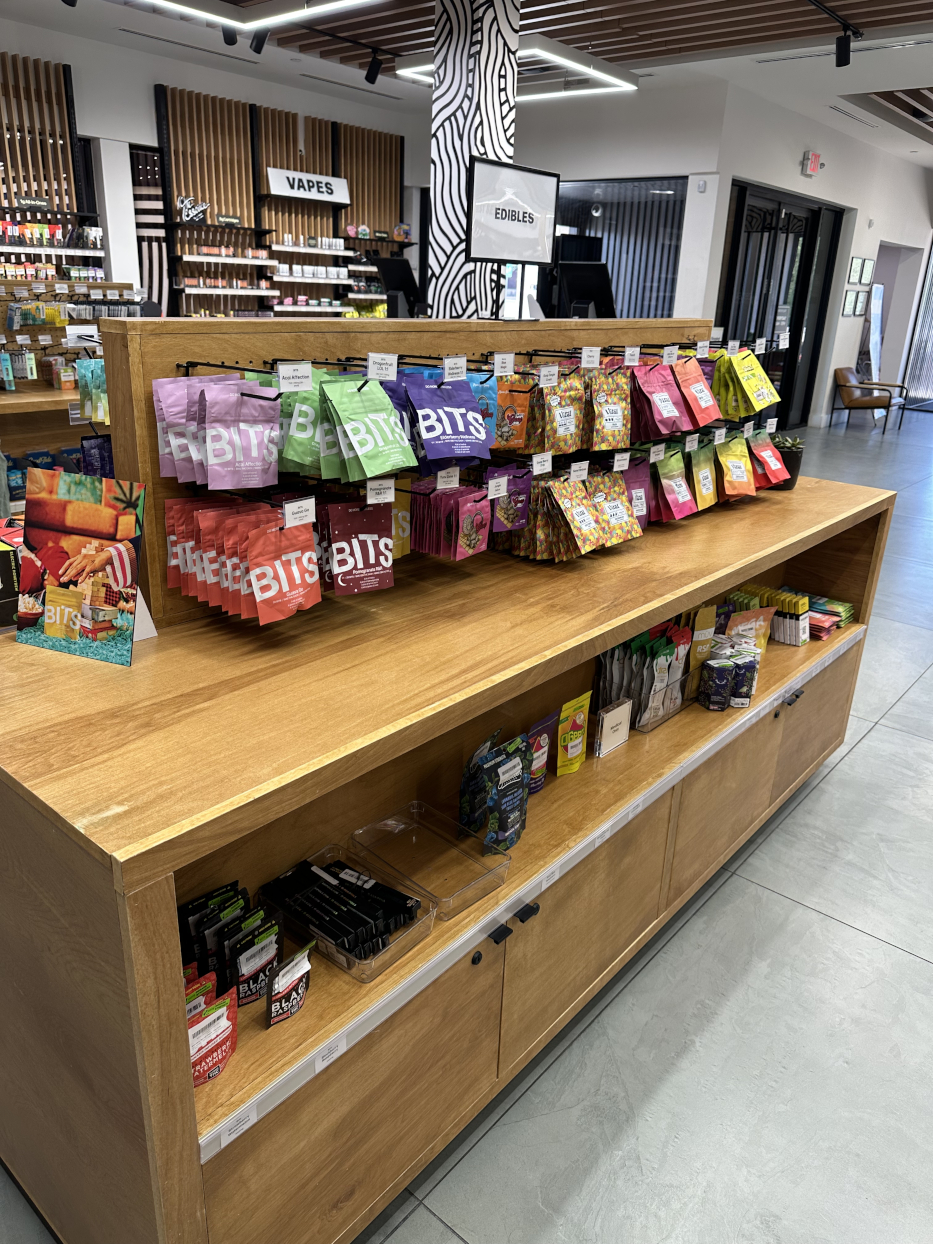
“You’re greeted by a person, just like walking into a restaurant,” Cohen said. “You’re not standing on the other side of a counter talking to someone through glass. Someone welcomes you as if you’re coming into their home.”
The physical environment supports that goal. Open layouts, clear sightlines, and approachable merchandising help demystify the shopping experience, particularly for newer consumers who may feel intimidated by cannabis retail. By removing physical and psychological barriers, Zen Leaf uses design to make education feel conversational rather than transactional.
Design also plays a critical role in how Zen Leaf introduces new products.
Cohen pointed out a recently launched vape platform as an example. The hardware includes both an all-in-one unit and a pod system, with a variety of flavors and reload options.
“Since it’s a new pod system, we want to make sure people can see the product and understand how to use it,” Cohen said. “You can check out some pictures on a website, but how big is it? What does it actually look and feel like? How does it function? In a retail setting, you can take it out of the box and really tell that story with a sensory experience.”
Accessibility beyond the front door
When evaluating new properties, Zen Leaf’s design team considerations extend well beyond the interior.
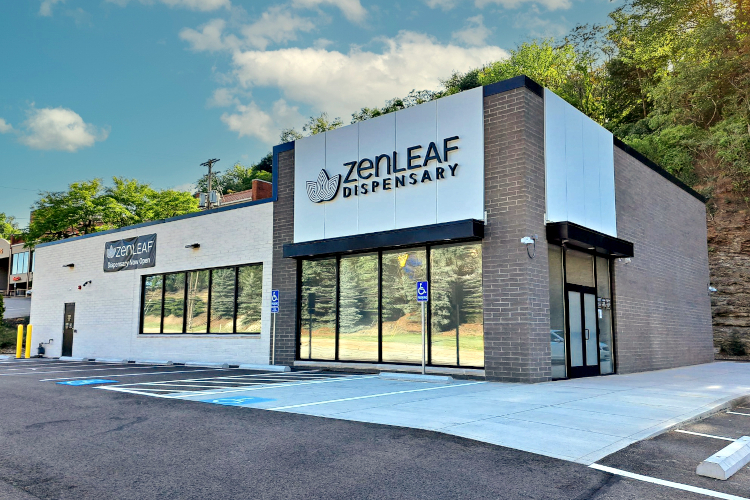
“How accessible is the space to the community?” Cohen asked. “Can customers get in and out easily? Is there parking? Is the lot well-lit? Is the store visible? These are questions we always want to ask when sourcing new locations.”
Cohen compared the ideal experience to shopping at Trader Joe’s. The visit should feel straightforward and unintimidating, not like navigating a fortress.
Accessibility also ties directly into community participation. Zen Leaf regularly organizes food drives, toy drives, and coat drives, reinforcing the idea that its stores are not just retail outlets, but also neighborhood citizens.
“We donated over 400 pounds of food to shelters in November,” Cohen said. “Our customers and employees live in these communities. Giving back is not optional for us.”
Looking ahead
As regulations shift and new markets emerge, Zen Leaf continues to expand thoughtfully, balancing opportunity with operational discipline.
“We’re constantly evaluating where we fit,” Cohen said. “In some markets, the brand is established, and we can open more locations. In others, new opportunities emerge as regulations change.”
Regardless of geography, the mission remains unchanged.
“Even if we’re not in your market yet, my hope is that we will be soon,” he said. “Wherever we are, the intention is to provide an incredible environment for people to share their love of cannabis and to participate meaningfully in the communities we serve.”
For Zen Leaf, retail design is not about visual sameness. It is about creating systems that allow culture, hospitality, and compliance to scale together. In doing so, the brand offers a case study in how cannabis retail can grow without losing the qualities that gave it resonance in the first place.
How Zen Leaf keeps dispensary design consistent across markets
How does Zen Leaf stay consistent across 13 states?
Zen Leaf builds consistency around the customer experience, not identical store layouts. Across medical and adult-use markets, the brand aims for the same “warm and welcoming” feel, then adapts the execution to local regulations, store size, and community expectations.
What does Zen Leaf mean by “consistency, not uniformity”?
It means the brand’s “DNA and intention” stay the same everywhere, even when the physical stores can’t. Zen Leaf expects variation in footprint, localization, and how much storytelling space a market allows, and then translates its concepts so the experience remains recognizable.
How do cannabis regulations shape Zen Leaf’s retail design?
Zen Leaf treats compliance as a design parameter from the beginning, asking early, “Is this compliant in all of our markets, and if not, how does it translate?” That can change operations (drive-thru vs. curbside) or the in-store experience (how brand stories fit within tighter rules and spaces).
How does Zen Leaf localize stores without losing brand identity?
Stores use local cues — especially murals based on neighborhood vibe — that remain Zen Leaf–branded. The company also encourages seasonal, community-friendly moments (like holiday décor) and local programming so each location feels embedded in its market without breaking brand continuity.
What are the most important dispensary design elements for new customers?
A welcoming entrance, open layouts, clear sightlines, and approachable merchandising reduce intimidation and make education feel conversational. Zen Leaf also leans on hospitality — being greeted “like walking into a restaurant” — to lower friction and build trust early in the visit.
What should retailers consider when choosing a dispensary location?
Zen Leaf starts with accessibility before aesthetics: easy entry/exit, parking, lighting, visibility, and how straightforward the visit feels. Cohen compares the ideal trip to Trader Joe’s: simple, unintimidating, and designed to remove friction before the customer even steps inside.
Related Articles: