

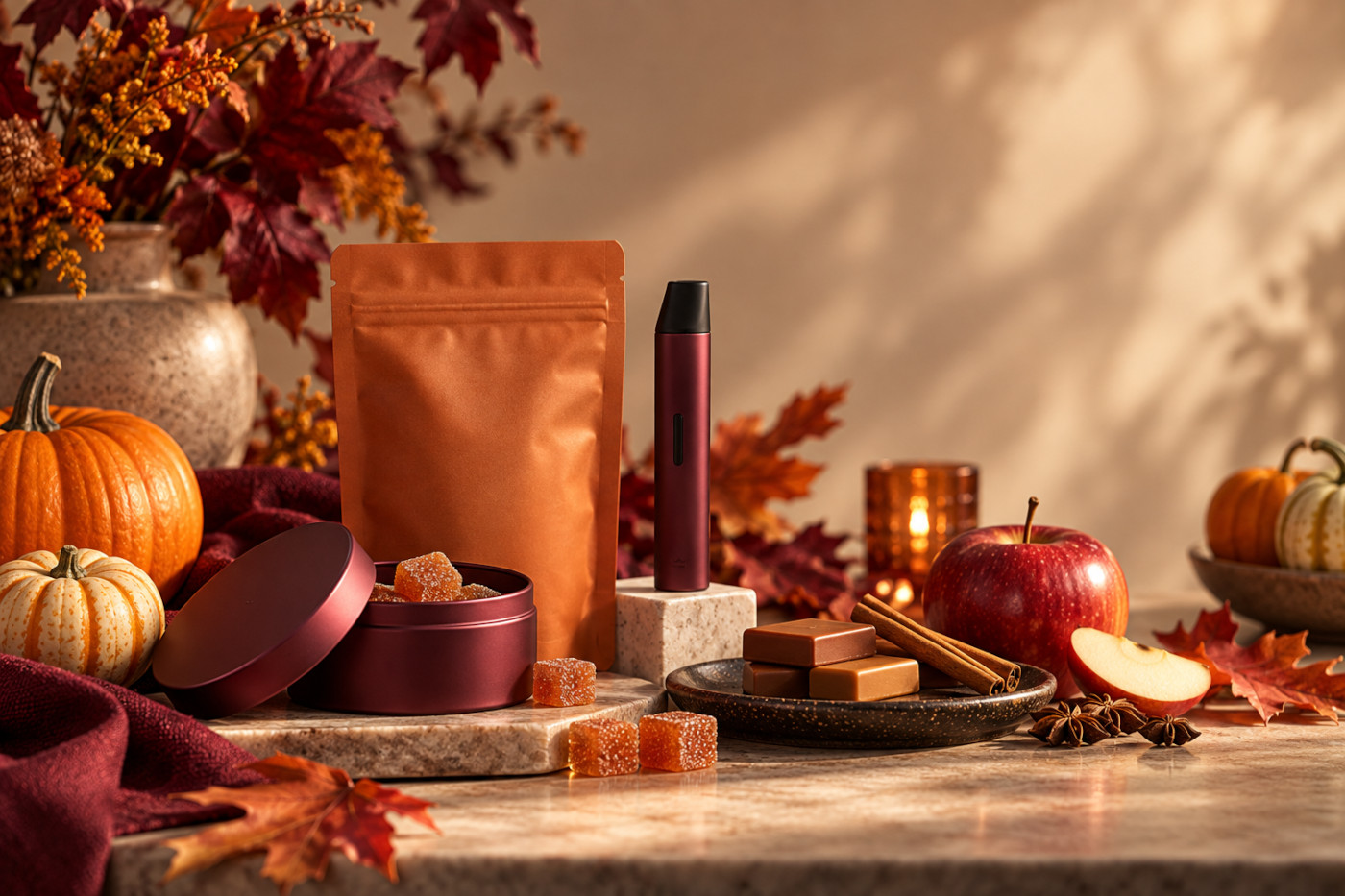
Pumpkin spice mania has reached cannabis.
So have apple cider donuts, caramel apples, caramel macchiatos, and at least one shade of burgundy apparently destined to spend autumn being called oxblood.
The products themselves may be novel, but the strategy behind them is anything but. Cannabis companies increasingly are borrowing a familiar playbook from mainstream consumer brands: Create products tied to a particular season, make them available for a limited time, and let scarcity do part of the merchandising.
This fall offers an unusually visible assortment.
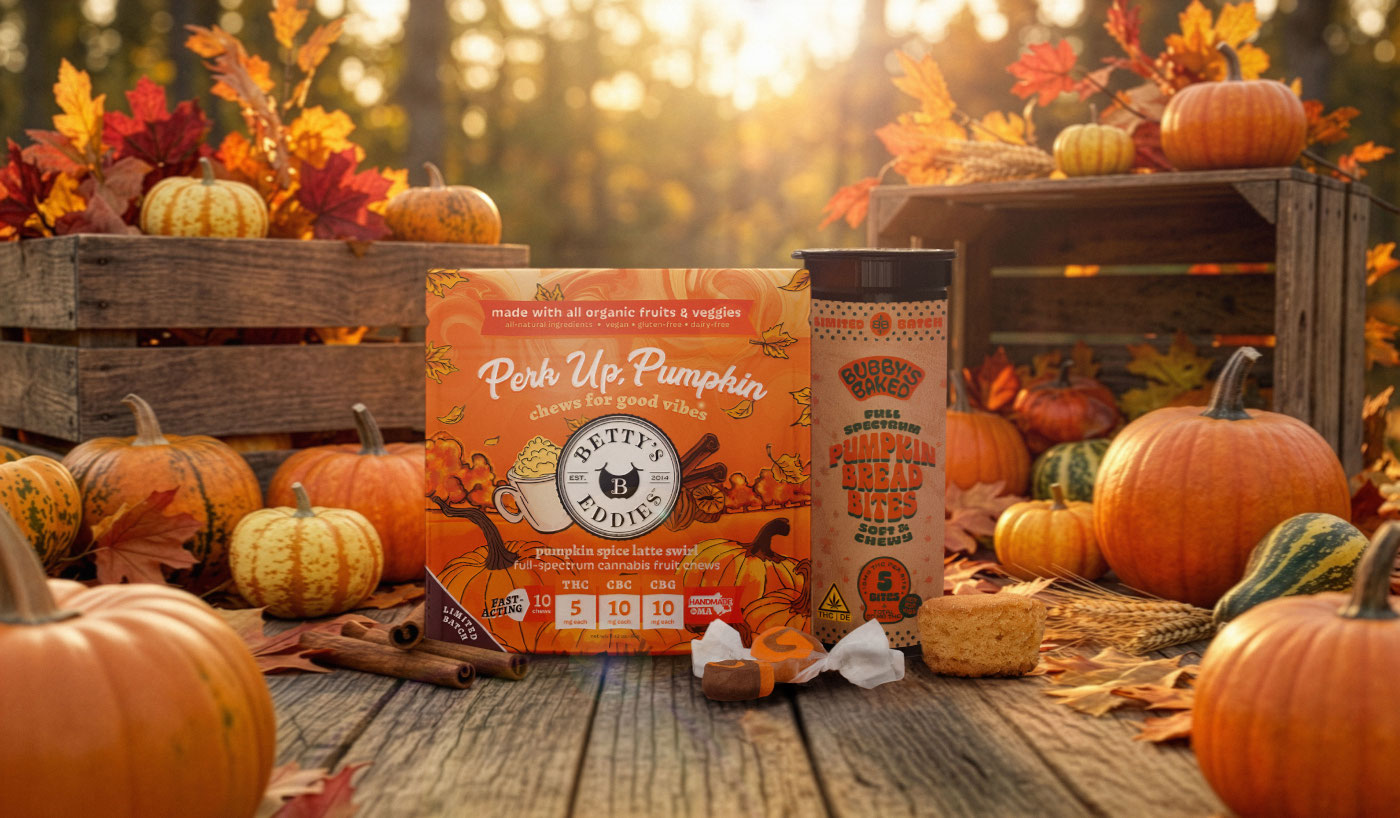
MariMed began rolling out pumpkin-spice-latte fruit chews under its Betty’s Eddies brand in August while bringing back pumpkin-bread bites from Bubby’s Baked. The products are being distributed across several of the company’s core markets.
“Seasonal flavors are one of the biggest drivers of consumer excitement each year, particularly pumpkin-inspired products during the fall,” said Sara Rosenfield, brand director for Betty’s Eddies.
Insa assembled a broader fall collection spanning multiple formats, including Apple Cider Donut Drops, Caramel Macchiato and Wicked Pistachio chocolate bars, and Caramel Apple vape cartridges. All are positioned as limited seasonal releases rather than permanent additions to the lineup.
PAX took the concept beyond flavor. On September 8, the hardware company released three existing devices in a limited-edition deep burgundy finish called Oxblood, borrowing the seasonal-color strategy more commonly associated with fashion, cosmetics, and home furnishings.
Together, the launches suggest cannabis is becoming more comfortable with something mature consumer categories have understood for years: Not every new product needs to stick around.
Scarcity can be a feature
Permanent line extensions carry baggage.
Every additional SKU has to earn shelf space, inventory dollars, production capacity, packaging, and attention from consumers already confronting crowded dispensary menus. Products that underperform can linger long after the excitement surrounding their launch has disappeared.
Seasonal releases operate under a different assumption. Their expiration date is part of the proposition.
“Seasonal drops like these exist because flavor should match the moment,” Insa said in describing its fall collection. The company tied flavors including apple cider, espresso, pistachio, and caramel apple to familiar seasonal cues from bakeries, coffee shops, and orchards.
Availability is deliberately finite. Insa said the limited-edition products will be retired once they sell through, with no guarantee they will return next year.
That gives manufacturers room to experiment without necessarily committing to year-round production, while retailers get something new to merchandise without assuming another permanent inventory obligation.
Limited availability also changes the consumer proposition. An everyday SKU can be purchased next month. A product expected to vanish with the season introduces urgency without requiring a markdown or other overt promotion.
None of this is particularly radical outside cannabis.
Starbucks has spent more than two decades turning the annual return of its Pumpkin Spice Latte into a seasonal event. This year, the drink returned August 25 as the centerpiece of the company’s fall menu, helping produce what Starbucks called its strongest fall launch day ever in the United States and Canada.
Trader Joe’s similarly has made rotating seasonal merchandise a defining part of its retail model. Its fall 2026 assortment contains more than 100 products spanning pumpkin, maple, apple, and other seasonal flavors.
Restaurants, beverage companies, beauty brands, and fashion labels routinely use limited fall collections to create anticipation and give consumers a reason to return. Cannabis simply has taken longer to employ the same tactic broadly.

A reason to refresh the shelf
Seasonal drops also offer an answer to a persistent merchandising problem: how to make a familiar category look new without reinventing the underlying product.
PAX’s Oxblood Edit illustrates the idea particularly clearly. The company did not introduce three entirely new devices. It changed the finish on existing hardware and tied the release to a seasonal design trend.
PAX is pushing the strategy beyond product aesthetics by connecting Oxblood to a series of fashion, art, and design events, including a New York Fashion Week collaboration and a one-night Lower East Side gallery activation built around the season’s burgundy palette.
The strategy is less about introducing a new device than about giving an existing product a cultural moment. In that sense, PAX is borrowing not just from seasonal CPG launches but from fashion and lifestyle brands that use limited collections, events, and collaborations to create relevance around a particular moment.
Edibles and vapes provide an equally obvious canvas. A manufacturer does not need to establish an entirely new product architecture to substitute caramel apple for another flavor or bring back a pumpkin product for several weeks.
Ingredient and flavor suppliers are building around the opportunity, too. Abstrax currently markets an autumn collection built around profiles such as caramel apple, pumpkin pie, orange chai latte, Honeycrisp apple, and spiced apple cider, specifically positioning them for seasonal and limited-edition product development. That kind of supplier infrastructure makes it easier for manufacturers to test short-run concepts without rebuilding an entire product line from scratch.
The strategy still carries risks. Too many limited releases can turn novelty into noise, and an unsuccessful seasonal product does not become less unsuccessful merely because it disappears quickly. Short runs also can complicate forecasting when lead times for packaging, production, testing, and distribution remain substantial.
But seasonal products have one advantage ordinary line extensions lack: Nobody expects them to last forever.
For an industry already wrestling with crowded menus and relentless SKU proliferation, that may be the most useful feature of all.