


For retailers, being labeled “high risk” sounds like an indictment. In payment processing, however, the term has a narrow meaning. Card networks and financial service providers believe businesses in the high-risk category may present a higher-than-average likelihood of chargebacks, regulatory complications, or other compliance concerns.
The definition doesn’t make the consequences any less disruptive.
“The challenge is, if you don’t have a trusted partner to work with, you can’t ensure that you won’t randomly be cut off from being able to accept credit cards,” said Joachim Jacobs, a strategic account executive with retail and hospitality technology provider Lightspeed. “A lot of people get into business, open up shop, but don’t really do their research. So, they get caught in a trap of working with someone, getting cut off, having their funds frozen, and having to start all over again.”
The problem is especially acute for retailers selling age-restricted or highly regulated products. Payment providers must consider not only potential chargebacks, but also the rules governing sales and age verification for products like tobacco, CBD, and hemp-derived cannabinoids. What a provider will support can depend on the products, the sales channel, and the merchant’s approval.
For merchants, losing the ability to accept cards is not an abstract compliance concern. It is an immediate threat to revenue, customer trust, and business continuity.
When ‘easy to start’ becomes difficult to sustain

According to Jacobs, the trouble often begins when a provider allows a merchant to start processing payments before completing a thorough underwriting process. The account appears functional until the provider identifies products it does not support. By then, the retailer may already have money moving through the platform … and no backup plan.
Lightspeed has seen the fallout firsthand.
“I’ve worked with countless merchants in this extremely difficult position where they try to go to work one day, they turn on their Square app, and then they realize it’s not working,” said Jacobs. “From there, they’re left figuring out how they’re going to go cash-only for the day. It’s a huge problem.”
For retailers, the lesson is clear: Accessibility at signup does not always translate to long-term reliability. Business owners should ask a prospective provider to review their actual product mix and sales channels before they begin processing. They also should understand the terms governing reserves, payment holds, and settlement times, and know whom to contact if a transaction or account is flagged. Those answers matter more than how quickly an account can be opened.
Technology built around reality
Lightspeed has spent about two decades developing software for retail businesses. Its platform brings core functions — including point of sale (POS), inventory management, customer information, ecommerce, and reporting — into one system. For eligible smoke, vape, and hemp-derived cannabinoid retailers, Lightspeed also works with a specialized payments partner that supports certain high-risk categories and integrates payment processing with its software. Product eligibility and payment options require confirmation during underwriting.
A payment partner familiar with the category can assess a merchant’s business before transactions begin. Integration can then make day-to-day checkout easier.
With an external terminal, an employee has to enter a purchase into the POS system and then manually enter the total into a separate card reader. That extra step can slow checkout and create opportunities for keystroke errors, mismatched records, and time-consuming reconciliation.
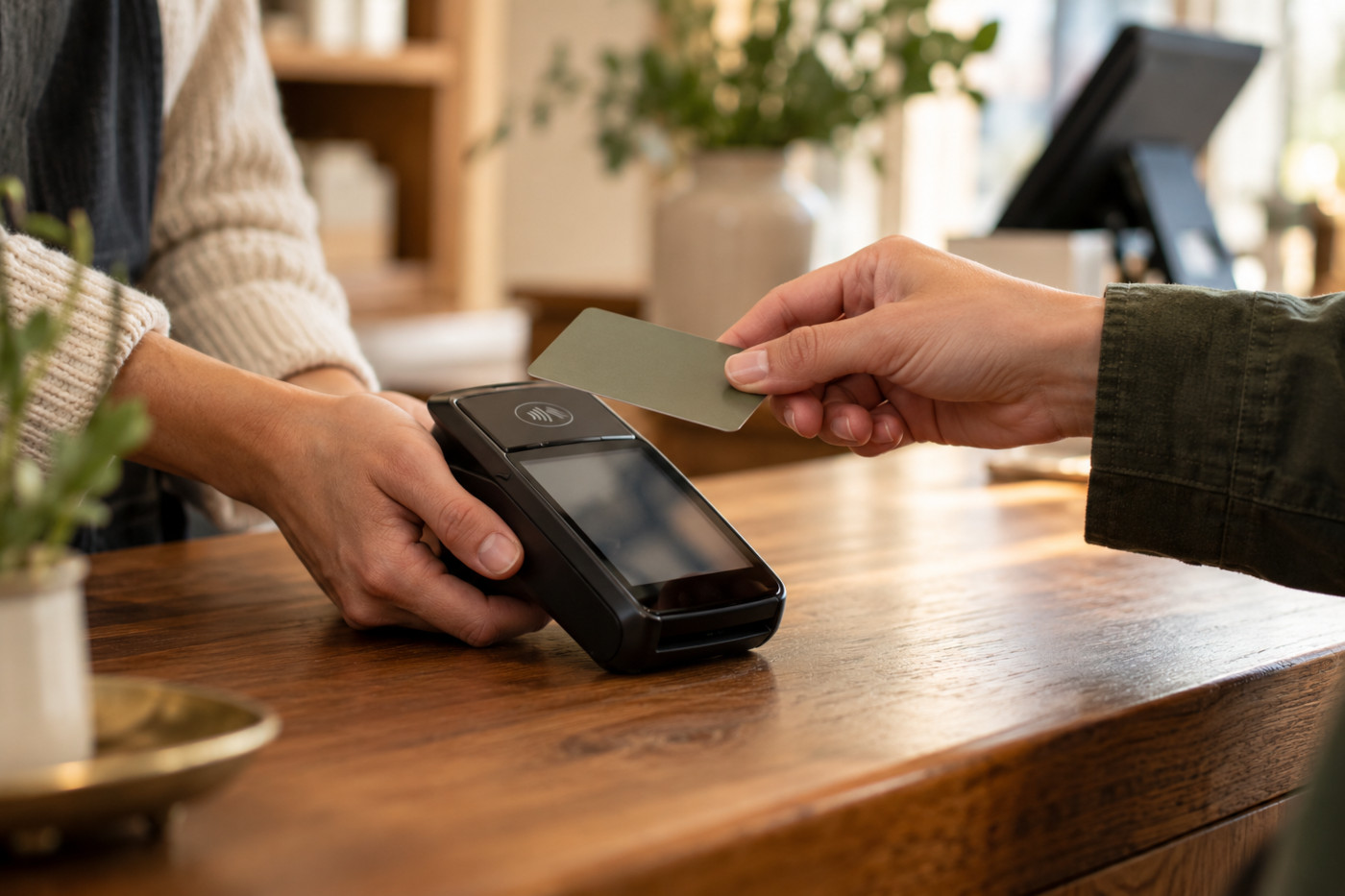
“With integrated processing, that dollar amount populates on the card reader as soon as it’s entered,” Jacobs said. “Customers can pay instantly with their credit card, and having that rapid, easy transaction process is a huge component to a good customer experience. Things move fast in retail, and if you can’t get customers in and out of the door quickly, it can create a huge bottleneck.”
Integrated payment processing also can produce a cleaner accounting trail for reporting and analysis. Employees can focus on serving the person standing in front of them instead of managing disconnected technology.
Turning transactions into intelligence
Reliable payment acceptance is the foundation, but it is not the finish line. Once the basic infrastructure is stable, the same retail platform can help operators answer larger questions:
- Which categories are selling through?
- Which brands turn fastest?
- Which flavors, formats, or sizes are losing momentum?
- What should the business reorder, and what is silently trapping cash on the shelf?
“Lightspeed puts a big emphasis on making businesses data-driven, which is so important for any merchant in a competitive industry like vape and smoke,” Jacobs said. “I live in Portland, Oregon, and there are so many different storefronts in competition out here. Any edge you can get on your competition will set you up for success.”

Lightspeed’s reporting tools allow retailers to evaluate performance by product, category, brand, and variant. Depending on their plan, merchants can review metrics such as sell-through and inventory turns. A retailer could, for example, identify merchandise that has remained unsold for six weeks and consider it for a targeted promotion or clearance campaign.
That process helps transform dusty inventory from a vague concern into an actionable list. Moving stagnant products can free cash for merchandise with stronger demand and give purchasing teams better evidence for future orders.
“We can tailor these reports in any direction,” Jacobs said. “From a business standpoint, this isn’t your average POS or register-closure report you receive at the end of the day. This takes it a step beyond surface-level reporting; honestly, maybe even fifty steps beyond. We help you get rid of those non-selling products while having the highest possible margin and success rate.”
As retailers grow, access to data can create a new challenge: deciding how to organize and use it without becoming overwhelmed. Lightspeed allows users to save customized reports and schedule them for automatic delivery on a daily, weekly, or monthly basis.
Jacobs said the company also is working on ways for retailers to ask questions of their business data more directly.
“We also have some AI projects in the works, which will give people the ability to query and prompt Lightspeed directly so they can have conversations with AI about what would be a good idea to put on sale next, for example,” Jacobs said. “As we move into this next technology era, partnering with a POS company that has AI functionality should be a retailer’s priority.”
Resilience first, growth next
For regulated and high-risk retailers, a technology partner must understand both sides of the equation. The POS and processing arrangement should support day-to-day operations while helping leadership improve margins, reduce unnecessary labor, and make decisions with greater confidence.
Peace of mind may be difficult to quantify, but a surprise shutdown makes its value immediately clear. Confirming product eligibility and payment terms up front gives retailers a stronger foundation for the business behind every transaction.
Learn more about Lightspeed here.