


HARTFORD, Conn. – Connecticut’s cannabis retailers are moving considerably more product without seeing comparable revenue growth, underscoring the financial pressures created by falling prices.
During the first eight months of 2026, adult-use retailers sold 27.5 percent more products than during the same period in 2025. Revenue, however, increased only 6.8 percent, according to state sales data analyzed by CT Insider.
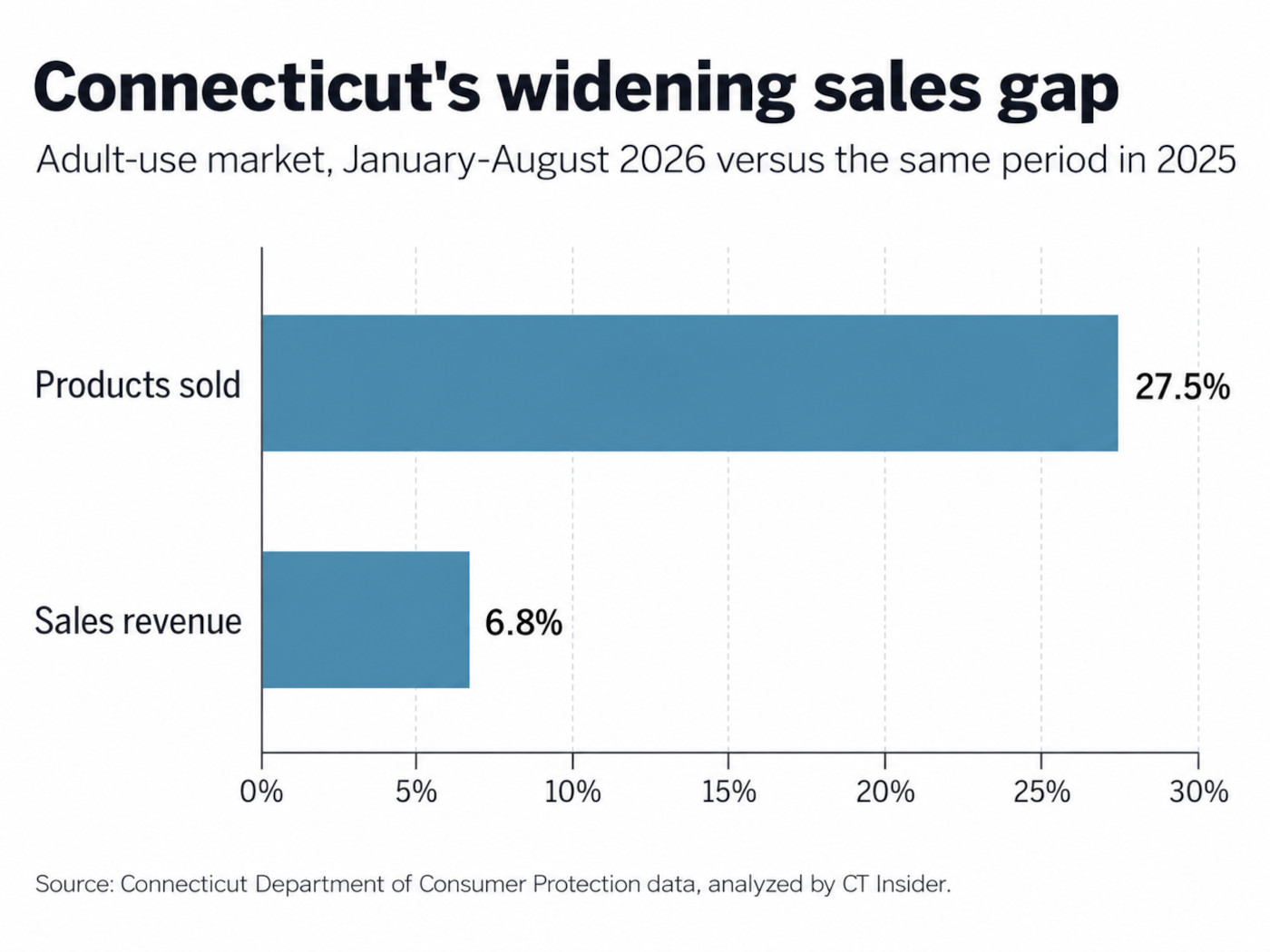
Price compression explains much of the disparity. The average price of usable cannabis fell from $10.57 per gram in January 2025 to $6.61 in August 2026, a decline of approximately 37 percent. Connecticut defines usable cannabis as flower sold whole, ground, or in pre-rolls without additional extracted materials.
The state’s adult-use market has continued expanding since recreational sales began in January 2023, but declining medical cannabis revenue has offset some of that growth. Combined medical and adult-use revenue has remained relatively flat since late 2023.
The figures illustrate a challenge confronting cannabis operators in increasingly competitive markets: Higher sales volume doesn’t necessarily translate into proportionately higher revenue.
Lower retail prices can benefit consumers and encourage additional purchases, but they also increase the pressure on operators to control costs, manage inventory, and protect margins. Revenue figures alone do not establish whether Connecticut retailers are becoming less profitable.
The distinction is important. Connecticut’s data measures individual products sold, not the total weight of cannabis purchased or the number of transactions. Nevertheless, the widening gap between product volume and revenue shows how dramatically market growth can change when measured in dollars rather than units.