

 Listen to this article
The question that keeps coming back
Every year, millions of people type some version of “how much is a gram of weed?” into a search bar. New consumers want to know what they’re walking into. Experienced shoppers want to know whether prices have shifted. And industry professionals — retailers, operators, investors — use the same data to read the market.
This is mg Magazine’s third annual deep dive into cannabis weights and pricing, and it remains one of our most-read articles for a reason: The fundamentals of how cannabis is measured haven’t changed much, but what you’ll pay for it shifts constantly. Wholesale averages, tax structures, and license counts all moved in 2025, and those changes are showing up at the register in 2026.
Whether you’re prepping for your first dispensary visit or benchmarking retail pricing across markets, this guide has you covered. Let’s start with how cannabis is actually weighed — because it’s weirder than you’d think.
How cannabis is weighed (and why it’s confusing)
Cannabis uses a measurement system that would make your high-school math teacher twitch: It blends metric and imperial units into a single, oddly consistent hybrid. Small amounts are sold in grams (metric). Larger amounts are sold in fractions of an ounce (imperial). And the biggest wholesale transactions happen in pounds (also imperial). Nobody planned this. It just evolved — and now the entire legal industry runs on it.
The good news: The system is the same everywhere. An eighth in a Los Angeles dispensary weighs exactly what an eighth weighs in a Denver dispensary. The slang, the scale, the math — all consistent coast to coast. The only thing that changes is the price on the label.
The other good news: The cannabis community has been using nicknames for these weights since long before dispensaries existed, and those terms are still alive in shops today. You don’t need to know them to order, but knowing your “zip” from your “quad” is — as the budtenders say — certainly a flex.
Let’s walk through each standard unit, from smallest to largest.
The gram
- Weight: 1 gram (0.035 oz.)
- Common slang: dime bag, G, dub
- Looks like: About the size and weight of a grape, or a single average-sized nug. Think paperclip-weight.
- Gets you: One fat joint or two slim ones; two to three bowls.
- 2026 price range: $2.22–$20
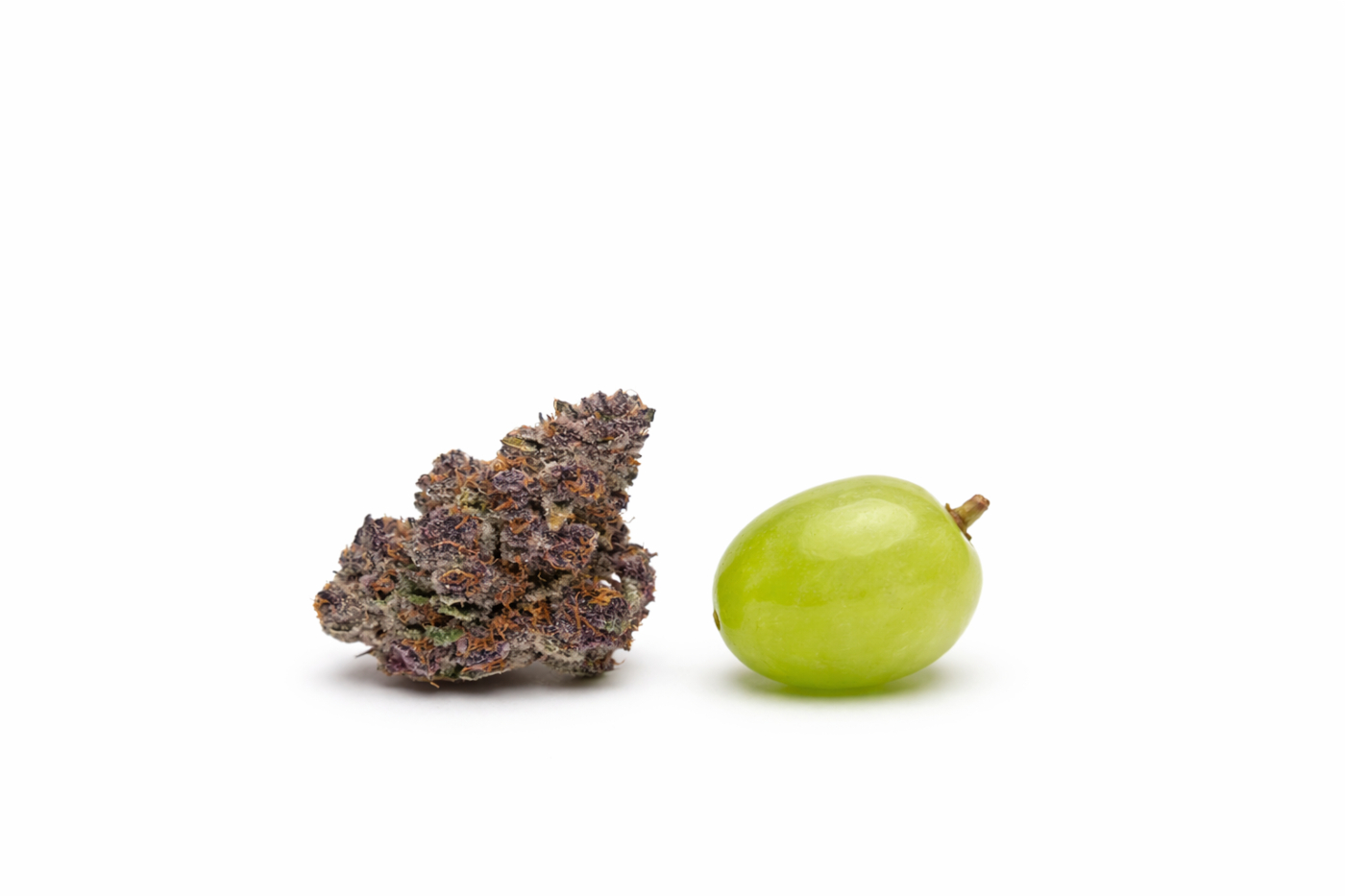
A gram is the starting line. It’s the smallest amount most dispensaries sell, and it’s ideal if you want to sample a new strain without committing to a larger purchase. Before legalization, a gram was called a “dime bag” because it typically cost about $10. The slang has outlived the price point — in 2026, what you’ll actually pay depends on quality, strain popularity, and your state’s tax structure.
For executives: The gram is also the base unit for wholesale pricing and per-unit retail analytics. When analysts quote a “price per gram,” they’re dividing a larger transaction down to this level — a useful apples-to-apples metric across markets.
The eighth
- Weight: 3.5 grams (⅛ oz.)
- Common slang: eighth, slice, cut, half-quarter
- Looks like: A small handful — roughly the size of a kiwi. Usually three to four decent-sized nugs.
- Gets you: Five to seven joints or roughly a dozen bowls.
- 2026 price range: $25–$80
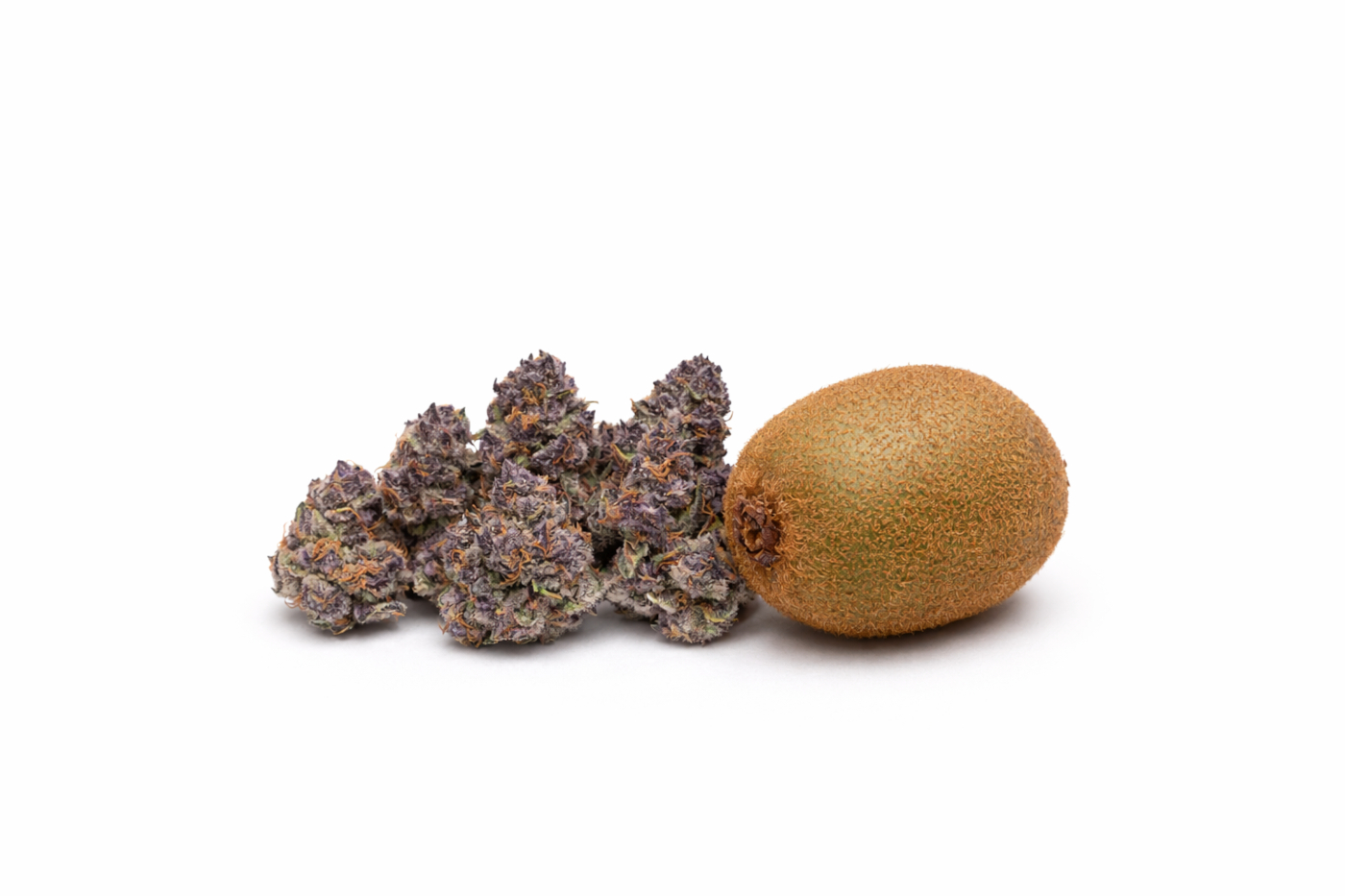
The eighth is the most popular retail unit in American cannabis. It hits a sweet spot: enough flower to last a casual consumer several days (or a weekend, if you’re sharing), at a price that doesn’t require a deep breath before tapping your card. If dispensary menus had a “most ordered” badge, the eighth would wear it.
The name is shorthand for “one-eighth of an ounce.” If that clicked immediately, great — you’re already thinking in the hybrid system. If it didn’t, no worries. Just remember: 3.5 grams, about a small handful, the single most common purchase in legal cannabis. Strain quality and local taxes drive the spread — budget options and house brands sit at the low end; high-demand craft strains push toward the top.
The quarter
- Weight: 7 grams (¼ oz.)
- Common slang: quarter, quad, Q
- Looks like: About the size of an apple or a small orange. A solid, two-handed scoop.
- Gets you: 7 to 14 joints, depending on how generously you pack them.
- 2026 price range: $40–$100
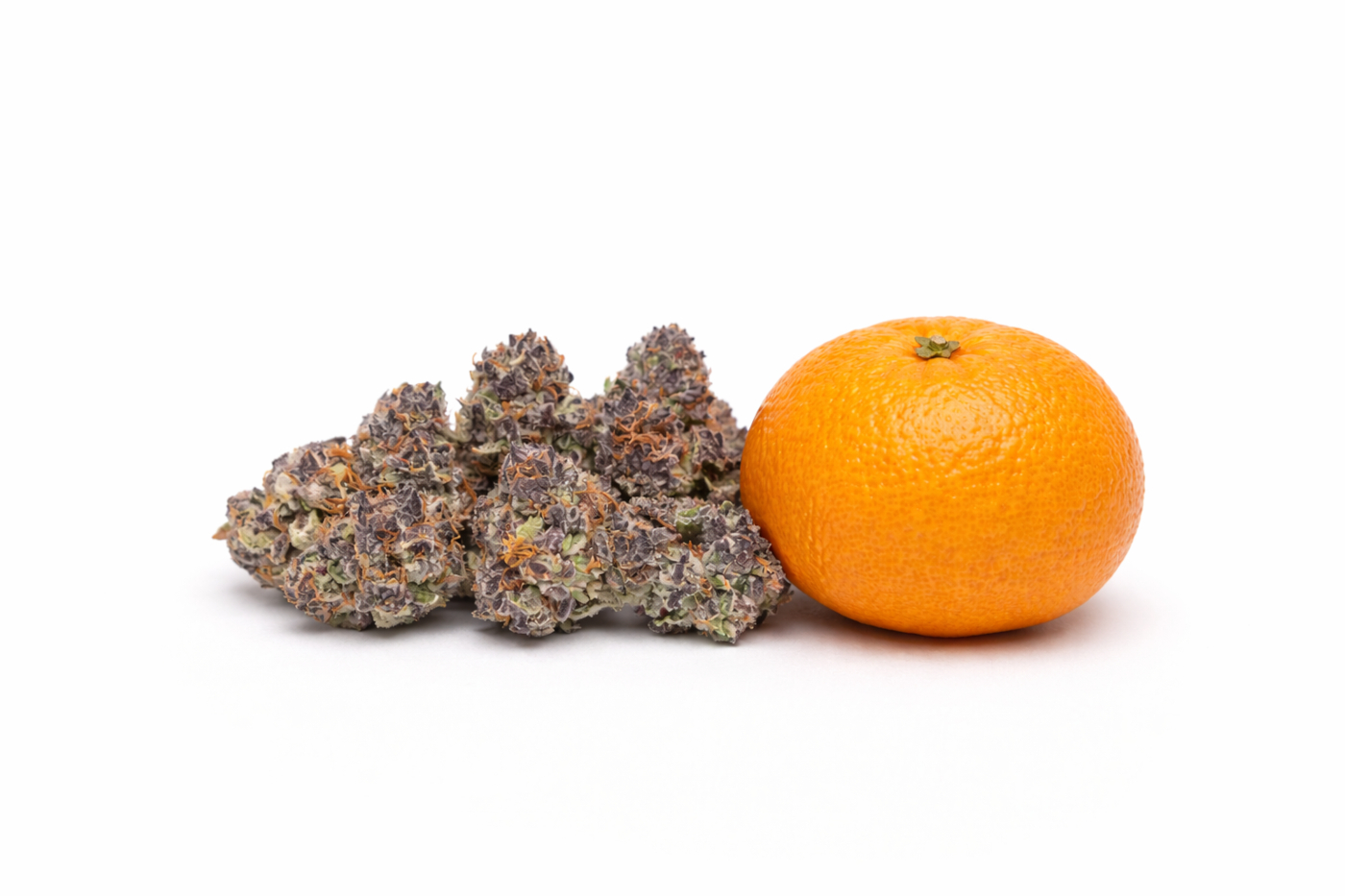
A quarter is a commitment — not a huge one, but it signals you’ve moved past the sampling stage and found something you like. This is the go-to quantity for regular consumers who’d rather stock up once than visit the dispensary twice a week. It’s also a popular pick for social situations: enough to share generously without feeling like you’re burning through your stash.
Per-gram pricing typically drops at the quarter level, making it more economical than buying two separate eighths. That built-in discount is why budtenders often nudge returning customers toward a quarter when they come back for the same strain.
The half-ounce
- Weight: 14 grams (½ oz.)
- Common slang: half, half-O, half-zip
- Looks like: About the size of a large orange or a grapefruit. Fills a medium-sized mason jar.
- Gets you: 14 to 28 joints. At a joint a day, this lasts two weeks to a month.
- 2026 price range: $90–$200
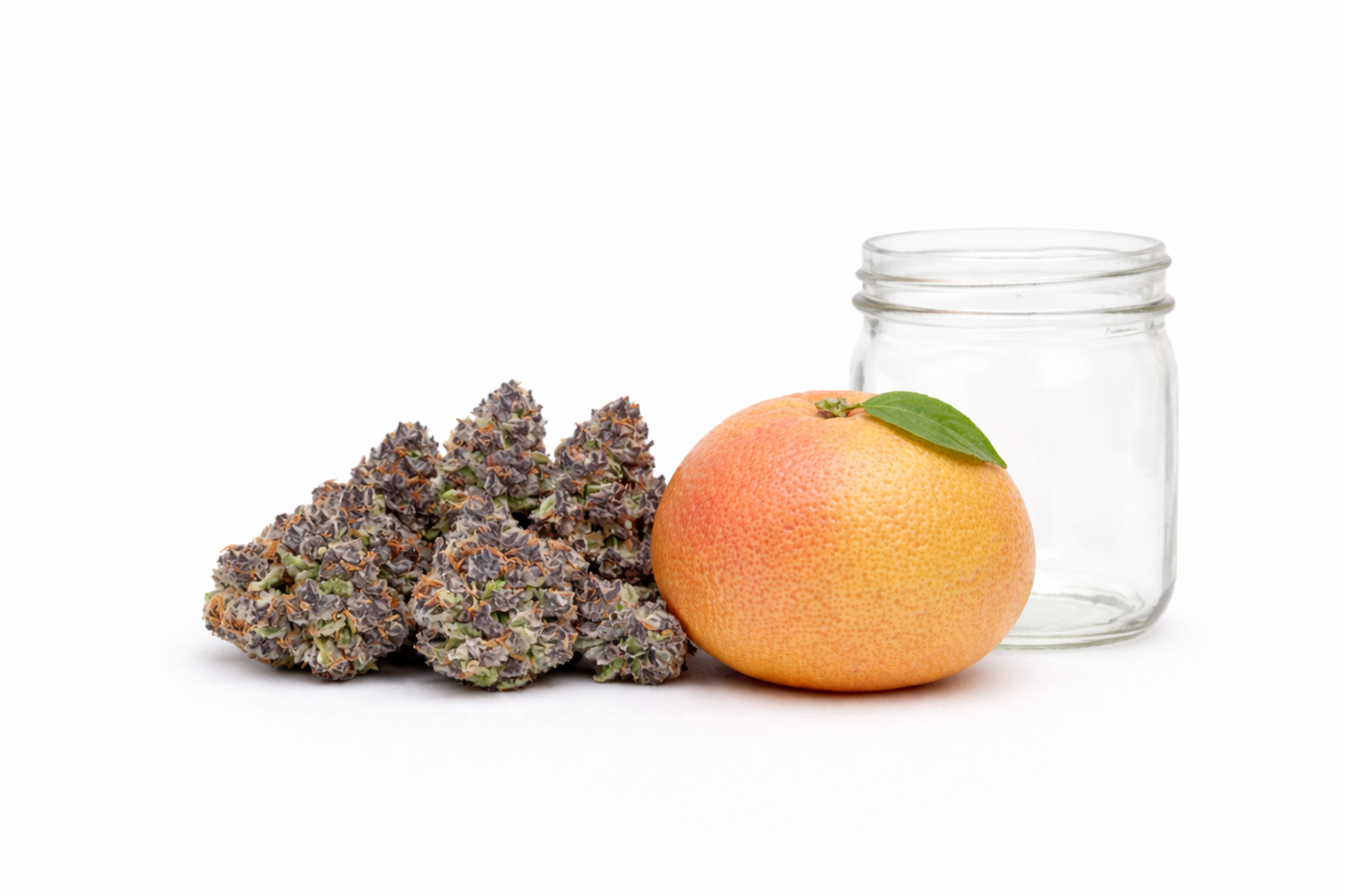
Half-ounces are a favorite among medical patients and high-frequency recreational consumers who’ve found their strain and want the best possible price per gram. Buying at this volume means fewer dispensary trips and a meaningful per-gram savings compared to smaller increments.
One practical note: At this quantity, proper storage matters. Keep your flower in an airtight container away from light and moisture, and it will stay fresh for weeks. Leave it in the bag it came in, and you’ll notice the quality fading.
The ounce
- Weight: 28 grams (1 oz.)
- Common slang: zip, O, OZ (pronounced “oh-zee”), lid
- Looks like: A lot of weed. Enough to fill two to three mason jars, or roughly the size of a coconut.
- Gets you: 28 to 56 joints. This is a long-term supply for most consumers.
- 2026 price range: $60–$590
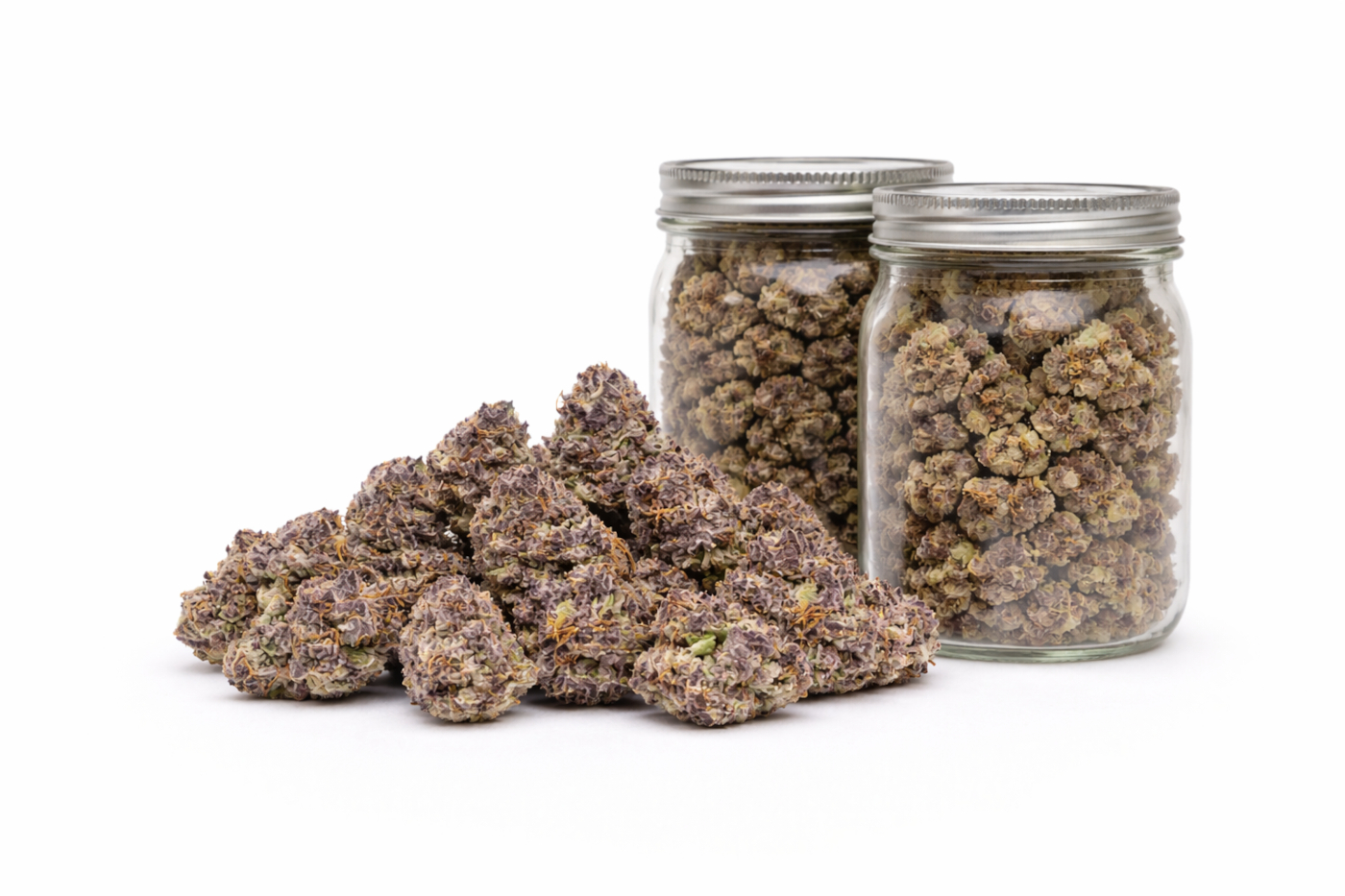
An ounce is the maximum single-purchase limit in most legal states (Oregon’s cap is two ounces), and it delivers the best per-gram value at the retail level. The term “zip” is a legacy reference to the Ziploc bags that once served as the standard packaging in the pre-legalization era — an ounce fit neatly into a medium-sized ziplock.
Buying a full ounce is relatively uncommon among casual consumers, but it’s a practical choice for medical patients with consistent daily use, for households with multiple consumers, or for anyone who has found their go-to strain and wants to buy smart. Mature markets like Colorado and Oregon trend toward the low end of the price range; newer or limited-license markets sit higher.
The pound (and why it matters to the industry)
- Weight: 453 grams (16 oz.)
- Common slang: elbow, P, pack
- Who buys it: Cultivators, distributors, and retailers — not consumers.
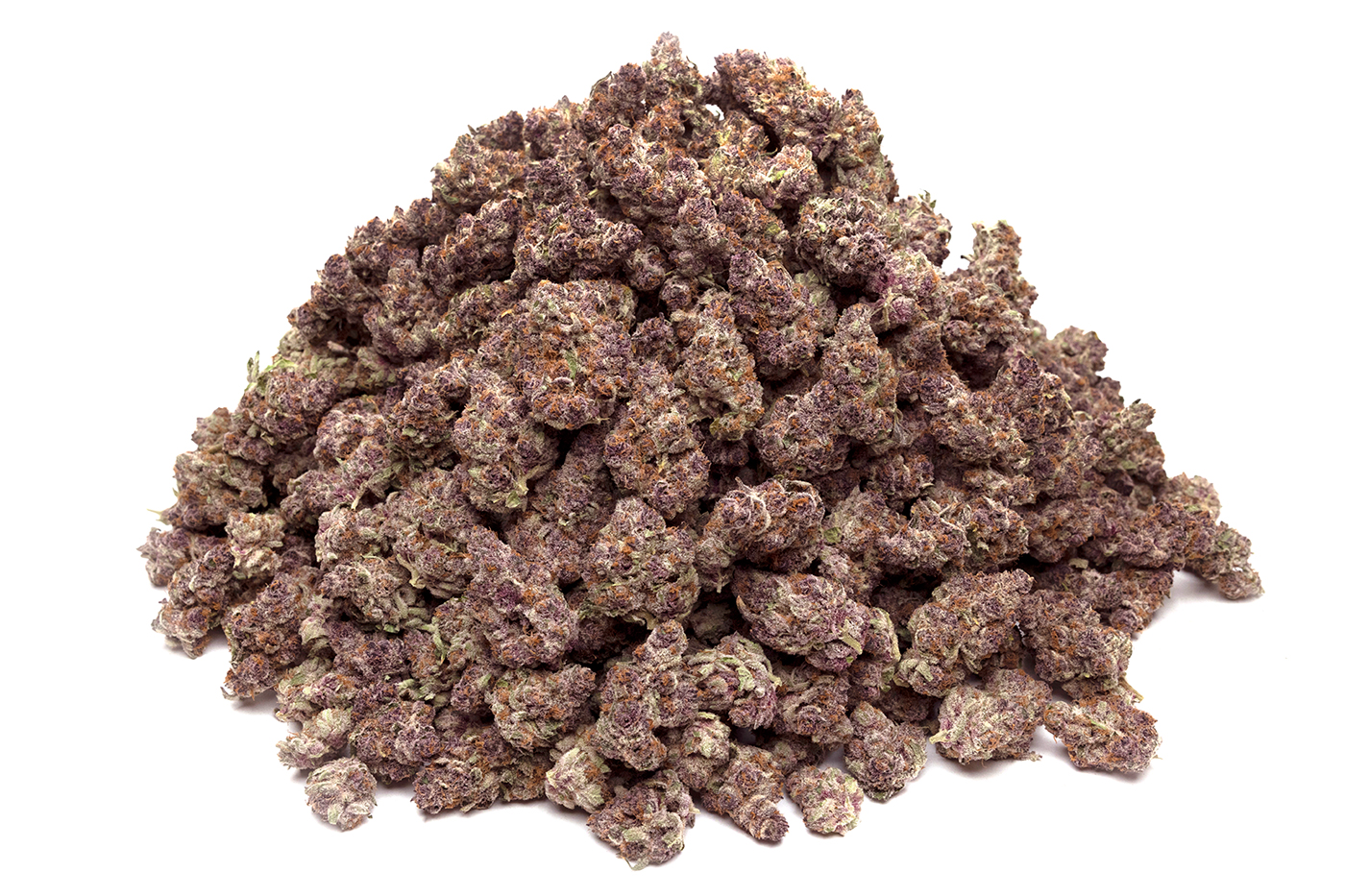
Pounds are wholesale units. You won’t find them on a dispensary menu, but pound-level pricing drives everything consumers pay at the register. When wholesale prices spike, retail follows. When wholesale prices drop, retail margins often widen instead of passing savings along — a pattern that frustrates consumers and delights investors.
More on wholesale pricing below.
| Unit | Metric Weight | Imperial Weight | Common Slang | Typical 2026 Price Range | Approx. Joints |
|---|---|---|---|---|---|
| Gram | 1 g | 0.035 oz. | dime bag, G, dub | $2.22–$20 | 1–2 |
| Eighth | 3.5 g | ⅛ oz. | slice, eighth, cut | $25–$80 | 5–7 |
| Quarter | 7 g | ¼ oz. | quad, quarter, Q | $40–$100 | 7–14 |
| Half | 14 g | ½ oz. | half, half-O, half-zip | $90–$200 | 14–28 |
| Ounce | 28 g | 1 oz. | zip, OZ, lid | $60–$590 | 28–56 |
| Pound | 453 g | 16 oz. | elbow, P | Wholesale only | — |
Wholesale spot prices in 2026
Wholesale pricing is the engine beneath retail. When wholesale moves, consumer prices eventually follow — though not always symmetrically. A jump in wholesale costs tends to show up quickly at the register; a drop in wholesale costs tends to pad dispensary margins before (if ever) reaching the consumer.
Cannabis wholesale prices are volatile, driven by local supply gluts, tax changes, and regulatory shifts. The national average for premium flower generally has trended near or above $1,000 per pound since May 2025, after recovering from a February 2025 average of $947 per pound.
National average spot prices for the week ending February 20, 2026
| Weight | Spot Price (Feb 2026) |
|---|---|
| Gram | $2.38 |
| Pound (premium) | $1,078 |
| Pound (biomass) | $200–$400 |
Source: Cannabis Benchmarks data
In February, analysts at Cannabis Benchmarks expected the average to fluctuate between $1,070 and $1,085 per pound through August 2026.
What’s biomass?
Biomass refers to trim, shake, and bulk flower destined for oil extraction. Those extracted oils become the concentrates, edibles, and vaporizer cartridges that now make up a significant share of the legal market. Biomass pricing is a fraction of premium-flower pricing and serves a completely different supply chain.
Why prices vary so much (and why it matters)
If you’ve ever compared dispensary prices across state lines and wondered why the same strain costs $35 in Oregon and $60 in New Jersey, it’s not random. A few structural forces create predictable pricing patterns across legal markets.
Market maturity and supply: Long-established markets like Colorado, Oregon, and California have had years to scale production. More growers competing for the same consumers means downward pressure on price. Newer markets haven’t reached that equilibrium yet.
State tax regimes: Tax burdens vary dramatically. Some states layer excise taxes, local taxes, and sales taxes in ways that push retail prices well above what wholesale costs alone would suggest. Two states with identical wholesale averages can look very different at the register once taxes are applied.
License density: Limited-license states — where the number of cultivation and retail permits is capped — tend to sustain higher pricing for longer. Open-license states accelerate competition, which generally benefits consumers.
Packaging and reporting nuances: Not every state records and reports sales data the same way. Some convert larger-increment sales into per-gram averages for statistical purposes, which can distort raw market-to-market comparisons. Keep this in mind when reading national benchmarking reports.
The bottom line
“How much is a gram?” is a simple question with a complicated answer — and that’s actually the point. Cannabis pricing reflects every layer of the industry: cultivation costs, wholesale dynamics, state tax policy, license structures, and local competition. Understanding the weights and what they cost isn’t just consumer knowledge; it’s market intelligence.
Whether you’re a first-time buyer trying to decode a dispensary menu or an operator benchmarking your pricing strategy, the fundamentals in this guide are your foundation. Bookmark it. We’ll be back next year with updated numbers.
See how prices have changed
- Our 2025 update: Weed Measurements, Weights, Cost, and Slang for 2025
- Our 2024 story: Weed Measurements and Prices Updated for 2024
FAQ: Common questions about cannabis measurements
How many grams are in an eighth?
An eighth contains 3.5 grams of cannabis. The name refers to one-eighth of an ounce. It’s the most popular purchase size at dispensaries nationwide, typically costing $25 to $80 in 2026.
How many joints can you roll from a gram?
One gram of flower will roll one standard joint or two slim ones. Most pre-rolls sold at dispensaries contain between 0.5g and 1g. If you prefer bowls, a gram will pack two to three.
Why does weed cost more in some states than others?
Three main factors drive the difference: tax structure (some states layer excise, local, and sales taxes), license density (fewer dispensaries means less competition and higher prices), and market maturity (states like Oregon and Michigan have had years to scale production, which pushes prices down).
What’s the cheapest way to buy flower at a dispensary?
Buying in larger quantities almost always reduces your cost per gram. A full ounce typically costs 40–60 percent less per gram than buying the equivalent amount in individual grams. Look for bulk discounts, loyalty programs, and “smalls” or “popcorn buds” — smaller nugs from the same plant, often sold at a 20–40-percent discount.
What does a gram of weed look like?
A gram is roughly the size and weight of a grape or a paperclip. It’s usually one average-sized nug or two smaller ones. Density varies by strain — a fluffy sativa gram will look bigger than a dense indica gram, even though they weigh the same.
What’s the most weed you can buy at a dispensary?
In most legal states, the maximum single-day purchase for adult-use customers is one ounce (28 grams) of flower. A few states allow more — Oregon permits two ounces, for example — and medical patients often have higher limits. Always check your state’s current regulations.
What’s the difference between top-shelf and budget flower?
Top-shelf (or “premium”) flower is typically indoor-grown, hand-trimmed, and comes from high-demand strains with strong terpene and cannabinoid profiles. Budget flower may be outdoor- or greenhouse-grown, machine-trimmed, or sold as “smalls.” The THC content can be similar; the difference is often in appearance, aroma, and cure quality.
Is it cheaper to buy medical or recreational cannabis?
Medical cardholders generally pay less — often 15–30 percent less — thanks to tax exemptions and patient-specific discounts. In states like Illinois and Massachusetts, the annual savings can exceed $250. The tradeoff is the cost and process of obtaining and renewing a medical card.