

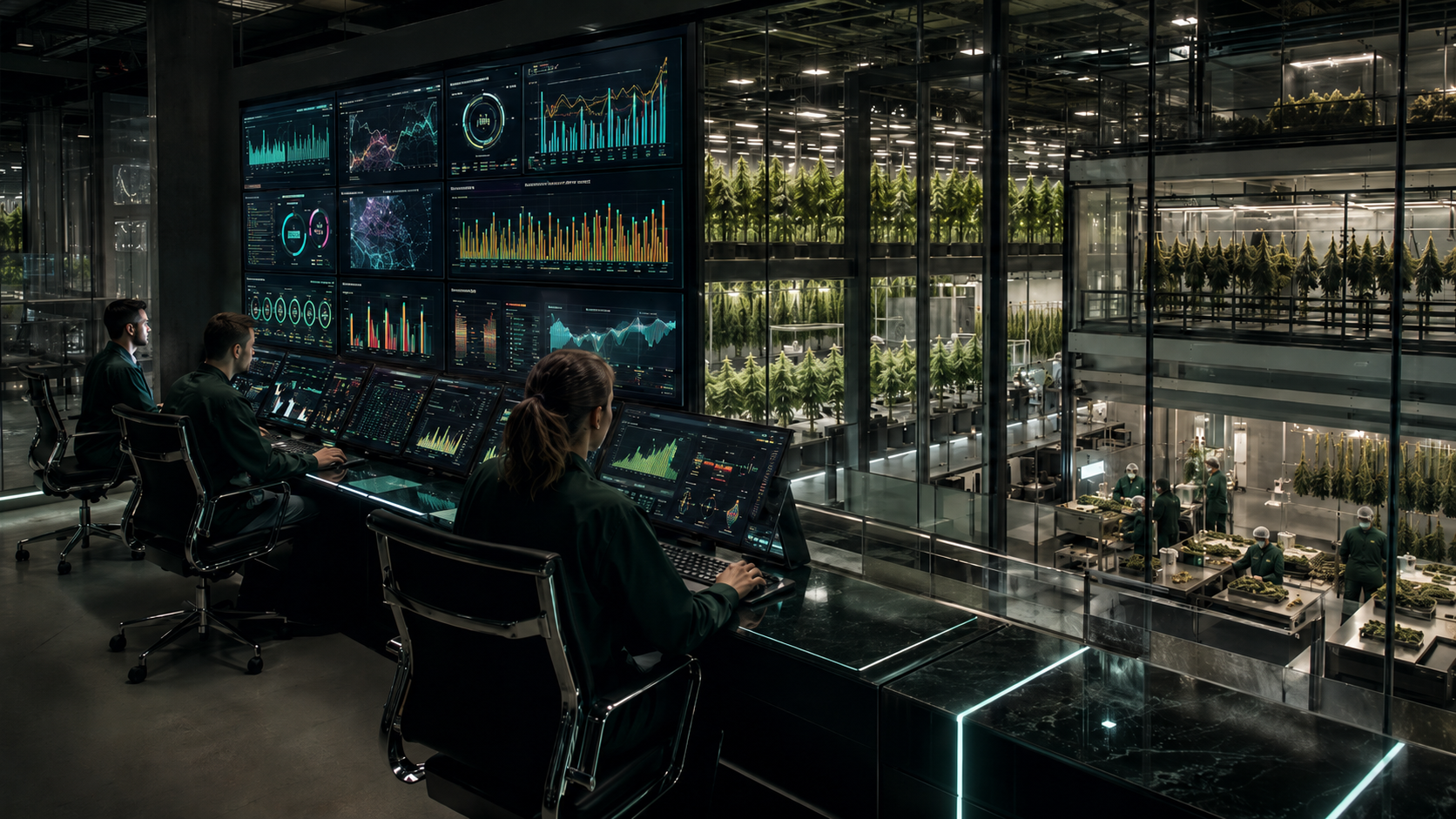
The cannabis industry has undergone a remarkable transformation over the past decade. What began as a fragmented, largely informal ecosystem shaped by prohibition and fueled by passion has evolved into one of the fastest-growing regulated markets in the country. Today, operators are no longer simply cultivating and selling cannabis; they are building scalable businesses in an increasingly competitive, scrutinized, and sophisticated environment.
With that evolution comes a fundamental shift in how success is defined. The next phase of cannabis growth will not be driven by intuition alone, but by operational precision. Businesses that once relied on “feel” and experience must now embrace data, standardization, and compliance frameworks to remain viable. Between the pressures of scaling multistate operations, navigating complex regulations, and meeting rising consumer expectations, the contrast between patchwork processes and precision systems has never been starker or more consequential.
The legacy of intuition
The foundation of today’s cannabis industry was built by legacy cultivators whose ingenuity and craftsmanship carried the plant through decades of prohibition. These operators developed sophisticated growing techniques without access to formal research, institutional capital, or modern infrastructure. Their methods — hand-trimmed flower, closely monitored by sight, smell and touch — produced some of the most celebrated cannabis in the world.
Post-harvest practices were equally hands-on. Techniques like jar curing and “burping” became industry standards, not because they were scalable, but because they worked within the constraints of the time. Environmental adjustments were made based on instinct rather than instrumentation. Quality was assessed subjectively, relying on the expertise of seasoned cultivators rather than quantifiable metrics.
These approaches reflect a deep respect for the plant and an intimate understanding of its nuances. But they also reveal inherent limitations. Without consistent data capture, repeatability becomes difficult and variability between batches increases significantly. As operations scale, these inconsistencies eventually lead to uneven product quality, inefficiencies and lost revenue opportunities.
The complexity of scale
The challenge has become more difficult in today’s commercial environment. Modern cannabis operators are managing multiple facilities, dozens or even hundreds of SKUs, and distribution across diverse regulatory markets. The complexity alone introduces risk. Without standardized processes and measurable controls, small deviations in cultivation, post-harvest handling, or storage can lead to significant downstream impacts: batch variability, product degradation, excess waste and, ultimately, brand erosion.
Scaling cannabis is not simply about producing more. It is about producing consistently. That requires a level of operational discipline that legacy methods on their own cannot reliably deliver. Today it is increasingly clear that controlled environments, documented standard operating procedures (SOPs), and real-time performance metrics are essential to maintaining both quality and margins.
At the same time, regulatory expectations are intensifying. As cannabis continues its march toward broader legalization and normalization, oversight is increasing in parallel. Operators should anticipate stricter testing requirements, more robust track-and-trace systems, and a growing alignment with Good Manufacturing Practices (GMP) and formal quality-assurance protocols.
In this environment, repeatability and documentation become crucial. It is no longer enough to produce a great batch once. Operators must be able to produce it the same way every time. Compliance often is viewed as a burden but, in reality, it provides a framework for operational excellence. The same systems that ensure regulatory adherence also enable better decision-making, improved efficiency, and reduced risk. In some cases, an operator’s license may depend on those characteristics.
The role of modern technology

Fortunately, technology is rapidly closing the gap between legacy practices and modern operational demands. Across the value chain, data-driven tools are transforming how cannabis businesses operate.
At retail, point-of-sale analytics and inventory management systems are enabling operators to better understand consumer behavior, optimize product mix, and refine pricing strategies. Data-driven merchandising allows retailers to tailor offerings to specific customer segments, improving both the shopping experience and overall revenue performance. Forecasting tools help reduce stockouts and overproduction, aligning supply more closely with demand.
In cultivation, integrated environmental control systems are bringing new levels of precision to the grow environment. Advanced HVAC, lighting, and irrigation systems paired with sensors and software platforms allow operators to monitor and adjust conditions in real time. Data collection on yield, cannabinoid profiles, and plant health provides valuable insight that can be used to refine SOPs and improve consistency across harvests.
Post-harvest, long considered one of the most variable and least controlled stages of production, also is undergoing a transformation. Controlled drying, curing, and storage technologies are replacing inconsistent manual processes, thereby reducing reliance on subjective decision-making. These systems help preserve terpene profiles, stabilize moisture content, and deliver more uniform outcomes from batch to batch. Just as important, they generate data that can be integrated into broader operational analytics, creating a continuous feedback loop for improvement.
This shift toward precision is closely tied to the emergence of cannabis as a true consumer packaged good (CPG). Like food, beverages, and pharmaceutical products, cannabis increasingly is evaluated based on consistency, safety, and reliability. Consumers expect clearly labeled products, predictable effects, and a high level of quality assurance, regardless of where or when they make a purchase.
Meeting these expectations requires more than great genetics or skilled cultivation. It demands systems that can deliver a repeatable experience at scale. Data-driven operations enable that consistency, providing the foundation for strong, trustworthy brands. In a crowded market, consumer loyalty is built on not just novelty, but also reliability and the confidence that a product will perform the same way every time.
As the cannabis industry continues to mature, the path forward is not about replacing craftsmanship with automation, but about integrating the two. The knowledge and intuition developed by legacy operators remain invaluable. The goal is to augment that expertise with data and systems that enhance precision, reduce variability, and support scalability.
Embracing data, standardization, and compliance should not be seen as a departure from cannabis culture, but as its evolution. These tools allow operators to protect what makes their products special while ensuring they can deliver that experience consistently to a broader audience. In that sense, operational rigor becomes a boon to craftsmanship rather than a constraint.
Defining the future
Looking ahead, federal rescheduling could further accelerate this shift, bringing increased oversight and higher standards across the industry. Operators who already have invested in data-driven systems and process control will be better positioned to adapt, while those relying on patchwork methods may struggle to keep pace.
The future of cannabis will be defined by those who can balance art and science and honor the plant’s legacy while embracing the discipline required to scale the industry responsibly. Precision is no longer optional. It is the foundation for trust, the driver of efficiency, and the key to sustainable growth in the next era.

With extensive experience in environmental control systems and cultivation operations, Ed Wells serves as vice president of sales at Cannatrol, where he works closely with commercial cultivators, operators, and international partners to modernize cannabis post-harvest practices.