
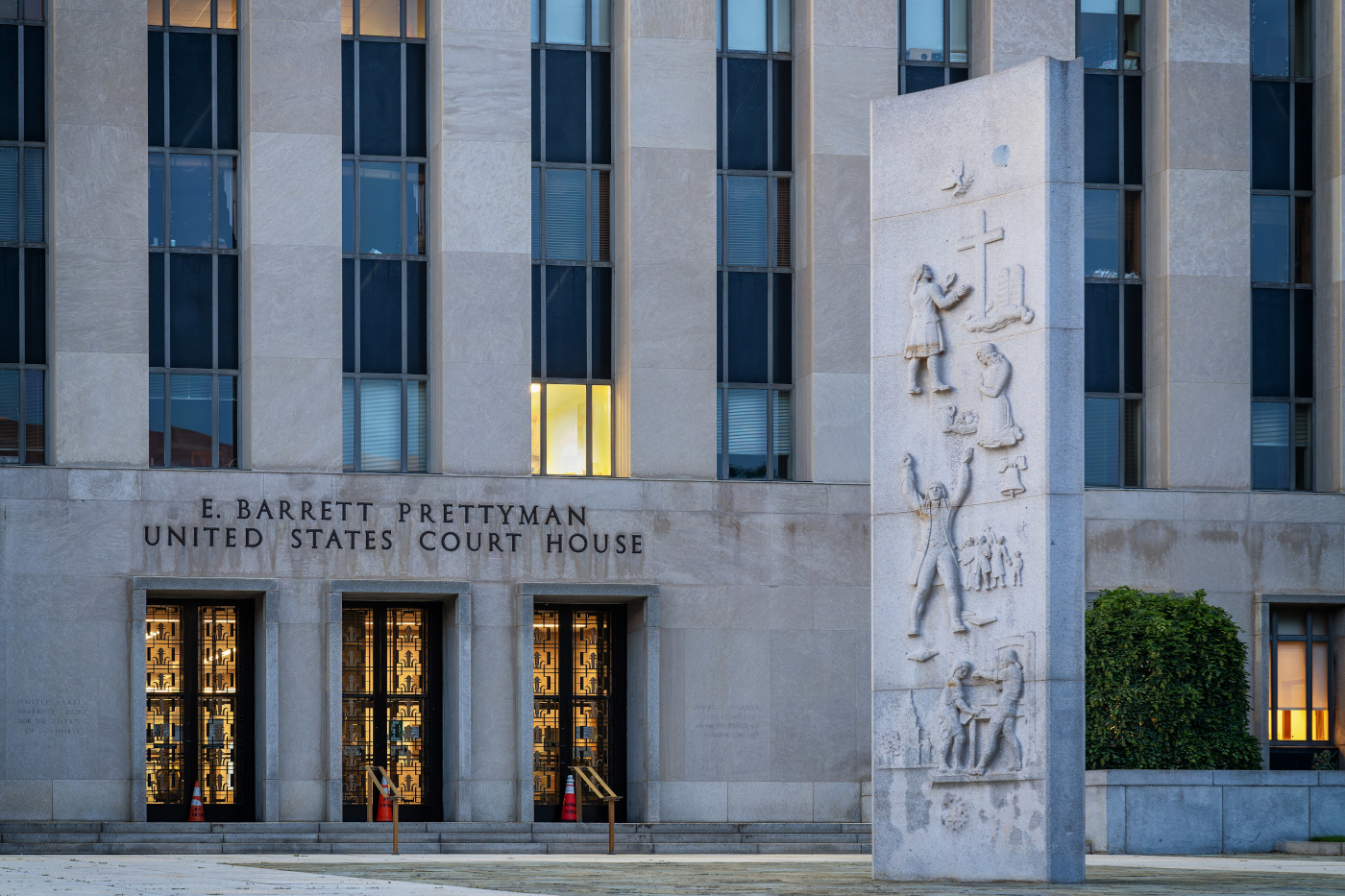
WASHINGTON – The U.S. Court of Appeals for the D.C. Circuit on Wednesday declined to suspend Attorney General Todd Blanche’s order moving certain marijuana products and state-licensed medical marijuana activity to Schedule III of the Controlled Substances Act (CSA) while multiple challenges to the policy proceed.
A three-judge panel concluded the challengers had failed to satisfy the “stringent requirements” for a stay pending judicial review. The September 9 order did not explain which requirements the challengers failed to meet, leaving Blanche’s rescheduling framework in effect without resolving the underlying questions about its legality.
Blanche signed the order April 22, transferring FDA-approved marijuana products and marijuana subject to qualifying state medical licenses from Schedule I to Schedule III. The order took effect April 28, when it was published in the Federal Register. Marijuana outside those categories remains in Schedule I while a separate Drug Enforcement Administration proceeding considers broader rescheduling.
The stay request was filed by the National Drug and Alcohol Screening Association and three affiliated companies: MMJ International Holdings, MMJ BioPharma Cultivation, and MMJ Biopharma Labs. The companies are among several petitioners challenging the rescheduling action in consolidated proceedings before the appeals court.
The challengers contend Blanche lacked authority to use provisions of the CSA governing international treaty obligations to accomplish the immediate rescheduling without completing the normal administrative process. The Justice Department disputes that interpretation and has defended the order as a lawful exercise of the attorney general’s authority under the CSA.
Wednesday’s ruling does not decide that dispute; it leaves the order in effect while the underlying litigation proceeds.
The court also denied requests by MedPharm Iowa LLC, which does business as Bud & Mary’s, and Tri-Mountain Pure LLC to intervene as full parties defending the rescheduling order. The state-licensed marijuana operators argued their economic and regulatory interests could be directly affected if the court ultimately vacates the order.
Although the companies will not become intervenors, the court permitted them to participate as amici curiae, or friends of the court.
The consolidated litigation includes challenges filed by Smart Approaches to Marijuana and the National Drug and Alcohol Screening Association, the states of Nebraska and Indiana, New Directions Addiction Recovery Services, and several other petitioners. Louisiana initially joined the states’ challenge but later moved to withdraw.
The court directed the parties to coordinate briefing as the consolidated cases move toward consideration of the merits.
The denial of a stay does not determine whether Blanche’s rescheduling order ultimately will survive judicial review.