

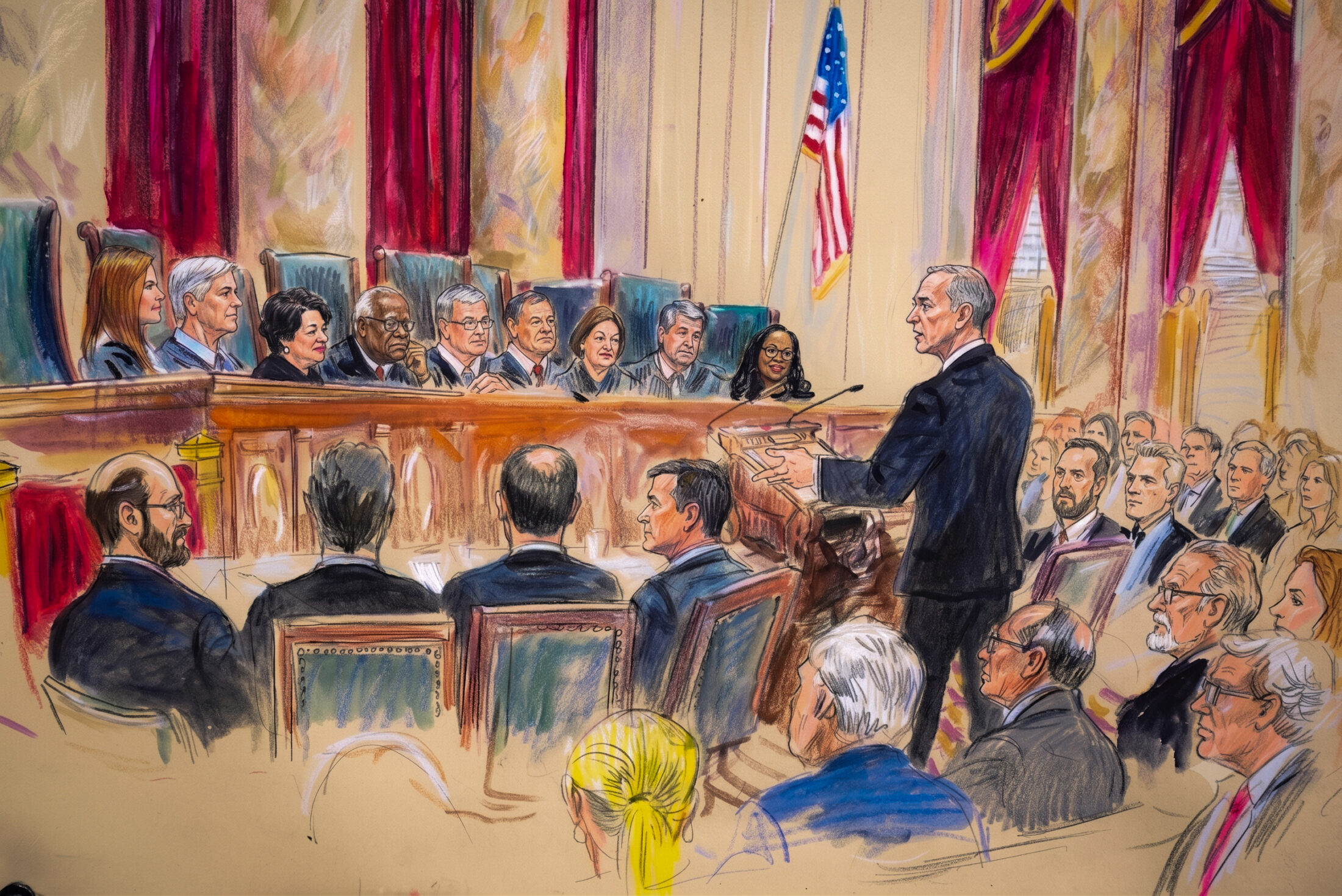
The Drug Enforcement Administration’s formal hearing on marijuana rescheduling begins June 29 in Arlington, Virginia, with one unusual feature: Every private participant selected by the agency opposes moving marijuana from Schedule I to Schedule III.
The federal government will be the sole proponent of the proposed rule and is expected to present the affirmative case for moving marijuana to Schedule III. But the seven outside participants granted formal hearing status represent law enforcement, drug testing, anti-legalization advocacy, state governments, drug-impaired-driving victims, and medical or pharmacy professionals who have publicly criticized cannabis reform.
That distinction matters because designated participants can do more than submit comments. They may present witnesses, introduce evidence, cross-examine other witnesses, and file legal briefs after the hearing concludes.
The proceeding, which will conclude no later than July 15, will be conducted under guidelines established by the Administrative Procedure Act (5 U.S.C. 551–557), with Chief Administrative Law Judge Derek C. Julius presiding. Julius is a former federal trial attorney. He was appointed an immigration judge in 2024 after serving from 2022 to 2024 as Foreign Section Chief in DEA’s Office of Chief Counsel. Before joining DEA, he spent more than a decade in the Justice Department’s Office of Immigration Litigation and also completed a detail in the department’s Fraud Section.
The hearing will not be livestreamed or broadcast, according to Julius’s preliminary order.
What the hearing will decide
The hearing concerns whether marijuana as a whole should move from Schedule I to Schedule III under the Controlled Substances Act (CSA). The question is narrower than the April order that moved FDA-approved marijuana products and marijuana regulated under state medical-cannabis licenses to Schedule III.
“[T]he scope of this hearing is not to discuss the rescheduling of medical products approved by the Food and Drug Administration that contain marijuana and of medical marijuana products already regulated by the states, which has already occurred,” Julius wrote in his preliminary order. “Accordingly, no evidence or testimony will be received on that matter. The narrow issue in this matter is whether the remainder of marijuana, as defined in the CSA, should be transferred from its current place on Schedule I of the list of controlled substances to Schedule III.”
Participant selection controversy
Under federal rules, an “interested person” eligible to participate is someone “adversely affected or aggrieved” by the proposed rule. DEA selected seven such parties from the petitions it received.
The agency’s decision has drawn criticism from reform groups including NORML, which argues that consumers, patients, and other supporters of reform should be allowed to participate directly in a hearing that could shape the record for future litigation and rulemaking.
“A fair administrative process should include the voices of those most directly affected by federal cannabis policy: consumers, patients, and the communities that have lived under prohibition,” said Joseph A. Bondy, chairman of NORML’s board of directors and counsel to the advocacy organization. “Excluding NORML from this hearing deprives the record of that perspective and risks producing a process that is materially incomplete at the very moment when federal marijuana policy requires clarity, balance, and restraint.”
The seven private participants
National Drug & Alcohol Screening Association
The National Drug & Alcohol Screening Association (NDASA) represents drug and alcohol testing professionals, including employers, laboratories, medical-review officers, and related service providers.
The organization has publicly opposed the federal government’s April action moving state-regulated medical-marijuana products to Schedule III and is among the parties challenging that order in federal court.
NDASA’s likely focus at the hearing will be workplace safety, employer drug-testing programs, and the practical difficulties of measuring impairment or maintaining drug-free workplace policies as federal cannabis restrictions change.
That is a legitimate institutional perspective, but it is also worth understanding as a business-sector position: NDASA’s members operate in a regulatory environment heavily shaped by federal drug policy.
Tennessee Bureau of Investigation
The Tennessee Bureau of Investigation will represent a law-enforcement perspective.
Tennessee has not adopted a comprehensive medical-cannabis program, and state officials historically have opposed broad cannabis legalization. The agency’s participation is likely to center on enforcement concerns, impaired driving, diversion, public safety, and the interaction between federal scheduling and state criminal laws.
Law-enforcement testimony may be particularly influential in a formal DEA hearing, because the agency itself sits within the Department of Justice and the record is being developed under the Controlled Substances Act.
Smart Approaches to Marijuana
Smart Approaches to Marijuana, commonly known as SAM, is one of the country’s most visible organizations opposing cannabis reform.
Led by former White House drug-policy adviser Kevin Sabet, the group consistently has argued marijuana should not be normalized through commercial legalization or broad deregulation. SAM also is challenging the April Schedule III order in federal court.
At the hearing, SAM is likely to emphasize public-health concerns, youth access, high-potency products, commercialization, mental-health risks, and what the organization describes as the unintended consequences of state legalization.
SAM’s role in the hearing gives a national anti-legalization organization direct access to the testimony, cross-examination, and briefing process.
Nebraska, Idaho, Indiana, and Louisiana
DEA selected Nebraska, Idaho, Indiana, and Louisiana as a joint state-government participant.
The grouping is notable because the states do not all occupy the same position in the state cannabis marketplace. Idaho remains one of the country’s most restrictive jurisdictions on marijuana policy. Nebraska and Indiana have not adopted comprehensive medical-cannabis programs. Louisiana, by contrast, operates a state-regulated medical-cannabis program.
Nebraska, Indiana, and Louisiana, but not Idaho, separately challenged the April order in the U.S. Court of Appeals for the District of Columbia Circuit. Their arguments raise procedural and statutory objections to the federal government’s decision to move certain medical-marijuana products to Schedule III before completing the broader rescheduling rulemaking.
The states’ participation could introduce issues involving federalism, treaty obligations, public safety, medical-program oversight, and whether the Justice Department followed the required administrative process.
DUID Victim Voices
DUID Victim Voices is an advocacy organization focused on vehicular crashes involving drivers alleged to have been impaired by drugs.
The group has long emphasized drug-impaired driving, particularly incidents involving marijuana. Its perspective is likely to focus on roadway safety, toxicology, cannabis impairment, and what advocates describe as shortcomings in existing methods of detecting marijuana-related impairment after a crash.
Its role in the hearing may overlap with arguments expected from law enforcement and from Phillip Drum, a clinical pharmacist whose public work has focused heavily on marijuana and impaired driving.
Kenneth Finn, MD
Kenneth Finn is a physician specializing in physical medicine and rehabilitation and a prominent critic of marijuana legalization and rescheduling.
He has served on Colorado advisory bodies related to medical marijuana and adult-use legalization and is co-vice president of the International Academy on the Science and Impacts of Cannabis, an organization that argues expanded marijuana access can create significant health and social risks.
Finn also was selected as a participant in the earlier marijuana-rescheduling hearing process initiated in 2024 before that proceeding was withdrawn.
Finn has publicly contended rescheduling would force physicians to recommend cannabis without proper scientific or safety guidelines. His arguments likely will focus on the difference between FDA-approved cannabis-derived medicines and state-regulated marijuana products, as well as questions involving dose consistency, product standardization, clinical evidence, psychiatric effects, and physician guidance.
For cannabis operators, Finn is likely to be one of the most consequential witnesses to watch because he brings medical credentials to arguments that often originate in anti-legalization advocacy circles.
Phillip A. Drum, PharmD
Phillip Drum is a clinical pharmacist with more than three decades of experience in community, hospital, oncology, and pharmacy-administration roles.
He also has spent years researching and speaking about marijuana and impaired driving. His public biography with the International Academy on the Science and Impacts of Cannabis says he became active in marijuana-impaired-driving research and public education after a family tragedy involving a driver allegedly under the influence of cannabis.
Drum’s inclusion may surprise some cannabis-industry readers because his professional credentials suggest a conventional clinical or pharmaceutical perspective. But his public work places him firmly among critics of marijuana legalization and state medical-cannabis systems.
He has argued that modern cannabis products pose public-health and roadway-safety risks and has questioned whether state medical-marijuana programs should be treated as equivalent to FDA-approved medicines.
Drum’s likely contribution will center on pharmacology, THC exposure, drug-impaired driving, testing limitations, high-potency products, and the distinction between approved cannabinoid medications and state-regulated cannabis products.
Why the participant list matters
The hearing will not determine rescheduling’s fate by itself. The administrative law judge will develop a record and issue a recommended decision, but DEA leadership ultimately will decide how to proceed.
Nevertheless, the participant list matters because it shapes who can test the government’s evidence in real time.
The federal government will carry the affirmative case for Schedule III. The private parties, however, are all positioned to challenge that case from different angles: public health, law enforcement, workplace testing, impaired driving, state sovereignty, medical standards, and administrative law.
Reform groups and cannabis-industry organizations that were not granted participant status may continue to argue their positions publicly and through litigation, but they will not have the same ability to call witnesses, cross-examine opponents, or submit party briefs in the hearing itself.
For the cannabis industry, the most useful question is not whether the hearing is balanced in the abstract. It is which arguments will enter the official record, who will make them, and how the Justice Department responds.