


WASHINGTON — Americans for Safe Access (ASA) has launched the Navarro Family Organ Transplant Resource Center, a national hub designed to end medical cannabis discrimination in organ transplantation. The center honors Patrick Navarro, a patient denied a life-saving lung transplant due to his legal medical cannabis use.
Key Resources Available
- For Patients: Guidance on navigating transplant program policies and reporting discrimination.
- For Clinicians: Evidence-based primers on cannabis and transplant eligibility.
- For Advocates: Policy frameworks to help states enforce anti-discrimination laws.
Why was Patrick Navarro denied a transplant?
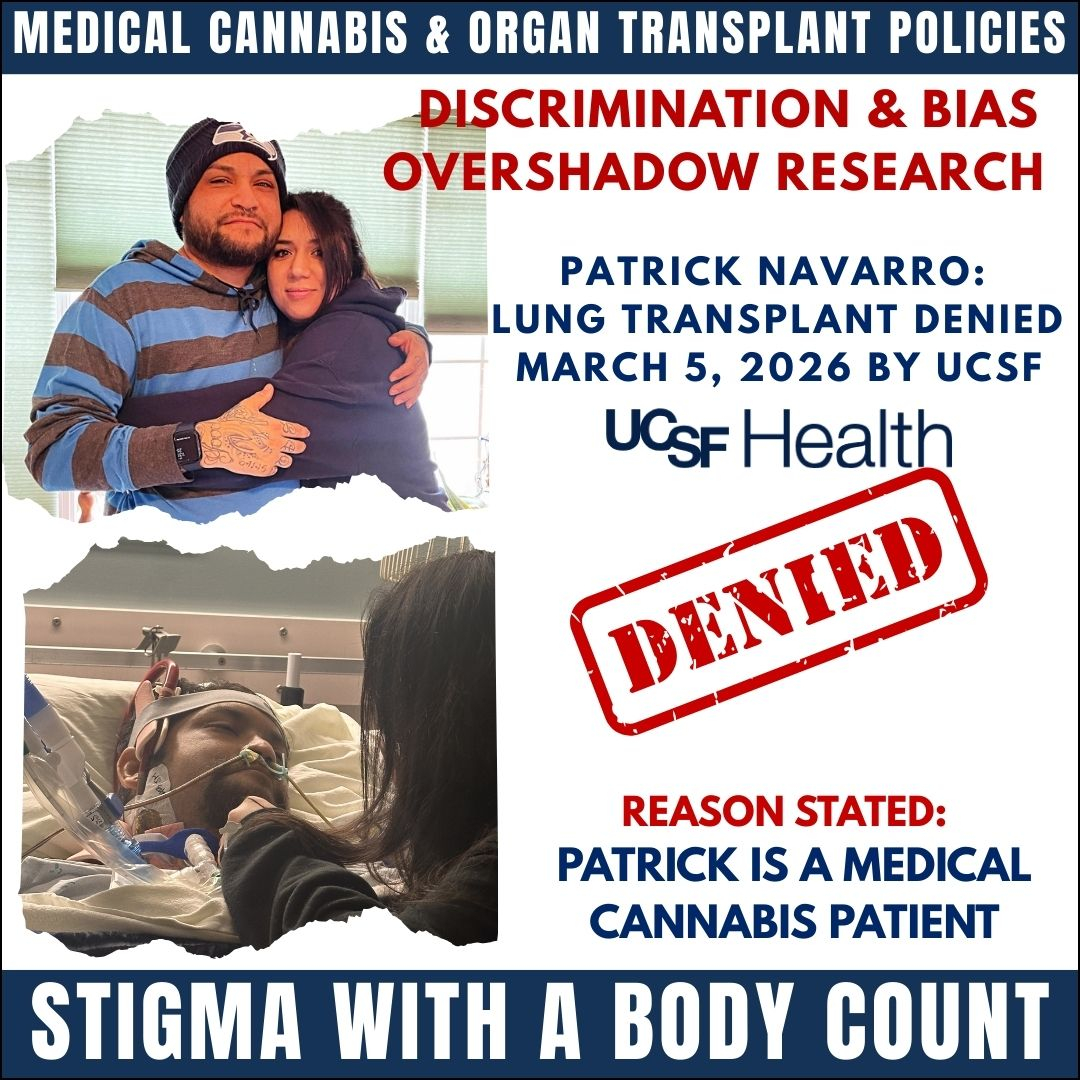
Navarro was denied a lung transplant by the University of California, San Francisco (UCSF) because his medical cannabis use for neuropathic pain was characterized as a “substance use” concern. Despite California’s 2015 law (AB 258) protecting medical cannabis patients, the transplant committee cited concerns over “durable abstinence,” highlighting a critical gap between state law and institutional policy.
Patrick Navarro’s story put a human face on a problem that many families do not discover until they are already in crisis. Even in states with medical cannabis laws, transplant program policies can remain inconsistent, unclear, or shaped by stigma rather than evidence-based care. For patients with end-stage organ disease, delays or barriers tied to medical cannabis can have life-or-death consequences.
“Patrick’s life mattered, and so does the truth about what families like ours are forced to face. By sharing Patrick’s story, we hope to help protect others and push for change.”
—Cindy Navarro
Evidence: Does cannabis use impact transplant success?
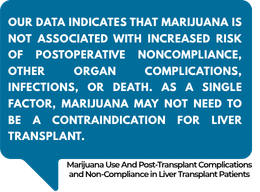
According to ASA’s landmark report, Stigma with a Body Count: Medical Cannabis & Organ Transplant Policies, there is no clinical evidence supporting the assumption that cannabis use is a contraindication to successful transplantation.
The report documented a problem that often remains hidden from the public eye: transplant access for medical cannabis patients is still shaped by stigma rather than medical evidence. Stigma with a Body Count revealed:
- Outdated assumptions continue to shape access to organ transplantation for medical cannabis patients, creating obstacles at every stage of the transplant process that can impact referrals, evaluations, waitlisting, active-list status, and aftercare.
- Clinical evidence does not support the assumption cannabis use is a contraindication to transplantation.
- Decisions that still restrict access to a life-saving procedure are grounded in stigma rather than medical evidence.
- Policies vary widely between programs and may include blanket ineligibility rules, abstinence requirements enforced through toxicology testing, or unwritten practices that leave patients vulnerable to inconsistent treatment.
- Many obstacles stem from institutional confusion between medical cannabis use and substance-use disorder.
- Legitimate concerns about contamination or drug interactions can be addressed through clinical management rather than prohibition.
The resource center’s goals
The Navarro Family Organ Transplant Resource Center provides educational materials, practical guidance, and policy resources to help families understand transplant program policies, identify potential discrimination, and advocate for evidence-based care. The center was created to support not only patients and caregivers, but also the advocates, attorneys, and healthcare professionals working to end discrimination against lawful medical cannabis patients in transplant systems.
“Patrick Navarro’s death is a heartbreaking loss, and we are honoring his life by making sure other families do not have to face these challenges alone and in the dark,” said Steph Sherer, founder and executive director of Americans for Safe Access. “Patrick, Cindy, and their family helped expose a hidden form of discrimination that has gone unchallenged for far too long. This resource center is both a tribute to their courage and a tool for change.”
ASA urges patients, caregivers, and families who have experienced discrimination related to medical cannabis and organ transplantation to speak out. Stories from the public are critical to documenting the scope of the problem, raising awareness, and advancing policy change, Sherer said.
“If this has happened to you or someone you love, please speak up,” she said. “Too many families have been isolated by fear, confusion, and time pressure. Reporting these experiences helps expose patterns of discrimination and builds the case for evidence-based reform.”
RIP Patrick Navarro 1984-2026
Patrick Navarro was a husband, father, brother, and survivor. The circumstances surrounding his death underscore the urgent need for federal reform to ensure that no patient is treated as less worthy of life-saving care because of their need for cannabis medicines.
“Through his melodies and his art, he shared his spirit with the world, leaving behind a legacy of sound and soul that will never be forgotten.”
—Patrick Navarro obituary
To honor his memory, the family has requested donations be made to Americans for Safe Access to help advance safe and legal access to medical cannabis.