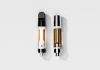


AMHERST, Mass. — State-level cannabis legalization in the U.S. is producing a lot of innovative ways to get high, but little in the way of evidence-based medical research to improve public health, according to new research from economists at the University of Massachusetts Amherst.
The study, published in the International Journal of Industrial Organization, shows that while recreational cannabis legalization nearly tripled cannabis-related patent filings in legalizing states, it did essentially nothing to spur clinical trials to understand how the substance affects human health. The research indicates the marketplace is evolving faster than the science meant to govern it — a gap that poses real risks.
“Legalization gives consumers more ways to use cannabis, but it doesn’t solve the fundamental problem for researchers. Access to high-quality research materials is still very limited,” explains Lucy Xiaolu Wang, assistant professor in the Department of Resource Economics and corresponding author on the paper.
Analyzing patent filings and clinical trial data at the state level from 2000-2020, Wang and co-author Nathan W. Chan, professor in the Department of Resource Economics, found that recreational cannabis legalization resulted in approximately 4.4 additional patent applications per state annually, while medical cannabis legalization was associated with a more modest increase of about 1.4 patents.
However, patent growth was concentrated almost entirely in commercial products and methods, such as vaporizers, edibles and production techniques, rather than in upstream medical research. Method-related patents rose by roughly 1.85 per state annually, and product-related patents rose by approximately 2.4, while patents tied to medical applications showed no meaningful increase.
Clinical trial activity was even more telling. Neither medical nor recreational legalization produced a statistically significant increase in cannabis-related clinical trials, across all categories examined, including trials focused on cannabis as a treatment, studies of its effects, and research on abuse and dependence.
Wang and Chan describe the divergence between commercial and medical innovation as a potential market failure with consequences for consumers. New products, including higher-potency cannabis strains and novel delivery devices, are reaching the market without the clinical evidence needed to guide safe use or inform physician recommendations.
“This is not your parents’ cannabis,” Chan says. “People are finding creative new ways to use these products, and we don’t yet understand how they impact health.”
He points to the 2019-20 outbreak of EVALI, a lung injury associated with vaping unregulated cannabis products, as a real-world example of what can happen when product innovation outpaces medical understanding.
Despite legalization of some form in 40 states and the District of Columbia, cannabis remains a Schedule I controlled substance under federal law, which Wang and Chan identify as the primary barrier to clinical research. Patenting, by contrast, does not require physical possession of cannabis, allowing that form of innovation to proceed largely unimpeded.
The researchers conclude that state legalization, whatever its other merits, is not going to close the gap between commercial innovation and medical knowledge on its own. They suggest the Medical Marijuana and Cannabidiol Research Expansion Act, signed into law in December 2022, is a promising federal step. The law establishes a new, separate registration process to facilitate marijuana research.
The findings may also serve as a cautionary tale for policymakers eyeing legalization of other Schedule I substances now being explored for therapeutic potential, including psilocybin, MDMA and LSD.
The study was supported by the Center for Data Science at UMass Amherst, the Max Planck Institute for Innovation and Competition, and the Institute for Humane Studies. A final discussion paper version, including the appendix, is available on the Social Science Research Network (SSRN).