
The question retailers hear most often has changed. It used to be “what has the most THC?” Now it’s more likely to be “how was this made?” or “can I see the COA?” (COA is an acronym for “certificate of analysis.”) That shift — from potency chasing to process awareness — is the most accurate measure of where the cannabis consumer actually is in 2026, and it’s reshaping the concentrate category in ways that raw market data alone doesn’t fully capture.
Rosin’s growth sends a signal
Concentrates have moved from a niche enthusiast category toward the cannabis mainstream, but the growth isn’t uniform. The segment that’s actually outperforming is narrow and specific: Rosin, a labor-intensive, craft-oriented, solventless product, grew 8.1 percent in year-over-year sales in an extract market that is otherwise largely flat to declining, according to BDSA. The same report shows the number of rosin products on the market expanded 11 percent, and average retail price held at $31 per gram — a significant premium that consumers are demonstrably willing to pay. In a market defined by persistent price compression, that’s a meaningful signal.
What it signals is the demand driving concentrate growth isn’t primarily about getting higher. It’s about knowing more.
Understanding that requires some grounding in what concentrates are and how the categories differ.
How concentrate categories differ
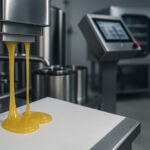
The three main categories reflect meaningfully different production approaches. Solventless products — rosin, bubble hash, hash rosin — are produced without hydrocarbon or alcohol-based extraction solvents, using combinations of ice water, heat, pressure, and mechanical separation. These products often carry a “cleaner” perception and command premium pricing. Solvent-based concentrates, including live resin, wax, badder, and shatter, use food-grade hydrocarbon solvents that are purged from the finished product; these are commonly used in infused pre-rolls and many vape formulations. At the far end of the refinement spectrum, crystalline and high-purity concentrates — diamonds, isolate, diamonds-and-sauce — strip most other plant compounds away to reach purity levels approaching 99 percent.
Consumers are asking better questions
Each category delivers a different expression of the plant, and each appeals to a different consumer at a different price point.
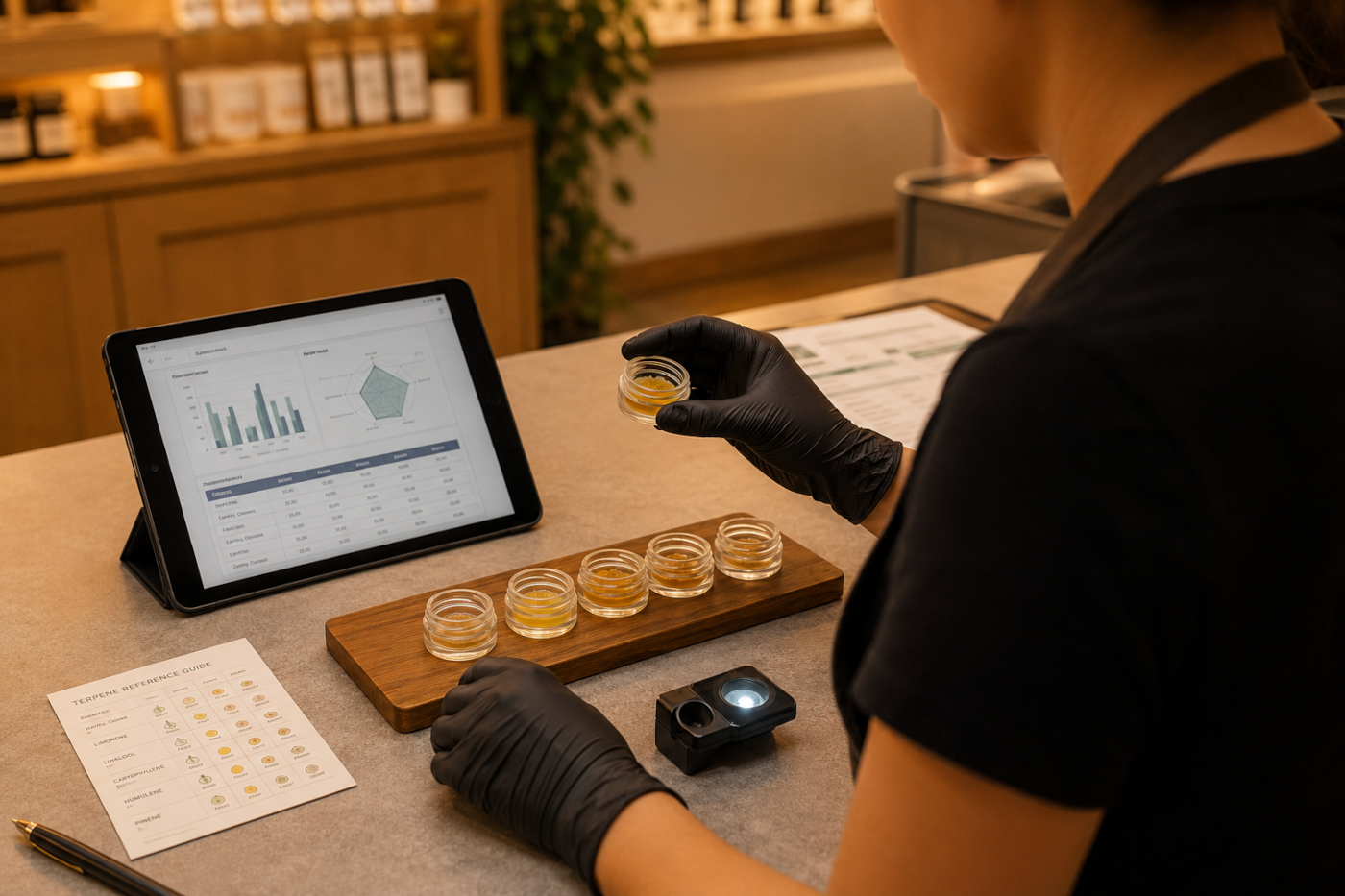
For retailers, the significance of those distinctions has grown considerably. Two years ago, most concentrate conversations on the sales floor started and ended with potency. Today, they’re more likely to involve extraction method, terpene profile, and whether a COA is available for the specific batch. That’s not a marginal shift. It’s a fundamental change in what the consumer expects to know before purchasing.
Market data points toward premium demand
The broader market data provides useful context. The global cannabis concentrate market was valued at $1.6 billion in 2025 and is projected to reach $6.8 billion by 2035 at a 15.7 percent compound annual growth rate (CAGR), according to Future Market Insights. Fortune Business Insights placed the broader cannabis extract category — which includes vapes, edibles, tinctures, and other extract-based formats — at $16.4 billion in 2025. Vapes and cartridges currently hold the largest product share at 47.5 percent of the global market, driven by convenience and bioavailability. Full-spectrum extracts lead the extract type segment with a 60.74-percent share, suggesting strong consumer interest in formulations that preserve a broader range of plant compounds.
That full-spectrum preference may reflect the same instinct driving rosin’s growth. Consumers aren’t just moving toward concentrates; they’re moving toward concentrates that preserve more of the plant, not less. The indica/sativa/hybrid framework is losing its organizing power on the retail floor as consumers increasingly focus on terpene profiles and the specific characteristics that shape effects. That’s a more sophisticated purchasing framework, and it requires a more sophisticated retail conversation.
Training turns product knowledge into retail value
That is why training is now critical infrastructure. The consumer who wants to understand the difference between live resin and rosin before purchasing, who expects to be able to scan a QR code for batch-specific lab results, who is asking about terpene retention rather than THC percentage — that consumer requires frontline staff who can meet them at their level of knowledge. Transparency is no longer a differentiator; it’s a baseline expectation. Brands that provide accessible COAs, clear sourcing information, and honest comparative product data are earning trust in a market where, historically, claims have outrun reality.
The implication for retail isn’t complicated, but it does require intention. Training programs that still center the conversation on THC percentages are preparing staff for a purchasing dynamic that’s already shifting. The consumers who are driving growth in the premium concentrate segment want to understand what they’re buying: the process, the plant, the data behind the label. Retailers who can deliver that conversation are better positioned to capture and retain those buyers.
Concentrates won’t displace flower, which remains the market’s foundation. But the premium concentrate segment is demonstrating something worth paying attention to: In a mature market under price pressure, the product categories with the most resilience aren’t the cheapest or the most potent. They’re the ones with the most to explain — and retailers who can explain them well are the ones with the most to gain.

Tripp Liles is director of sales training and tactics at Apotheca Cannabis Dispensary. His work centers on helping cannabis retailers translate complex compliance requirements into clear, confident customer conversations.