
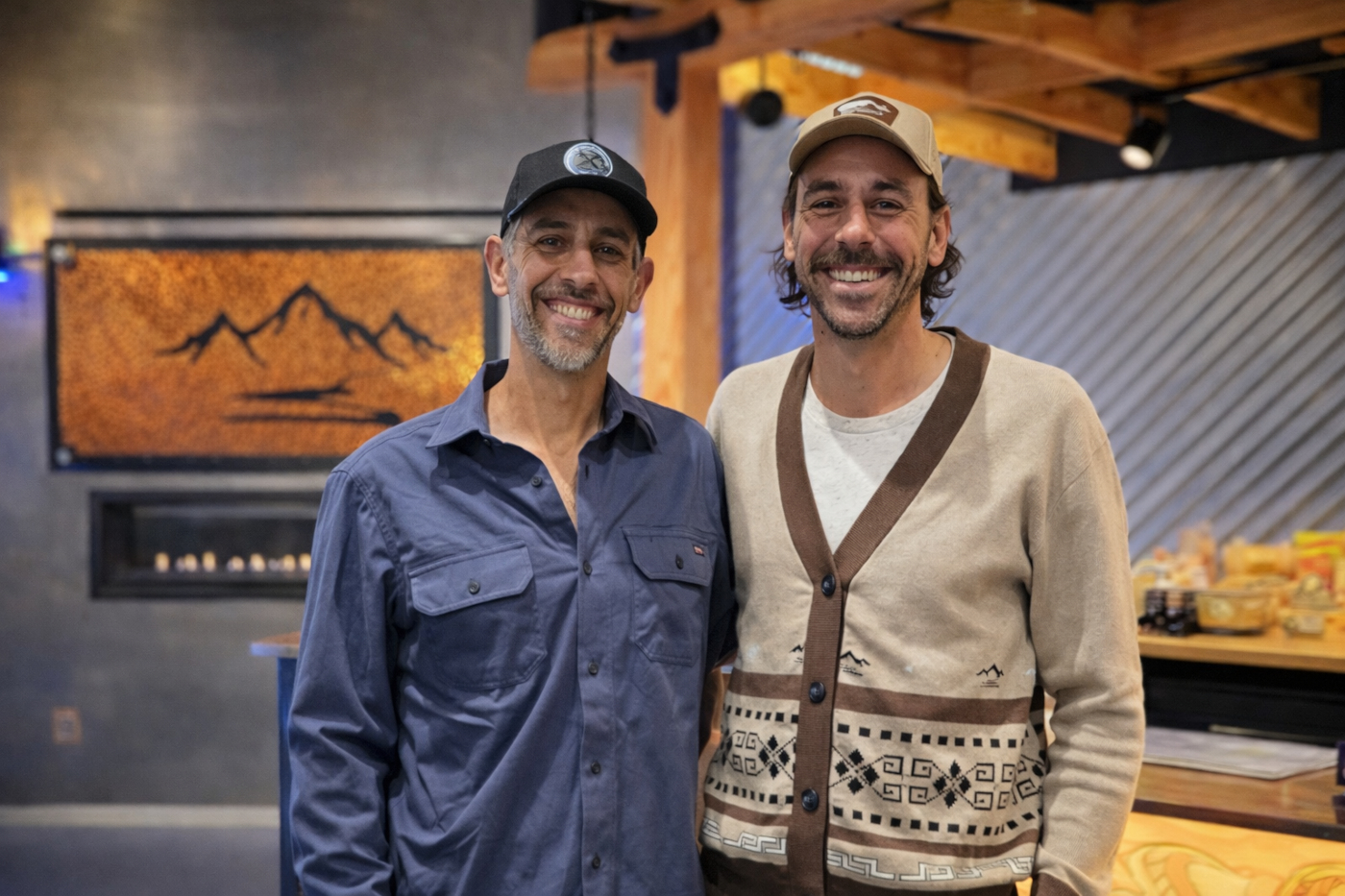
On the day Sam Hachey received his cannabis cultivation license, he stood outside an Alaska state building, hooting and hollering. “I thought it was the proudest moment of my life,” he said.
It was 2016. Alaska had recently legalized recreational cannabis, and Sam and his brother Joe — along with friends Leslea and James Nunley — had just secured one of the state’s first six cultivation licenses. They had no outside investors, no contractors, and a budget Sam would later describe as “laughably small.” But they did have a bare, 1,500-square-foot warehouse; Sam’s electrical experience; Joe’s background in mechanical engineering and construction; and a stalwart refusal to slow down.
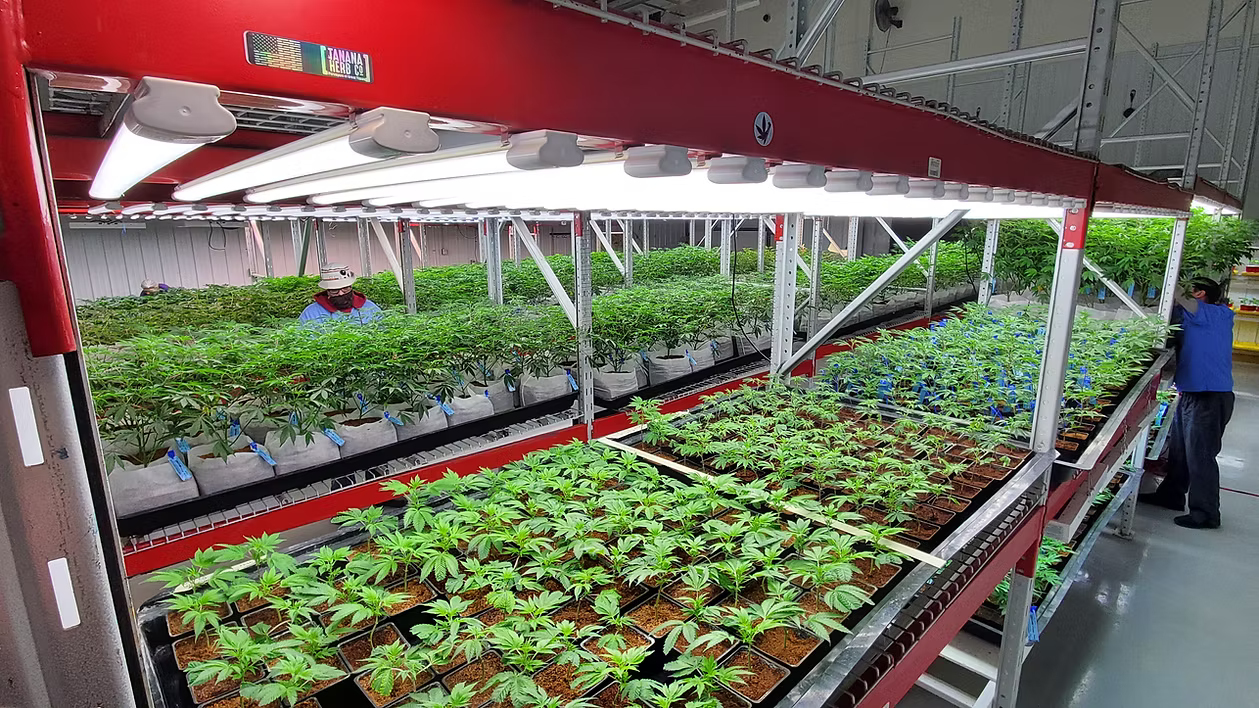
Nine years later, Tanana Herb Company operates out of a 48,000-square-foot facility in Fairbanks, runs a ten-week harvest cycle, and produces forty to forty-five strains at a time. The company’s products reach retailers from Juneau and Ketchikan to Bethel, Wrangell, and Dutch Harbor, a fishing port at the far end of the Aleutian Islands. The road to get where they are now — literally and metaphorically — was long, often treacherous, and occasionally involved a moose.
Building a cannabis company the hard way
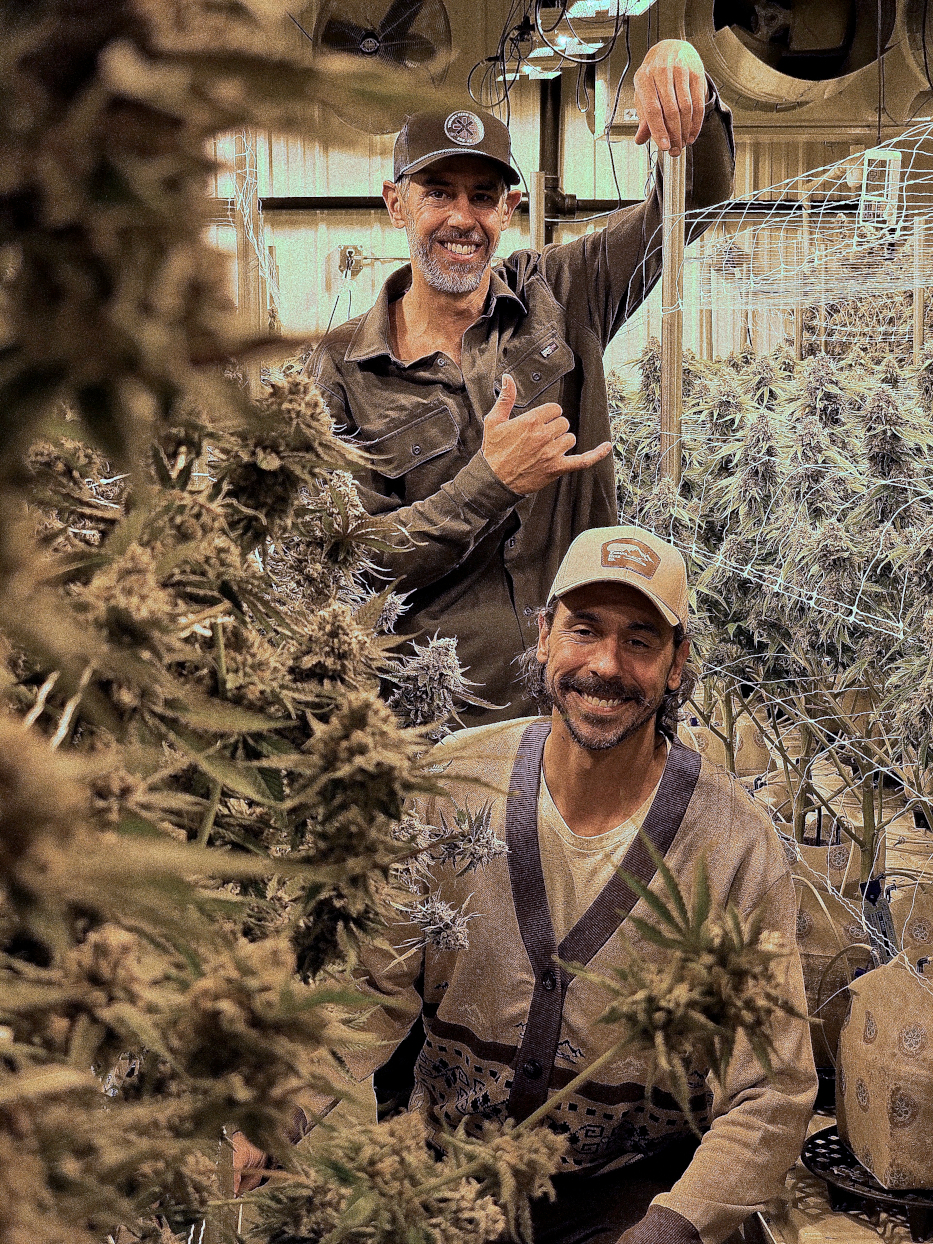
The Hachey brothers moved to Alaska in 2015, just as the state legalized recreational cannabis. Sam had worked in the legal industry in Colorado before relocating to Washington state. Heading to the Last Frontier with his brother just made sense, he said.
“We decided to move to Alaska and start a cannabis company,” he recalled. “Because, why not?”
The early days were a crash course in doing everything themselves. Alaska’s rules prohibited out-of-state financing, and the brothers didn’t want outside investors anyway. They had no intention of ceding control of what they were building. So they bootstrapped almost everything.
“We did all the work ourselves,” Sam said. “There would have been nowhere near enough money to contract all of this work out. Me, myself, and a thousand bucks got the manufacturing running. I didn’t try to reinvent the wheel. I read a book and a couple articles and tried things.”
Showing up — every day, in every condition — was the strategy.
“At the end of the day, I’m showing up. Joe’s showing up. It’s getting done,” Sam said.
Alaska changes the math
Today, Tanana is faring better than much of its competition. The company plans to open a second retail location this year and is building more flowering rooms, a new processing space, and additional offices and bathrooms. In a state where the failure rate for cannabis businesses runs around 50 percent — driven by market oversaturation, high taxes, and the recent incursion of a controversial process for converting hemp-derived CBD into THC — survival is success. Growth is a bonus.
“There’s about 240 or so retailers in the state, and we transferred product to 117 of them last year, which is pretty awesome,” Sam said.
Getting products to that many retailers means navigating Alaska’s terrain, which does not negotiate. Tanana sells 30–40 percent of its cannabis locally in Fairbanks, but the majority goes 350 miles south to Anchorage, the state’s primary population center. For much of the year, the road between the two cities is effectively impassable.
“It’s kind of a treacherous highway,” Sam said. “It’s beautiful in the summertime — no snow, twenty-four hours of daylight, and you can drive to your heart’s content.”
The other months are a different story. “There are landslides and moose and bears and other people,” he said, recalling a drive through Cantwell, near the highway to Denali, just as the sun set. “The road snakes down into this gorgeous river valley, and I remember driving about fifty miles per hour, just cruising.” Without warning, the weather took a turn for the worse. “It was just a white-out blizzard. I looked out my window and it was like a snow globe. It was the most crazy, vertigo-inducing experience. I thought I was going to die and fly off into nowhere.”
Wildlife encounters are their own category of adventure. “I once made eye contact with this moose, and it started running,” Sam said. “I slowed down thinking it would cross, and it matched my pace. I played chicken with this moose. It was icy. I was sliding. I was so close I could have just reached out my window and slapped his booty.”
Braving those conditions, he said, was simply part of the job. “There have been many times where I’m like, ‘Oh, it’s really dangerous to drive there.’ I would just drive slow and make the delivery, because I’ve got payroll, I’ve got a mortgage, I’ve got insurance.”
Those days are mostly behind the brothers now. As Tanana has grown, they’ve brought in transportation companies that handle long-distance deliveries in dedicated vehicles, offering both hub and product-transport services. Sam doesn’t miss the era when he and Joe got up at 4 a.m. to drive all day and reach Anchorage by 4 p.m., then begin making rounds.
The weekly delivery cadence, though, is something he considers a genuine competitive advantage. “The thing that sets us apart is we deliver every week,” he said. “I’m going to sell retailers more weed if I deliver every single week. The retailer only needs to put out a small amount of money, recover it during the week, and then use that money to buy more and recover again. That weekly delivery is very important for them.”
Built for the road
Four hundred miles of highway — much of it rough, remote, and weather-dependent — changes how you think about packaging. A pre-roll that leaves a Denver facility and arrives at a retailer fifteen minutes later is a different product from one that’s spent a day rattling around in a vehicle crossing the Alaska Range.
“When you’re in Denver and you’ve got a nicely rolled joint, you put it in a tub and the next day it gets picked up and driven fifteen minutes to a retailer and then put on the shelf,” Sam said. “But if you have 400 miles to go in a vehicle, that joint gets 400 miles of banging around.”
To protect their pre-rolls, Tanana uses U.S.-made paraffin-coated cardboard boxes for single and double-pack joints, along with six-joint slider boxes made of thick cardboard that can be recycled or composted.
Word of mouth in a giant state
Moving product is one challenge. Getting Alaskans to ask for it by name is another.
With fewer than 750,000 people spread across more than 665,000 square miles — a land mass roughly one-fifth the size of the lower forty-eight states — building brand awareness requires a different playbook. About 40 percent of the state’s population lives in Anchorage, but reaching the farthest-flung communities demands creativity.
For Tanana, word of mouth is the cornerstone. The team makes a point of showing up wherever potential customers gather, from vendor marketing days to public events, and connects personally rather than just promoting product. They also sponsor blocks of music on several radio stations to build name recognition across the state.
At one point, the brothers took it further, hosting their own unscripted radio talk show — “The Buzz” — featuring fire marshals, politicians, dog mushers, and “as many random people as we could get,” Sam said.
Nine years after Sam Hachey stood outside a state building hollering about his license, Tanana Herb Company is not just surviving — it’s expanding. In a market where roughly half of Alaska’s cannabis businesses have closed, that counts for something. The new retail location and additional build-out planned for this year count for more.
What got them here isn’t complicated. Two brothers showed up. They did the work. They kept showing up.
“Never slow down,” Sam said. “Never surrender.”