


- The tax shift: Reclassifying medical cannabis to Schedule III eliminates Internal Revenue Code Section 280E, ending an era where operators faced effective tax rates of 70% or more.
- The marketing challenge: Rescheduling does not lift paid-media advertising bans across Google, Meta, and TikTok.
- The solution: Operators must allocate their the 280E windfall to spend less on traditional channels and more on channels that compound over time.
When medical cannabis was reclassified to Schedule III, the largest single-day capital event in cannabis history hit the industry’s balance sheets. The elimination of Internal Revenue Code Section 280E ended the federal tax provision that has prevented cannabis businesses from deducting standard business expenses, taxing operators instead on gross revenue rather than net income. This vagary of the tax code contributed to effective federal tax rates of 70 percent or more for some companies. Maryland dispensaries alone will save an average of $805,000 per store annually.
That capital has to go somewhere. The default playbook says more billboards. More dispensary signage. A bigger field-sales team.
None of those channels are where the next decade of cannabis brand authority will get built.
Why rescheduling doesn’t solve the cannabis advertising ban
Cannabis remains banned from Google, Meta, TikTok ads, broadcast television, and most premium digital placements. Those bans are not lifting with rescheduling. Schedule III changes the tax code and the research pathway. It does not change paid-media policy at the platforms that dominate consumer attention. A $38.5-billion industry is still locked out of the advertising infrastructure other consumer packaged goods (CPG) companies take for granted.
This is the structural mismatch documented in The Cannabis Communications Gap, a 2026 research report 5W published last month. The findings are unforgiving: Cannabis brands spend 80 percent less on marketing as a percentage of revenue than CPG competitors, and the gap is widening.
Worse? Within that already-undersized budget, allocation skews toward the restricted channels and away from the ones where cannabis has no restrictions: earned media, search engine optimization (SEO), owned content, generative engine optimization (GEO), and compliant influencer marketing.
What are the best marketing vehicles for cannabis brands?
The brands that win the next 18 months will not be the ones that spend the most. They will be the ones that spend on the channels that compound over time.
1. Earned media: creating citable digital assets
A Forbes feature, a Fortune profile, or a trade-press deep dive creates a permanent, indexable, citable artifact that AI engines will surface for years. Paid placements vanish the moment the budget stops.
2. Generative engine optimization (GEO): winning AI citation share
ChatGPT, Claude, Perplexity, Gemini, and Google AI Overviews are now where consumers, retailers, and institutional investors research cannabis brands. The operators publishing structured, state-specific, credentialed content at scale today are accumulating “citation share” that late-movers cannot buy at any price. The math does not get more forgiving with a bigger budget; it gets harder.
3. Owned content: developing high-authority retrieval anchors
Research reports, category indexes, and proprietary data sets become vital retrieval anchors for large language models (LLMs). They get cited in news coverage, in policy debates, and on earnings calls. They are the closest thing cannabis has to a paid-media equivalent that AI engines will actually surface.
4. Compliant influencer marketing: leveraging ad-exempt channels
Most social media platforms ban cannabis ads, but they do not ban creators operating under Federal Trade Commission disclosure rules and state-level regulations. The creator economy is the one of the few digital channels cannabis actually can buy at scale.
Now, contrast that with where the 280E tax savings are heading by default: expanded retail footprints, more sales reps, larger paid buys on the few channels that allow them, and capital returns to investors. Each is defensible. None build brand authority that survives the next downturn.
The critical 18-month window for cannabis brand authority
Cannabis is in the narrow stretch between early-stage chaos and mature category consolidation. In that window, first-mover communications investments compound in ways they do not after every major operator has built brand infrastructure. The Gaming Trust Index 5W published late last year showed a category where earned media investment produced returns paid advertising could not replicate. Cannabis is a category in which almost no one has made that investment yet.
Eighteen months after the final rescheduling rule, the brands that built communications infrastructure will be the ones AI engines cite, journalists call, and institutional capital evaluates. The brands that spent the windfall on more of the same will be wondering why their customer acquisition cost kept climbing while a smaller competitor took the category.
Build the infrastructure before the crisis, not during it. The capital is coming. The question is whether cannabis operators will use it to earn the brand authority their ad-banned competitors had to build the hard way.
Schedule III is a tax event. What you do with it is a brand event.
Strategic Framework: Quick Reference for Operators
How should cannabis operators calculate and reallocate their post-280E tax savings?
Operators should resist the urge to treat the 280E elimination as a windfall for short-term paid acquisition or immediate retail expansion. Instead, treat this capital as a foundational investment in permanent brand infrastructure.
A strategic macroeconomic approach dictates reallocating a significant percentage of these newly recovered margins into compounding marketing channels: earned media, owned content data assets, and generative engine optimization (GEO). Building digital authority ensures your brand remains the definitive answer when consumers and investors query AI search engines.
Will the transition to Schedule III completely lift the cannabis advertising ban on major digital platforms?
No. This is the most critical compliance trap for operators in the post-280E landscape. While the federal government is shifting cannabis to Schedule III, private tech conglomerates like Google, Meta (Facebook/Instagram), and TikTok maintain their own independent terms of service regarding restricted goods.
Because cannabis remains a federally controlled substance, these platforms are highly unlikely to lift their blanket prohibitions on paid cannabis advertisements in the near term. Operators who plan their budgets around a sudden surge in digital paid ads will find themselves locked out of the primary CPG advertising infrastructure.
If paid digital ads remain restricted, how can brands legally scale their digital visibility?
To scale visibility legally without violating platform ad policies, brands must pivot.
- Compliant influencer marketing: While brands cannot buy paid ads on popular social media channels, third-party creators can legally discuss, review, and feature compliant products under standard Federal Trade Commission disclosure rules and state-level regulations.
- Retrievable owned content: By publishing structured, authoritative, and data-driven content (such as state-by-state market reports or proprietary consumer indexes), brands create “retrieval anchors.”
These compliant assets are heavily indexed by traditional search engines and prioritized by Large Language Models (LLMs) like ChatGPT, Gemini, and Perplexity when generating user summaries.
Why is the next 18-month window considered critical for cannabis brand authority?
The industry is currently in a high-stakes transition period between early-stage fragmentation and long-term enterprise consolidation. Right now, AI search engines and LLMs are actively building their semantic web relationships — deciding which brands are the trusted authorities for specific cannabis categories, regions, and medical applications.
The investments made into organic brand authority over the next 18 months will compound exponentially. Once an AI engine establishes a specific brand as a foundational citation source, unseating that competitor becomes incredibly difficult and expensive. Late-movers will find that no amount of future marketing spend can easily buy back the “citation share” surrendered today.
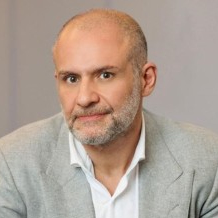
Ronn Torossian is founder and chairman of 5W, an AI communications firm. An expert in crisis communications, Torossian has counseled blue-chip companies, public-company boards, founders, and public figures through ransomware incidents, data breaches, regulatory investigations, high-stakes litigation, activist investor campaigns, product recalls, and reputational crises. He has lectured on crisis public relations at Harvard Business School. A regular guest on CNN and CNBC, he is a contributing columnist for Forbes and the Observer, and the author of For Immediate Release: Shape Minds, Build Brands, and Deliver Results With Game-Changing Public Relations, now in its second edition. He is a recipient of the Stevie American Business Awards Entrepreneur of the Year and the American Business Awards PR Executive of the Year, twice over, and was named to Business Insider’s Top Crisis Communications Professionals.