
I’ve spent close to two decades building cultivation operations. I’ve designed more than three million square feet of facilities and helped scale cultivation operations for some of the country’s best-known cannabis companies, including Cookies, STIIIZY, Originals, and Dr. Greenthumb. I’ve worked in facilities across multiple states alongside teams producing some of the industry’s most respected products. After all of it, the thing that stuck with me probably isn’t what you’d expect.
I’ve walked into facilities with exceptional genetics where the systems behind them were a disaster, and I’ve walked into others with unremarkable genetics but incredible discipline. Over time, I watched which of those operations succeeded, and it usually wasn’t the one with the flashiest genetics.
Every facility had talented people in it. That was never the problem. The problem emerged when one of those key people walked out the door and the quality walked out with them. The knowledge wasn’t really living in the company; it was living inside a handful of individuals.
That realization changed the way I think about growing. My mission became building systems good enough that excellence sticks around even when the people change.
Why potential doesn’t scale
To me, much of the industry has this backward. Everybody wants to talk about genetics, test results, terpene profiles, and THC numbers. That’s where the marketing money goes: proving your product is the best one on the shelf. A cultivator’s reputation can end up riding on one crop, one harvest, that single time everything lined up perfectly.
Meanwhile, the thing that helps determine who lasts is largely invisible. It isn’t glamorous, and it never shows up on a lab report. I’m talking about the boring infrastructure: training, documentation, processes, and workplace culture. Those are the things that let you achieve the same quality repeatedly, but they rarely receive the same attention.
I’ve watched the alternative play out more times than I can count. Somebody builds a facility around phenomenal genetics. The first crop comes out beautifully, the brand catches fire, and everybody celebrates. Then the second crop is a different animal. Maybe the weather shifted. Maybe somebody left. Maybe the one person who really understood the process is gone, and nobody ever documented why that person did things a certain way.
Suddenly, the results are all over the place and the quality slips. The brand blames the growers, the growers blame the genetics, and nobody points at the system because there was never a real system to point at.
That operation may have genuine potential. The genetics and talent may be real. But potential doesn’t scale if you can’t repeat it. At that point, you’re not really running a business; you’re getting lucky, and luck eventually runs out.
What a disciplined operation looks like
Now put that next to another kind of operation: one where the genetics are solid but perhaps nothing that would get a marketer excited. What the company has instead is a tightly run system. Procedures are documented. Everybody on the floor understands why they’re doing something, not just what to do. Training is standardized, and the outcome doesn’t depend on one grower’s gut feeling.
The quality remains consistent cycle after cycle. The operation may not have the flashiest story, but it has something more valuable: reliability. Its reputation doesn’t hinge on one standout test result, and its margins may be healthier because consistency means fewer failed crops, less waste, and more predictable costs.
When the market tightens, which of those two operations is better positioned to remain standing? Which one does an investor want to back? Which one can expand to a second or third location without coming apart at the seams? More often than not, it’s the second one.
The difference between growing and operating
A lot of how I think about this goes back to before I ever touched cannabis. I served in the Marine Corps, and one of the biggest lessons it drilled into me was that discipline isn’t about following rules for their own sake. It’s about building things that hold up under pressure, regardless of who happens to be in the room that day. That’s how I believe a cultivation operation should run.
That is the difference between growing cannabis and running an operation. A good operator isn’t waiting to react to problems as they blow up. The operator anticipates them before they become problems.
This matters more now because of where the industry is. Companies are consolidating, margins are being squeezed, and cultivators that built their names on a single great harvest are discovering that reputation doesn’t pay the bills if they can’t repeat the performance. If you bet everything on genetics without building the systems underneath them, a beautiful product you can’t reproduce becomes expensive unpredictability.
The market increasingly will demand the very thing it has often overlooked: sound operating systems.
Those systems don’t have to be complicated. They come down to documenting processes, training people well, and establishing protocols that hold no matter who is on shift. They require a team that understands the why behind the work, not just the what. They require a culture built around discipline instead of the occasional flash of brilliance—and that kind of culture comes from leadership, or it doesn’t come at all.
Measurement turns instincts into standards
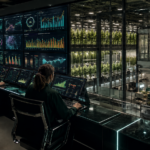
The other essential piece is measurement. Decisions should be measurable through environmental data, irrigation data, labor efficiency, yield consistency, and other meaningful indicators. Without data, you’re running on opinions instead of facts, and opinions don’t hold up over a hundred cycles. Data is what turns good instincts into standards you can repeat.
The strongest operations I’ve been part of share one trait: They don’t depend entirely on any single person. A key employee can leave without taking the company’s knowledge and operating consistency along with them. That isn’t an accident. It is designed into the organization.
For me, this became almost an obsession close to 20 years ago. I became absorbed in the challenge of controlling an environment precisely enough for plants to express their potential consistently.
That’s what separates a grower from an operator. A grower can hand you an incredible harvest. An operator builds an environment in which a well-trained team can produce exceptional harvests consistently because the system supports the outcome. A grower grows plants; an operator builds a business. The industry has spent years optimizing for the grower when it should have been optimizing for the operator.
That’s also a big part of why we pursued OCal certification. For anyone unfamiliar with it, OCal is California’s comparable-to-organic standard for cannabis, which cannot be certified USDA organic at the federal level. Certification isn’t a substitute for discipline. It puts an outside body in a position to confirm the operation follows the processes it claims to follow. The standards matter to me because the systems matter.
Companies that understand the importance of systems are quietly building businesses designed to last. Those that continue treating systems as an afterthought may find themselves increasingly vulnerable as the industry consolidates.
The question investors should ask
If you’re trying to decide where to put your capital, whom to partner with, or which operators have a durable edge, ask one simple question: Does this business succeed because of one person or because of a system? If it depends on one person, what you have may be a personality. If it relies on a sound system, you have something that can scale.
None of this means genetics, testing, and product quality stop mattering. They always will. But the brands positioned to lead the next decade won’t succeed on genetics alone. They’ll be the ones with the discipline to deliver quality consistently. That’s what mature markets understand: Over the long haul, consistency beats flashes of genius, and repeatability beats the highlight reel. Cannabis doesn’t need more heroes right now. It needs more operators.
The companies that dominate the next stretch won’t be remembered because they grew one perfect crop. They’ll be remembered because they built something capable of producing thousands of them. That, to me, is where this industry is headed.
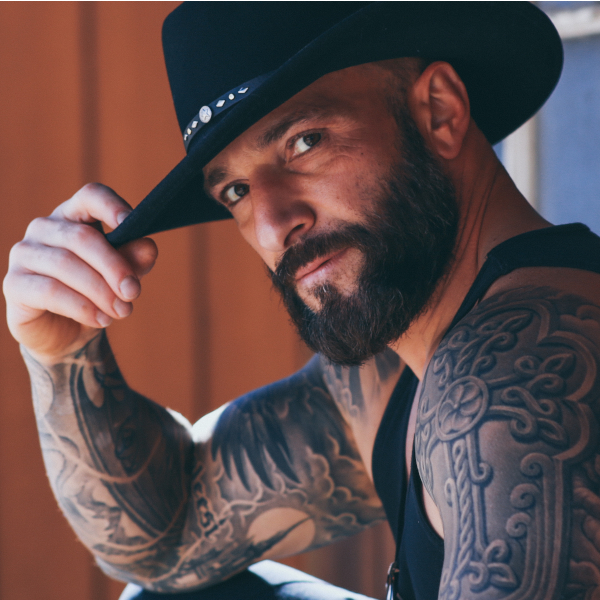
Sean Oganesyan is the founder of Surreal Yields and a Marine Corps veteran with nearly two decades of experience designing and scaling cannabis cultivation operations. He has helped build and optimize more than 3 million square feet of cultivation infrastructure for companies including Cookies, STIIIZY, Originals, and Dr. Greenthumb. His work focuses on standardized training, environmental controls, automation, and data-driven processes that reduce variability and improve yield and product consistency.