
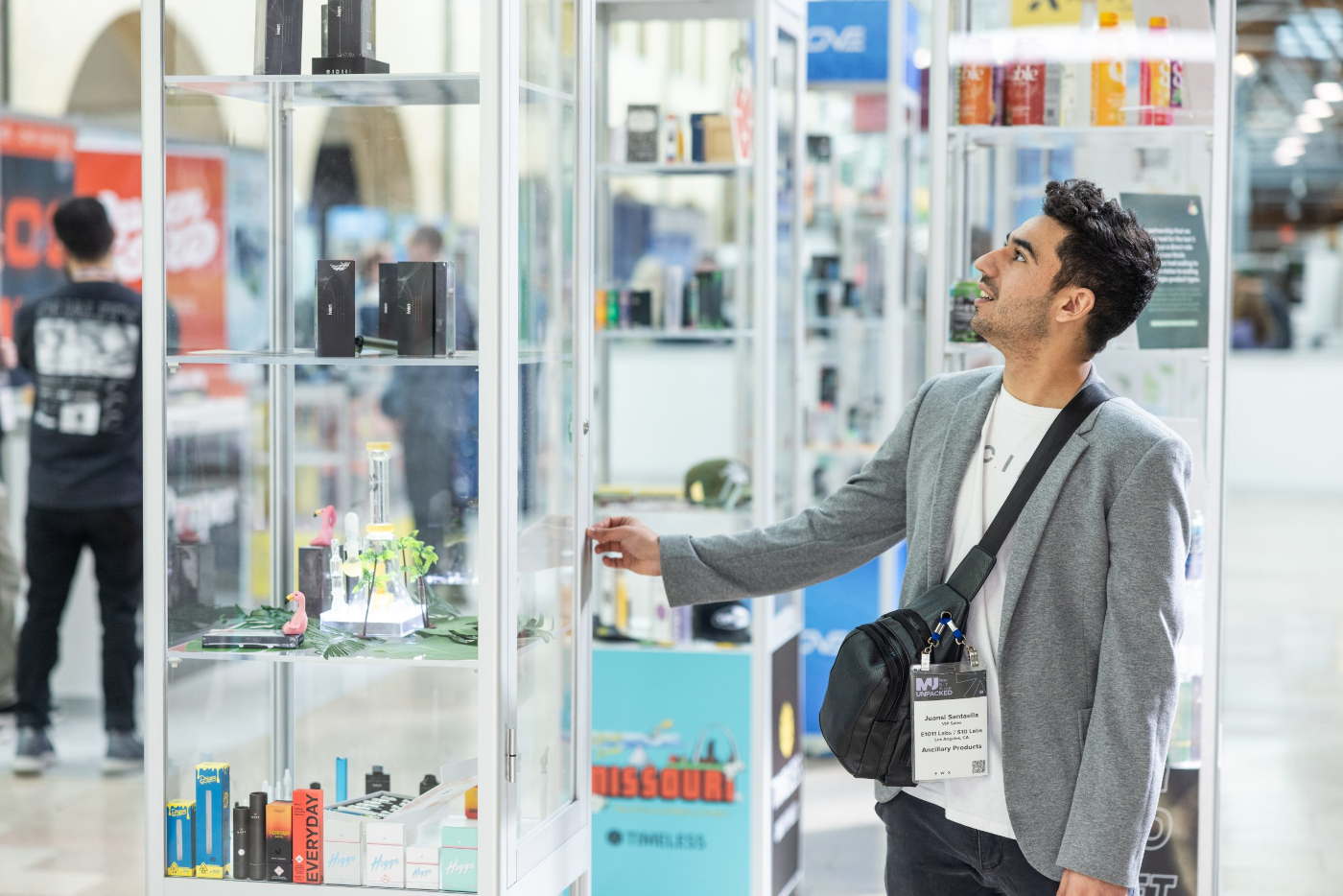
ATLANTIC CITY, NJ — MJ Unpacked’s East Coast conference wrapped last weekend with a clear consensus across its panel discussions: Cannabis operators who build lasting brand-retailer partnerships aren’t competing on price. They’re competing on experience.
Panels at the Atlantic City event drew retailers, brand leaders, and operators who shared strategies for merchandising, delivery, loyalty, and customer experience.
Meeting consumers where they are
In competitive markets, the channel matters as much as the product. In New York, 75 percent of dispensary business comes through online orders or delivery, according to Carol Tyson, director of marketing for New York brand Jaunty. That means a customer’s first interaction with a brand is often a digital menu — not a budtender or a shelf display. “Messaging has to be absolutely consistent across the board to eliminate any confusion within the purchase decision of the customer,” Tyson said during the “Designing the Buy: How Cannabis Merchandising Drives Sales” panel.
Delivery customers behave differently from in-store shoppers, noted Matt Krishnamachari, founder and chief executive officer of California’s Purple Lotus Dispensary. They tend to spend more — they don’t have time to visit a physical store — and they expect professionalism to match. The challenge for operators is translating the in-store brand experience to a single driver at someone’s door.
Brand presence beyond the shelf matters equally. “The brands that do well in our stores support our events,” said Dharsh Casinathen, co-founder of Joy Leaf in New Jersey.
Keep it simple
Joy Leaf carries about 72 brands and just under 600 SKUs, but 70 percent of revenue comes from 30 percent of those SKUs. Casinathen structures her inventory in three tiers — value, premium, and new and exciting — each calibrated to a specific customer type. Rather than organizing products by category, she builds around what she calls “moments”: sleep, relaxation, social occasions. When the story is built around a customer’s life rather than a product spec, she said, it sells.
The same principle applies to brand messaging. Customers don’t need to understand extraction technology or strain genetics. They need to know whether a product will meet their needs, and a well-trained budtender is the critical link. Casinathen said a budtender should be able to answer four questions in 15 seconds:
- What is this product?
- Who is it for?
- How do I sell it?
- Why is it best for this customer?
Avoiding the race to the bottom
Price competition dominated the conversation across multiple panels — specifically, the dangers of relying on it.
“If we just keep racing to the bottom, what happens when we can’t use price as leverage?” asked Spencer Belz, chief operating officer for SunnyTien Dispensary in Atlantic City. “When we all have razor-thin margins, we can’t run big discounts and compete with our neighbors.”
Delivery customers don’t price-shop the way in-store customers sometimes do, Belz asserted. They’ve already committed to ordering and are paying for reliability. But inconsistent discounting can destroy trust faster than high prices will. A customer who sees a 30-percent discount online and finds it gone at the register isn’t just disappointed. They’re done. “That’s the story of loyalty,” he said. “The 80/20 rule still holds: 20 percent of your customers are driving 80 percent of your revenue. That group isn’t looking for the cheapest option. They’re looking for a place they can rely on.”
Krishnamachari framed the loyalty equation in terms familiar to any consumer marketer: Nike and Coca-Cola don’t lead with price. They sell a lifestyle, a feeling, an identity. “We all want to spend money with people we like, companies we trust,” he said. “Once you resonate with that, the price tag isn’t going to matter so much.”
Getting your house in order
Brand resonance and merchandising strategy matter only if operations can back them up. Krishnamachari stressed that inventory, routing, team training, and technology must all be dialed in, and online, in-store, and delivery app listings must carry matching brand information, accurate inventory, and quality product photography. When a customer orders a product that turns out to be unavailable, they have just developed a trust problem with that retailer.
Casinathen’s starting point: Audit your digital menu as a first-time customer would. Is it easy to navigate? Are the categories correct? Are product photos current and consistent with what’s actually on the shelf? “That is the easiest fix we can make,” she said, “and it directly impacts sales.”
Technology that underperforms should be replaced, Belz said. Loyalty programs that don’t track properly, inventory systems that don’t sync, and e-commerce platforms that add friction are liabilities in a market where consumers expect the kind of one-click convenience Amazon has made the gold standard. “If you’re not able to fully provide that level of service,” he said, “they’re going to find somebody else who can.”
The bottom line
Retail that works is an ecosystem. The brand, the retailer, the budtender, the delivery driver, the digital menu, the loyalty program — none of it is expendable, and none of it functions in isolation. When every element is aligned around the customer’s experience, the margin holds and trust compounds. When any piece breaks down, no discount is deep enough to cover the gap.