

By Chris Pickering

Few retail industries operate under the level of regulatory scrutiny faced by cannabis dispensaries. Rules about age verification, purchase limits, and reporting continue to evolve, forcing operators to adapt quickly or risk falling out of compliance. Every transaction must meet strict regulatory standards, right down to the first interaction customers have with a dispensary: the ID scanner at the door.
- In cannabis retail, compliance starts before the transaction begins.
- ID-verification systems help reduce manual errors and speed customer intake.
- Integrated tools can support purchase-limit tracking across locations.
- Audit trails matter almost as much as the verification itself.
- Strong data-security practices are essential when handling customer ID information.
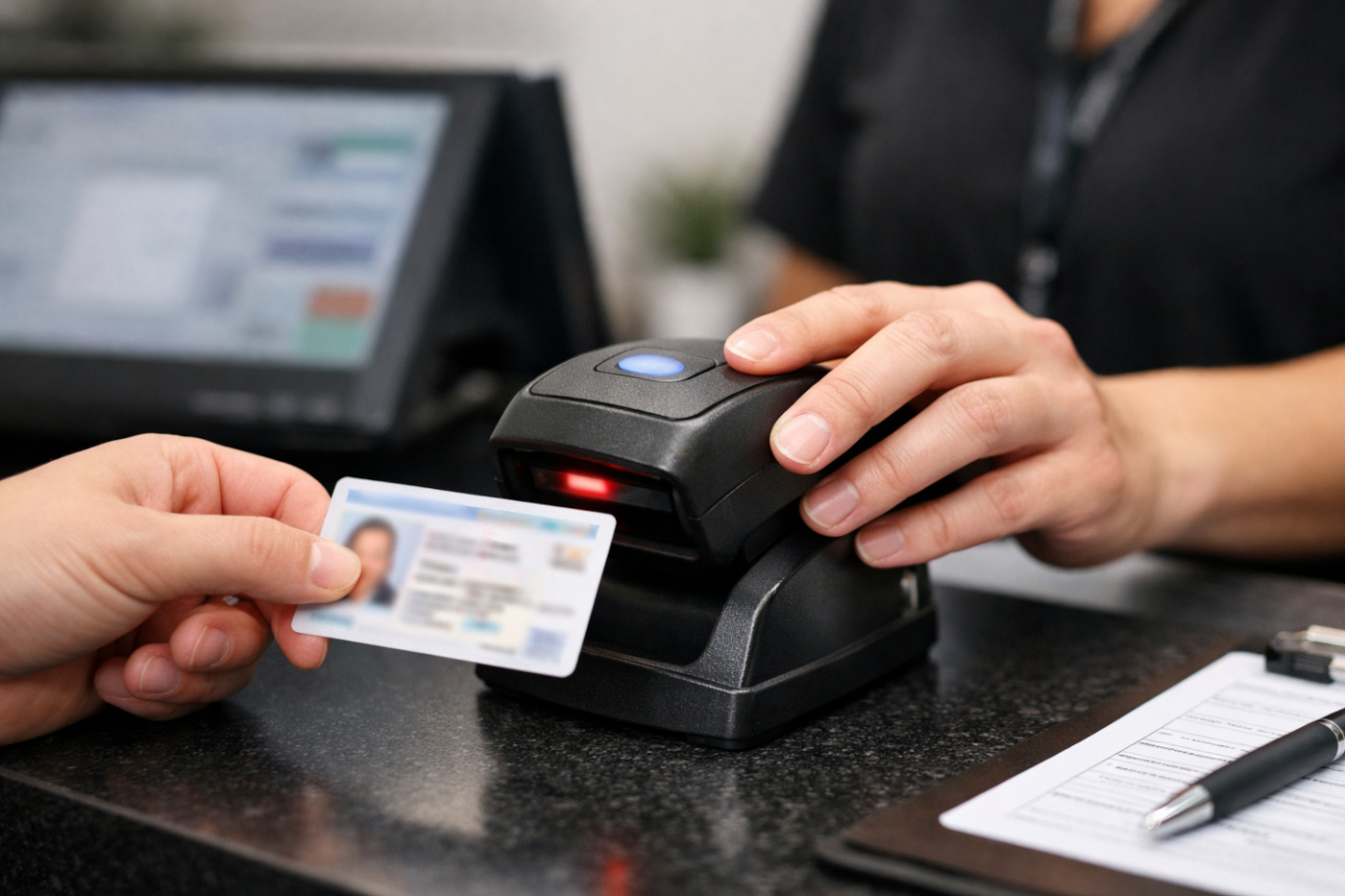
Hardware systems for identity verification have become one of the most important pieces of technology in cannabis retail. Where security guards once gave IDs a quick visual check, modern systems now rely on specialized scanners integrated with point-of-sale (POS) systems and compliance software, allowing identity and age verification in seconds.
As the industry matures, tools like these are no longer optional conveniences. They are essential infrastructure that carry the responsibility of protecting sensitive customer data.
Why ID-verification technology matters
Most states require cannabis retailers to ensure consumers are at least 21 years old before allowing them to enter a dispensary or make a purchase. Failure to verify ages can lead to severe penalties including heavy fines and license suspension or revocation. Reliable verification technology helps dispensaries remain compliant as regulations evolve.
Manual ID checks introduce risk. Human gatekeepers can accidentally overlook expired cards, misread birth years, or fail to detect counterfeit IDs. Hardware-based ID-verification systems reduce the risks by scanning machine-readable barcodes embedded in most current government-issued IDs. The systems instantly extract key data like name, date of birth, and whether the card is expired.
Many scanners include additional security checks such as ultraviolet light verification, hologram detection, and barcode validation to identify fraudulent IDs. In high-traffic dispensaries, these tools improve efficiency. Instead of staff manually inspecting IDs and calculating age, scanners automate the process and create a digital record of each check. That documentation can be crucial during audits or regulatory inspections, when proving consistent compliance procedures matters just as much as following them.
Compliance beyond the front door
Identity verification does more than confirm age. In regulated cannabis markets, purchases are often subject to strict daily limits designed to prevent diversion into the illicit market.
ID-scanning systems help track those limits by linking transactions to a verified identity. This capability becomes particularly important for multi-location retailers. Without centralized verification and transaction tracking, customers potentially could exceed purchase limits by visiting multiple stores in a single day.
Some states have gone even further by specifying a list of approved ID-scanning systems. Compliance is not simply encouraged. It is built directly into the technology used at the point of sale.
What retailers should expect from modern ID-scanning hardware
While software platforms often receive most of the attention, the physical hardware performing ID verification is just as important. Reliable scanners must be fast, durable, and capable of accurately reading a wide range of identification formats in a fast-paced retail environment.
Several ID-scanning devices have become standard tools in cannabis retail due to their reliability and ability to process government-issued identification quickly. These include Honeywell’s Xenon 1900 Color, Zebra’s DS4608, Datalogic’s QuickScan QD2400, and Gemalto’s CR5400. Each of these scanners can read the PDF417 barcodes commonly found on driver’s licenses and state identification cards across the United States.
When integrated with a modern POS environment, scanners automate verification, reduce manual errors, and help maintain consistent procedures across registers and store locations. Many retailers prioritize technology stacks where hardware, POS software, and compliance reporting tools seamlessly work together. Some retail platforms provide everything from hardware-compatible ID-verification solutions to broader retail management tools, helping dispensaries integrate all their compliance processes into a single workflow.
Compliance advantage comes with data-security obligation
While ID-verification hardware improves compliance and operational efficiency, it also introduces an important responsibility. These systems handle sensitive personal information such as names, birth dates, identification numbers, and sometimes purchase histories.
For customers, this understandably raises questions. What information is collected? Where is it stored? Who has access to it?
Most ID-scanning systems extract only the information required for compliance and age verification. In many jurisdictions, regulations also restrict how long personal data may be retained or prohibit storing full copies of identification documents without consent.
But even limited data creates cybersecurity obligations for dispensaries. Retailers must protect customer information using encryption, secure storage, and strict access controls. If stored customer information is compromised, the consequences may include legal liability, regulatory action, and loss of consumer trust.
Hardware is only part of the solution
The effectiveness of ID-verification hardware depends on the broader technology ecosystem surrounding it. Scanners must integrate with POS systems, inventory platforms, and compliance reporting tools.
When hardware and software work together, retailers gain clearer visibility into transactions while reducing manual processes that can introduce errors. Integrated systems also make it easier to apply consistent security policies across the operation, from access controls to data-retention practices.
Building trust through technology
Cannabis retail sits at the intersection of public safety, regulatory oversight, and consumer privacy. ID-verification hardware is one of the most visible ways technology helps balance those priorities.
For operators, these systems help protect licenses and support compliance. For regulators, they create transparent and auditable records of retail activity. For customers, they help ensure cannabis sales are happening within a controlled and responsible environment.
As the industry continues to grow, the conversation about ID verification will extend beyond the hardware itself. The real focus will be on how securely the data behind the systems is managed.
In cannabis retail, the ID scanner at the door may be the first line of compliance. But the systems protecting the data behind it will define how secure, scalable, and trustworthy dispensary operations become.
Common questions about cannabis retail ID verification
Why is ID verification so important in cannabis retail?
Because dispensaries operate under strict rules around legal age, purchase limits, and recordkeeping. Reliable ID verification helps reduce compliance risk and supports consistent procedures.
Can ID scanners help prevent fraud?
Yes. Many systems can read machine-readable barcodes and may include checks such as barcode validation, ultraviolet verification, or hologram detection, which can help flag suspicious IDs.
Does ID-verification technology create privacy risks?
It can if retailers do not handle the data responsibly. Because these systems process sensitive personal information, operators need strong encryption, secure storage, and restricted access controls.

Chris Pickering is the senior content creator at Mariner Business Solutions. An artist, designer, and avid outdoorsman, he is currently pursuing a bachelor of science degree in industrial design at Metropolitan State University in Denver. He has a passion for creating outdoor gear that is gender- and body-inclusive, ultra-light, highly functional, and aesthetically focused.










[…] fifth point is worth its own discussion. ID scanners with UV, hologram, and barcode validation create automated age verification logs that are not subject to employee memory or manual log […]