
For years, cannabis retailers have relied on the same playbook: attract more customers, expand product menus, and compete on price. Yet, as margins continue to tighten and profitability remains elusive across much of the industry, many operators are overlooking one of the most immediate opportunities already sitting inside their own stores: the accessories category.
That’s not because accessories are new. Quite the opposite. Accessories have existed alongside cannabis for as long as the plant has been consumed. The problem is too many dispensaries still treat them as an afterthought. A few grinders behind glass, rolling papers near the register, or a small collection of pipes selected based on personal preference rather than customer demand.
Meanwhile, the same customer buying flower, pre-rolls, vapes, or edibles often needs the products that help them consume, store, clean, transport, and personalize their cannabis experience.
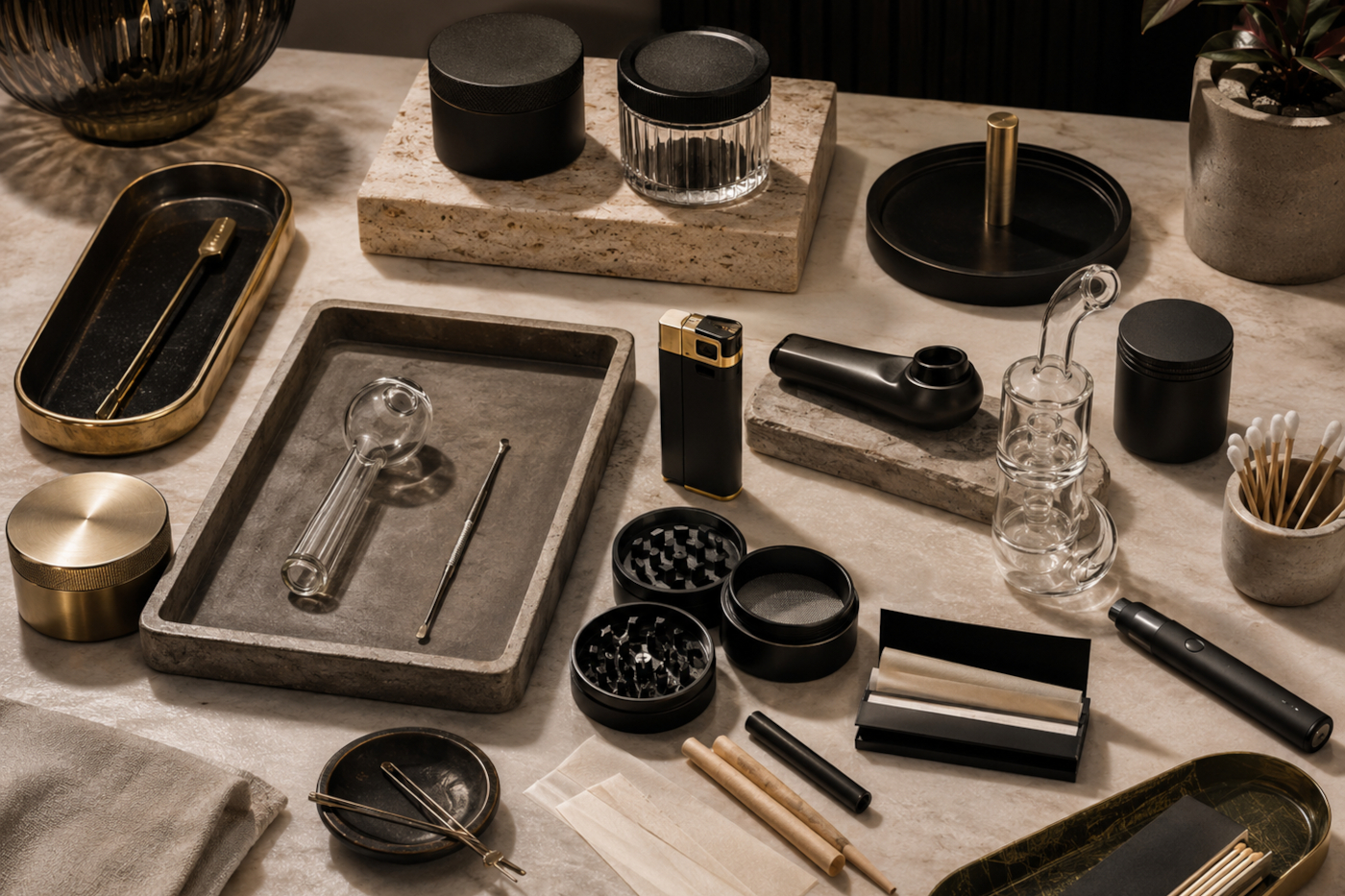
That customer may need a lighter, tray, grinder, glass piece, cone, battery, storage jar, cleaning solution, or odor-control product during the same visit. When those products are not visible, not in stock, or not part of the sales conversation, the retailer is effectively sending the customer somewhere else to complete their purchase.
- Accessories often account for only about 1.5 percent of dispensary sales, but a disciplined retail strategy can push that share toward 5 percent.
- Grinders, trays, rolling papers, storage products, cleaning supplies, and other add-ons can increase basket size without relying on discounts or higher foot traffic.
- Well-managed accessory programs can deliver average margins above 55 percent, with some products carrying margins of 70 percent or more.
- Visibility, inventory discipline, budtender education, and open-floor merchandising are key to turning accessories into a managed retail category.
The next cannabis retail economy
The operators that thrive during the industry’s next chapter will not necessarily be the ones with the largest menus or the lowest prices. They will be the ones that learn to manage accessories — and the rest of their inventory — as true retail categories.
This is not a revolutionary concept in most retail sectors. Convenience stores, grocery chains, and big-box retailers have spent decades refining category management. Inventory levels are monitored closely. Product placement is intentional. Staff are trained to recommend complementary purchases. Vendor partners help manage replenishment, merchandising, shelf space, and sell-through.
Nobody thinks of the snack aisle, cooler door, or checkout display as a random assortment of nice-to-have items. They are managed profit centers.
Cannabis retail is still catching up. Too often, accessory selection is driven by individual taste instead of sales velocity. Products go out of stock. Displays are hidden from customers. Budtenders receive little training in how accessories fit into the broader customer experience. The result is predictable: missed revenue, lower basket sizes, and unrealized margin.
What is striking is how significant the upside can be when operators apply basic retail discipline to the category. In stores that have embraced open-floor merchandising, consistent inventory management, and staff education, we have seen accessory sales triple.
Customers did not suddenly discover they needed accessories. The stores finally met customers where they are, making the category visible, shoppable, and easy to understand.
Bringing accessories out from behind the glass
It doesn’t take hundreds of SKUs to create an exciting, profitable accessories selection. In our experience, success often comes from maintaining a disciplined assortment of 40 to 50 core products, keeping them consistently in stock, and matching that assortment to the store’s customer base. A tourist-heavy dispensary, a high-volume urban store, and a neighborhood medical shop should not treat the category exactly the same way.
But all of them should treat it with intention.
A disciplined approach to accessories can move the revenue needle. For many dispensaries, accessories account for roughly 1.5 percent of sales. With the right products, merchandising, inventory discipline, and staff support, that share can grow upward of 5 percent. For a retailer trying to improve profitability without relying on tax reform, wholesale price recovery, or a sudden surge in foot traffic, that’s meaningful growth.
The margins make the case even stronger. Some accessory items can carry margins of 70 percent or more, with average margins well above 55 percent when the category is managed well. High-volume products can turn up to eight times annually when supported by vendor-managed inventory and real category expertise. But the key to the program is discipline: The products that matter most must be in stock all the time.
When essential accessories are out of stock, hidden behind glass, or selected without regard to velocity, operators leave some of their cleanest retail margin on the table.
Visibility matters. Inventory matters. Education matters. Just as importantly, incentives matter.
Empowering budtenders to build the complete customer experience
Budtenders remain one of the most influential touchpoints in the customer journey. When staff understand the products, know how to recommend them, and are incentivized to engage in those conversations, attachment rates increase naturally. Customers discover products that improve their experience. Retailers increase basket size. Everyone wins.
This is where cannabis operators should borrow more openly from mainstream retail. Accessories should not sit behind glass like luxury watches unless the product truly demands that level of control. Customers need to see, touch, and compare everyday items. They need to understand the difference between one grinder and another, why a storage product protects flower quality, and which cleaning product keeps a favorite piece usable.
Open-floor merchandising makes the category feel like part of the cannabis experience rather than a separate errand.
A broader market shift is also underway. Traditional smoke shops and head shops are facing pressure from flavored-vape restrictions, kratom crackdowns, hemp bans, and other regulatory changes. Dispensaries already have the licensed environment, the cannabis customer, and the trusted retail relationship. The opportunity to become the place where consumers buy cannabis and the full set of products that support that experience is significant.
That doesn’t mean every dispensary needs to become a cluttered smoke shop. It means operators should stop pretending cannabis retail is about only the THC product on the receipt. In the future, dispensaries may look less like Apple Stores and more like well-run specialty retailers: curated, profitable, practical, and built around how customers actually consume.
Investing in sustainable cannabis retail performance
We’re not reinventing retail here. The industry simply needs to start applying proven retail principles to categories that historically have been overlooked.
Operators should stop thinking of accessories as a side business. They are one of the few areas where retailers can simultaneously improve margins, increase basket size, and create a more complete customer experience. The category also gives operators a non-plant-touching revenue stream at a time when every incremental dollar matters.
In an industry searching for sustainable profitability, that is an opportunity worth bringing out from behind the glass.

Brett Harris is founder and chief executive officer at LuvBuds, a national cannabis accessories and retail performance company serving dispensaries across the United States. A longtime entrepreneur with a background in distribution, product development, sales leadership, consulting, and investment banking, he entered the cannabis industry at the beginning of adult-use legalization in Colorado and has been building in the space ever since.