


A major shift is underway for the cannabis industry. And perhaps ironically, it’s pulling the sector back toward where it all began: healthcare, and all of the complexity, responsibility and opportunity that comes with it.
This should not be controversial. Cannabis has always had roots in medicine. Most adult-use markets originated as medical programs, often through ballot initiatives and patient advocacy. For decades, advocates fought to have cannabis treated less like contraband and more like a legitimate therapeutic option.
But much of the conversation surrounding federal rescheduling has focused almost entirely on the financial implications: 280E relief, expanded research opportunities, improved investor confidence, and access to capital.
What that conversation often misses is that an entirely new lane is opening, and it’s a direct result of the federal government moving cannabis closer to legitimacy within the broader healthcare ecosystem.
- Federal rescheduling may create expectations that extend beyond tax relief, research, and access to capital.
- Medical cannabis operators seeking healthcare legitimacy will need systems for patient records, provider visibility, compliance, education, and care coordination.
- The next growth opportunity may favor companies that build for patients and healthcare infrastructure, not only retail transactions.
Retail polish is not medical legitimacy
Rescheduling may make cannabis easier to sell, but it also fundamentally changes expectations about how the industry operates.
For years, cannabis companies were told to think like mainstream retailers. Build better stores. Improve customer experience. Train budtenders. Strengthen branding. Optimize merchandising. Increase basket size and customer loyalty.
That discipline helped professionalize the industry. But retail legitimacy is not the same thing as healthcare legitimacy.
The next major growth opportunity will come not simply from making cannabis retail more polished but from making medical cannabis more functional within healthcare itself.
Healthcare is certainly a compliance burden. But it is also one of the largest economic ecosystems in the world. If cannabis can connect meaningfully to providers, employers, insurers, patient benefit programs and coordinated care systems, operators no longer will be competing solely for walk-in traffic or the lowest-price eighth. They will be participating in longer-term patient relationships, reimbursement-supported care models, and more predictable channels of demand.
That is an entirely different business category. A dispensary can sell a product. A healthcare system has to support a patient.
Built for patients, not just purchases
If cannabis is going to function as a legitimate therapeutic class, it will require infrastructure that looks far more like healthcare than traditional retail: provider visibility, privacy-compliant data systems, eligibility verification, patient records, clinician education, care coordination, and reimbursement pathways.
For years, the medical cannabis model often left patients navigating the system largely on their own. A patient obtained a card, visited a dispensary, and then frequently disappeared from the formal healthcare system until renewal time. Physicians often had little visibility into what their patients actually were using unless the patient volunteered that information. Employers lacked frameworks for evaluating cannabis within health benefit programs. Patients themselves were left translating complex medical needs into retail purchasing decisions.
That is not how mature therapeutic categories operate.
In a retail model, the transaction often ends at the point of sale. A customer walks in, describes a desired effect, purchases a product, and leaves with their purchase. There may be future marketing, loyalty rewards, or repeat business, but the structure remains fundamentally transactional.
In a healthcare model, the product is only one component of a much larger patient journey.
A clinician may need to understand what a patient is using, how frequently they are using it and whether it interacts with other medications. A pharmacist, nurse or trained cannabis professional may need to discuss dosing, contraindications and formulation selection. An employer may want a responsible framework for incorporating medical cannabis into a benefits strategy. Patient assistance and reimbursement programs may help improve affordability and continuity of care.
The infrastructure gap
We are already seeing pieces of this future emerge in real time. Employers are exploring reimbursement models. Cannabis healthcare platforms are beginning to connect patients, providers, dispensaries, and insurers through compliant infrastructure. Physicians and nurses are seeking cannabinoid education because patients are asking more sophisticated questions. Researchers and policymakers are evaluating cannabis integration into workers’ compensation systems. Healthcare record integration and validated purchase tracking are increasingly becoming central challenges in coordinated cannabis care.
These are not isolated developments. They are early indicators of where the industry is moving.
The cannabis sector is evolving toward a more formal healthcare framework, and that transition will require far more than branding, packaging, and retail optimization. It will require accountability, interoperability, standards, and systems capable of supporting patient-centered care at scale.
A fork in the Schedule III road
Some operators are already closer to that future than others. Medical-only markets like Utah, with pharmacist supervision, strict testing standards, inventory controls, patient education requirements, and more structured tracking systems, offer a glimpse of what a mature cannabinoid medicine framework could look like. Other markets remain much closer to conventional adult-use retail even while serving patients using cannabis for pain, sleep disorders, anxiety, cancer symptoms, neurological conditions, and other serious health concerns.
That distinction is going to matter far more in a Schedule III environment.
Operators should not assume rescheduling merely creates a friendlier business climate. It also creates a strategic fork in the road.
Some companies will remain focused primarily on adult-use retail, consumer branding, and lifestyle positioning. That lane will continue to exist and remain economically significant.
But operators seeking to participate in medical cannabis as a reimbursable, provider-supported, and coordinated therapeutic category will need to build for an entirely different future.
It also means accepting “medical” can no longer function simply as a market label. It has to become an operational standard.
Medical has to mean operational
The industry has spent decades fighting for legitimacy. Rescheduling represents a major step toward achieving it. But legitimacy also brings new expectations.
This does not mean every dispensary becomes a pharmacy overnight. It does not mean every brand suddenly transforms into a healthcare company. And it certainly does not mean the retail sophistication that helped normalize cannabis suddenly loses value.
It simply means retail is no longer enough.
The real opportunity ahead is not just selling more cannabis under a more favorable federal classification. The larger opportunity is building the infrastructure layer for cannabinoid healthcare itself — the very foundation the industry has been moving toward all along.
Operators that recognize this shift early will be positioned for the next phase of the market.
Operators that continue treating medical cannabis like conventional retail eventually may discover they optimized themselves for the final chapter of the old industry instead of the beginning of the next one.
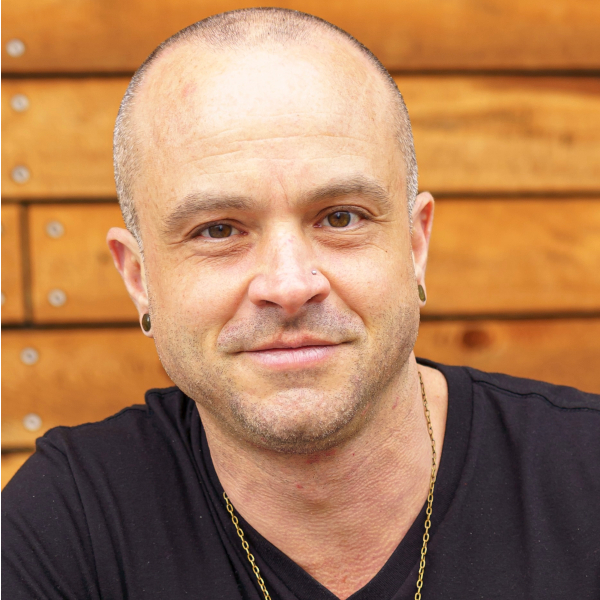
Matthew Myro Rothman is a marketer, cultivator, and educator with two decades at the intersection of cannabis science and patient access. As chief science officer and vice president of marketing at EM2P2, he guides national strategy and consumer education initiatives for CannaLnx, a digital health platform devoted to modernizing healthcare by integrating the power of medical cannabis into traditional care models and systems. A Cleveland native with a master’s degree from the California Institute of Integral Studies, Rothman hosted the Edge of Cannabis Medicine podcast, where he interviewed researchers and innovators shaping the role of cannabis in health care. He is also a certified yoga, tai chi and qigong instructor, a personal trainer, and a longtime singer-songwriter.